Design pros at Zoë Feldman Design argue that small laundry room spaces deserve careful thought and real style. They show how a stackable washer dryer combo can free up room and make daily chores faster and neater.
When a homeowner trades bulky cabinets for smarter planning, the entire room feels brighter and more open. That extra breathing room helps when folding clothes or moving a basket to the closet.
Good planning turns limited floor area into efficient work zones. Simple ideas—like stacking a washer and dryer and adding hooks—keep drying supplies reachable without crowding the space.
Whether a person hires a pro or tackles a DIY, the goal is the same: make the laundry day routine quicker and more pleasant. Thoughtful design makes compact rooms work harder while feeling less like a chore.
The Case for Vertical Storage Apartment Laundry Solutions
Using height to organize transforms cramped work areas into efficient, airy rooms. This approach frees floor area and gives small spaces a clearer purpose. Zoë Feldman even painted walls, ceiling, and millwork in citrine to add depth and presence.
Benefits of Going Up
Going up keeps essential items reachable while clearing valuable floor space. It helps the laundry room feel less crowded and more calm.
- More room for folding and sorting
- High shelves keep detergents out of a child’s reach
- Added depth and style without bulky furniture
“Smart use of walls makes a tiny service area feel intentional and well edited.”
Assessing Your Available Wall Space
Measure wall height and check for studs before planning shelves or rails. Map outlets, vents, and door swings so shelving fits without blocking function.
With a clear plan, homeowners find simple solutions that store more items and keep the laundry room organized and stylish.
Why Traditional Cabinets Often Fail in Small Spaces
In tight rooms, traditional cabinets often crowd the floor and make movement awkward. They can feel bulky and timid in a compact laundry room, reducing usable space and blocking light.
Deep cabinet boxes create hidden dead zones. When shelves are fixed low, tall items cannot fit, and smaller items get lost at the back. That wasted interior space makes storage less efficient.
Designer Claire Staszak of Centered by Design in Chicago shows a simple fix: spray paint can turn standard white cabinet fronts into custom ice-blue pieces. This approach refreshes the look without a costly overhaul.
Many professionals favor open shelving and lighter fittings because they keep items visible and reachable. These ideas make a small laundry room feel more airy and help owners stay organized.
“Standard cabinets rarely adapt to changing needs; open solutions let each room work harder.”
- Less floor crowding
- Better access to daily items
- More flexible shelving options
Maximizing Vertical Space Above Your Washer and Dryer
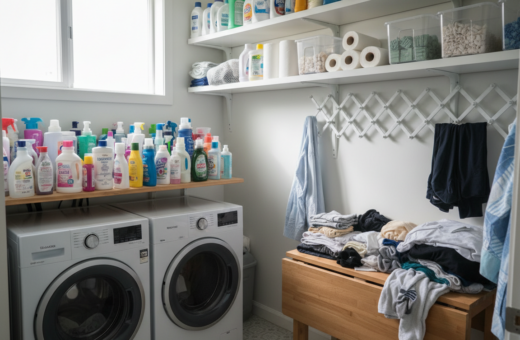
A smartly arranged shelf or rod above the washer and dryer can change how the whole room functions. This area is a prime place to add shelving, a rack, or a shallow cabinet without shrinking work zones.
Marea Clark used upper cabinets and a hanging rod above the washing machine to keep clothes and supplies close at hand. Her approach keeps the room tidy while freeing floor space for folding.
Stacking Kits and Safety
Using a manufacturer-approved stacking kit is the safest way to combine a washer and dryer. A proper kit secures units and prevents shifting during cycles.
For renters, Rob Stuart suggests standalone cabinets placed on top of appliances as a no-drill hack. Installing a drying rack or a hanging rod above the machines also creates a convenient spot to air-dry clothes.
- Stacking kits secure washer dryer pairs and open up floor space.
- Open shelves or a wall-mounted shelf keep items within arm’s reach.
- Stand-alone cabinets offer a renter-friendly alternative to drilled fittings.
“Maximizing the area above your appliances creates a dedicated storage space and makes the laundry room much more functional.”
Installing Floating Shelves for Open Access
Floating shelves turn an unused wall into a practical staging area for daily chores. Emilie Munroe of Studio Munroe in San Francisco used open shelving and woven baskets to keep items corralled in a small laundry room.
Open access shelving keeps the most-used products visible and easy to grab. A shallow shelf above the washer creates a quick landing zone for detergent, sorter bins, and a folding basket.
They are also a friendly DIY project. Homeowners can hang a few shelves at staggered heights to fit tall bottles, boxes, and decor. Woven baskets tuck small items away and maintain a clean look.
Design tip: mix closed bins and open shelves to balance function and style. This approach frees floor area and makes the room feel lighter without bulky cabinets.
“Floating shelves make a small laundry room look edited and work harder.”
- Easy DIY installation
- Better access to daily items
- Custom heights for varied products
Utilizing Wall Mounted Drying Racks
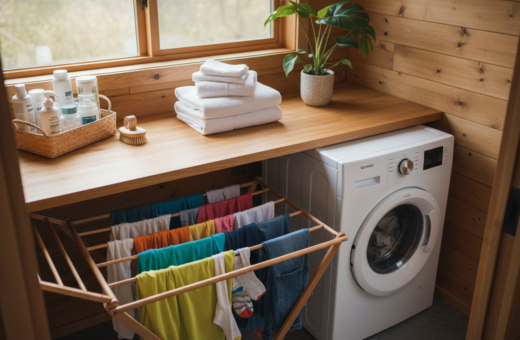
Mounting a drying system on the wall preserves room while adding practical hanging space. Wall-mounted choices make the most of a small area and keep wet clothes off counters and doors.
Kathryn Murphy of Kathryn Murphy Interiors in Oak Park installed a foldaway drying rack in a rich blue laundry room. Her design shows how a compact rack fits above a washer and dryer without crowding the work zone.
Wall Mounted Options
Foldaway models tuck flat against the wall when not in use. Open shelving or a shallow rail can add hooks for delicates and small items. Designers favor units that match the room’s finish so the rack blends in.
Retractable Designs
Retractable racks pull out when needed and slide back to clear the space. They are often more convenient than floor units and stop clothes from being draped over every door.
- Folds away to save floor space
- Works well near a washer or dryer
- Keeps the laundry room tidy and functional
“A wall-mounted drying rack is a simple, elegant answer for drying delicates while keeping a small room organized.”
Incorporating Pegboards for Laundry Essentials
A pegboard turns a bland wall into a highly functional command center for wash day. It keeps tools and small items visible and within reach. This reduces clutter on counters and the floor.
Mount a pegboard above the washer or dryer to hold detergent, dryer sheets, and pods. Add hooks for lint rollers and racks for small baskets. Designers like this because it frees usable space and speeds tasks.
Flexible layout matters. Swap bins, hooks, and shelves as needs change. A pegboard adapts to seasonal cleaning supplies and odd-shaped tools.
- Keep essentials reachable: detergent, dryer sheets, lint tools.
- Cut counter clutter: use hooks and small bins for loose items.
- Save floor room: wall-mounted organization frees walking space.
“A pegboard helps every tool have a home, which makes laundry quicker and less stressful.”
Choosing Vertical Storage Over Bulky Furniture
A compact bench can do double duty as a folding station and a mudroom spot, cutting the need for heavy furniture.
Nadia Watts of Nadia Watts Interior Design in Denver used a bench to create a tidy place for sorting, sitting, and dropping shoes. This simple piece proves that a movable element can change how a small room functions.
Designers advise focusing on tall solutions rather than large floor pieces. That approach keeps floor area free for task flow and makes cleaning easier.
- Flexible use: a standalone bench can be shifted as needs change.
- Better movement: lighter pieces allow people to work without bumping into furniture.
- Smart style: slim shelving and racks keep items organized without heavy bulk.
In short: choose options that lift items up and out of the walkways. For practical tips on arranging higher elements, see ways to use your vertical space. A well-planned laundry room becomes a calmer, more efficient part of the home.
Implementing Sliding Door Systems to Hide Clutter
A simple sliding door can instantly turn a functional closet into a calm, finished room. Designers often use doors to hide machines when chores are done and keep sightlines clean.
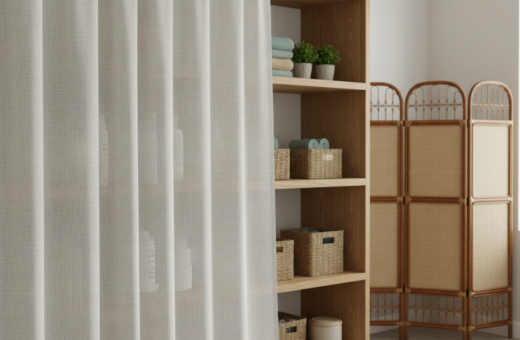
Stephanie Kraus of Stephanie Kraus Designs in Wayne, Pennsylvania, favors caned sliding doors to conceal a washer and dryer. The texture hides mess while adding character.
Lisa Laliberte-Alle of Laliberte Interiors in Hawthorne, New Jersey, prefers closed cabinet fronts to minimize visual noise. Closed fronts let a small room feel peaceful and organized.
Practical benefits:
- Doors hide clutter and keep detergent bottles out of sight.
- Creating a hidden nook for your washer dryer maintains a clean aesthetic.
- Sliding systems suit rooms that open to other living areas.
“When the doors are closed, the laundry room becomes a quiet, tidy space; when open, it functions fully.”
Using sliding or cabinet doors balances form and function. This approach keeps the space usable and the home visually calm.
Leveraging Vertical Height with Tall Wardrobes
Tall wardrobes that reach the ceiling turn an awkward alcove into a polished, functional area. Hannah Fulton of J. Banks Design in Hilton Head champions cabinets that extend to the top of the wall to make a small laundry room feel custom and orderly.
Creating a hidden nook is an easy way to tuck a washer and dryer out of sight. Floor-to-ceiling cabinets form a built-in look and hide supplies behind closed doors, so the room reads as calm and finished.
Using the full wall height gives more room for linens, cleaning items, and seasonal goods. Designers find this the best way to add practical cabinet space without enlarging the footprint of the closet or work area.
- Maximizes usable area: stores more in less square footage.
- Hides machines: keeps washer and dryer tucked away for a neater home.
- Built-in feel: makes the room look intentional and high-end.
“When tall cabinets are used thoughtfully, a small room becomes a highly functional and stylish part of the home.”
Creating Custom Vertical Drying Stations
Custom hanging solutions above machines turn an awkward gap into a hardworking drying zone. Alexandra Kaehler of Alexandra Kaehler Design in Winnetka installed a hanging rod above the washer and dryer to use that wasted space.
Creating a dedicated place for drying lets delicate clothes air-dry without taking up valuable floor space. Designers often suggest a low-profile rod or a foldaway drying rack that stays easy to reach.
Practical benefits:
- Keeps wet items off counters and floors.
- Makes the laundry room more efficient for daily use.
- Allows personalization so the solution fits the household’s needs.
With a few hooks, a retractable rail, or a slim rod, homeowners make a small room feel organized and calm. A well-planned drying station adds function and style, so managing laundry becomes quicker and less stressful.
“Use the area above your machines to create a drying place that works with your routine.”
Using Hooks and Rails for Daily Supplies
Hooks and rails transform unused wall area into a practical zone for everyday items. This small change helps the laundry room run more smoothly and keeps the room tidy.
Designers often install a slim rail to hold baskets, detergent, and other supplies you use during the day. Items stay visible and easy to grab, so the washer and dryer area stays clear.
Hooks are ideal for hanging bags, towels, or a folding drying rack. They keep the floor open and free of clutter near the door.
- Quick access: everything is within reach when sorting and folding.
- Custom layout: place rails at heights that match your height and routine.
- Small footprint: this way saves precious space in compact rooms.
“A simple rail and a few hooks make daily chores faster and the room feel more organized.”
Using hooks and rails is a low-cost, renter-friendly way to improve function. It’s a smart method to keep supplies organized and make laundry day less of a chore.
Optimizing Floor Space with Vertical Stacking
A butcher-block or continuous counter above machines converts clutter into a tidy folding zone. Ashley Macuga of Collected Interiors recommends a butcher block on top of the washer and dryer to create a true folding station that feels intentional.
Meghan Dorrian of Young America Creative took the idea further with an expansive wooden countertop in a galley laundry room. The result is a smoother workflow and more usable space for folding clothes.
In practice, stacking a washer and dryer or tucking them into a tall niche frees the floor and keeps the room open. Designers say this approach makes cleaning easier and keeps baskets off the ground.
- Butcher block or counter: adds an immediate work surface.
- Stacking units: opens floor area for movement and chores.
- Baskets on shelves: keep clothes organized and off the floor.
- Smart solutions: balance function with a calm, finished look.
“Prioritizing height turns an awkward gap into a useful, beautiful work area.”
Adding Texture and Style to Vertical Surfaces
A few tactile choices make a small room feel curated instead of purely utilitarian. Mixing mesh, bold trim, and patterned tile gives the space character while keeping it useful for daily tasks.
Kriste Michelini favors mesh-front cabinets to add an English-inspired texture that still hides clutter. They keep items organized and add a soft, lived-in look.
Emily June Spanos recommends bold trim—neon accents or painted edges—to inject personality into a compact laundry room. A pop of color makes the shelf and hooks feel intentional.
- Sara Hillery uses geometric floor patterns to elevate the floor and tie the room together.
- Wallpaper, textured cabinet fronts, or painted walls create depth without crowding the work zone.
- Woven baskets and open shelves add warmth while keeping detergent and tools accessible.
“Focus on details—fabric, finish, and pattern—to make a practical room feel like part of the home.”
Selecting the Right Lighting for Vertical Workspaces
Lighting that targets work zones transforms a dim closet into a practical, stylish hub. Rachel Cannon of Rachel Cannon Limited used a beaded chandelier to add whimsy and a focal point in her laundry room.
Denise Morrison of Morrison Interiors recommends three wall-mounted sconces to keep the room bright and shadows at bay. Good fixtures clarify shelves and make it easy to spot detergent, baskets, and other supplies.
Design tips:
- Combine one showstopping fixture with task lights above work zones.
- Use wall-mounted sconces near counters and the dryer for direct illumination.
- Choose warm LEDs to make the space feel larger and more inviting.
Lighting matters as much as shelving or cabinet layout. Proper illumination highlights organization, supports efficient chores, and makes the room feel finished and calm.
“A bright, well-placed fixture turns chores into a quicker, more pleasant task.”
Maintaining a Clutter Free Environment
When each product has a permanent spot, the chores flow faster and the room stays tidy. Craig O’Connell of Craig O’Connell Architecture in San Francisco even recommends bold paint to camouflage the washer and dryer and reduce visual clutter.
Daily habits keep a small space usable. Return detergent and cleaning supplies to a labeled bin after use. Hang shirts and sheets on hooks or a drying rack so they do not pile on counters.
Weekly upkeep matters too. Spend five minutes each day straightening shelves and baskets. Check cabinets and closet shelves for stray clothing or products and move them back to their place.
- Use baskets and bins to group like items.
- Install hooks and slim racks on walls for quick-access items.
- Keep one shelf near the washer for detergents and small supplies.
“A well-maintained room is the key to a stress-free home.”
These simple organization solutions make the room easier to clean and help the whole household focus on the task at hand. With clear spots for every item, wash day becomes faster and less stressful.
Conclusion
Maximizing height and clear zones makes a small laundry room work smarter, not harder. This approach boosts usable floor area and keeps the room calm and efficient.
Moving away from bulky cabinets improves flow and supports better organization. Thoughtful choices make chores quicker and the space feel intentional.
Incorporate simple solutions like folding drying racks, shallow shelves, hooks, and labeled bins for detergent and other daily items. These touches help manage clothes and a single dryer with ease.
Start by assessing wall height and stud placement, then pick the storage options that fit your routine. With the right plan, even the smallest closet can become a stylish, clutter-free work area that lasts for years.