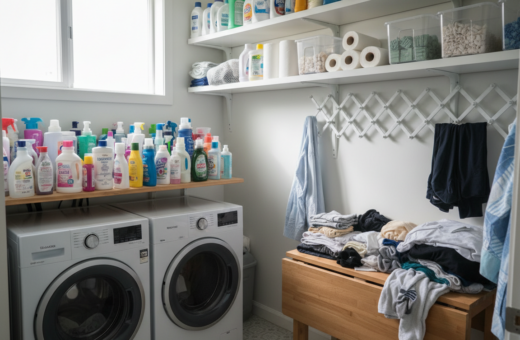
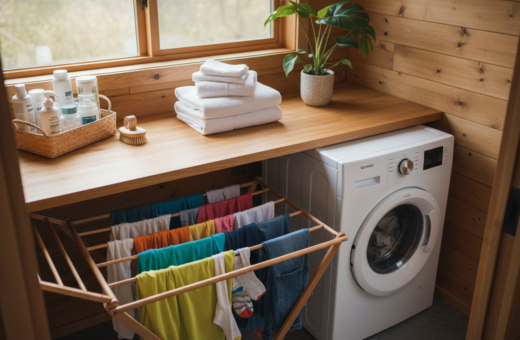
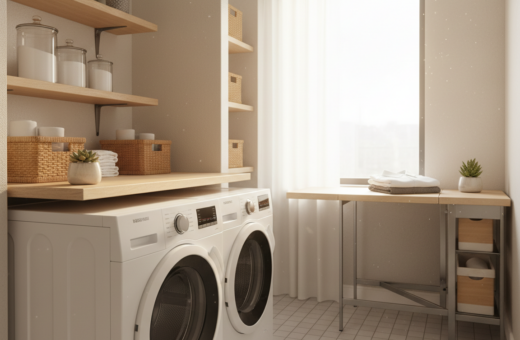
Coohom once noted that the site stores a small cookie to improve performance and user experience. This article shows practical ways to divide working zones without bulky pieces that steal space.
This guide explores simple techniques to keep a compact area organized while preserving privacy and a polished user experience. It covers clever panels, shelving swaps, and layout tweaks that boost functionality and add a personal touch.
By planning around the existing layout, one can use every inch efficiently. For more details on making choices that improve both flow and style, see this helpful resource at transforming your space.
Assessing Your Laundry Room Layout
Start by mapping the footprint and traffic paths to see how a partition will fit and perform. Measure wall-to-wall distances and note door swing, appliance clearances, and where people pass most often.
Consider flow and access. A thoughtful design keeps equipment reachable and prevents bottlenecks during busy times. Think about how a divider might alter movement and sight lines.
- Check vertical space for shelving to increase storage without taking floor area.
- Match measurements to typical wall-mounted or ceiling-mounted divider options.
- Plan zones for sorting, folding, and supplies to reduce duplicate trips.
- Confirm that the chosen split keeps daily tasks simple and easy to use.
By analyzing dimensions and daily patterns, one can decide if a simple partition will provide the needed separation for laundry tasks while preserving function and style.
Creative Laundry Room Divider Ideas for Small Spaces
Flexible screens and fabric treatments let small homes gain distinct work zones fast. These approaches keep function visible while concealing supplies and noise. They suit compact footprints and modern design sensibilities.
Curtain Systems
Curtain systems offer a soft, movable wall that hides storage and machines without heavy construction. Jennifer and Amy completed their project in one day, turning a utility area into a cozy library with full-height curtains.
Tip: Use a secure frame so the curtain can glide across the wall and clear the door path.
Sliding Panels
Sliding panels save floor space and can let natural light filter through translucent sections. They work well when the goal is to block sight lines but keep areas bright.
- Panels mount on a compact track to minimize impact on wall studs.
- Choose finishes that match existing wall color for seamless style.
- Keep hardware accessible for quick access to storage and folding zones.
Selecting the Right Fabric for Privacy
The material you pick can act like a lightweight wall while improving overall style.
Choosing the best fabric for a room divider is key to keeping the laundry area private and tidy. Heavy-duty curtains often provide the most reliable privacy because they block sight and sound better than thin panels.
When selecting fabric, consider durability, how it drapes, and how it fits the existing design. Canvas and thick cotton hold up well and clean easily. Velvet or linen blends bring a softer finish while staying practical.
- Privacy: Choose opaque weaves for full coverage.
- Durability: Pick fabrics rated for frequent use and washing.
- Style: Match color and texture to the wall and furnishings.
A well-chosen curtain design turns a simple divider into a polished feature that suits the space and meets functional needs.
Hardware Essentials for Ceiling Mounted Systems
A reliable hanging system starts with the right parts. For a ceiling-mounted room divider, the hardware must support full-length curtains from ceiling to floor and work smoothly over time.
Choosing Hooks
Hooks must be rated for the curtain weight and the expected pull force. Use heavy-duty ceiling hooks or threaded anchors into joists when possible.
Tip: Pick corrosion-resistant finishes if the space sees humidity.
Rod Selection
Select a rod that resists sag and lets the curtain glide easily. Telescoping steel rods or a tracked system work best for frequent use.
Feature: A smooth track prevents fabric wear and keeps room dividers aligned.
Measuring Tape
Accurate measuring ensures the rod sits level and the curtains clear the floor. Measure twice: ceiling height, then width across studs or anchors.
For step-by-step setup and accessory ideas, consult this guide to laundry room organization.
Locating Structural Supports Without Damage
Marking the path of joists and studs first prevents damage and gives clear mounting points for any overhead hardware. This step protects the finish and makes installations more reliable when creating a split in a compact room.
Using Magnets for Stud Detection
Using a strong magnet is a simple, noninvasive way to find the nails that mark studs and ceiling joists. A magnet will cling to fasteners, so the installer can trace solid support without drilling into the wall or ceiling.
- Prevent damage: Before mounting your divider, sweep a magnet along the ceiling to locate studs and avoid harming the laundry room wall.
- Secure attachment: Finding studs ensures that the divider is anchored firmly near the door and stays stable during use.
- No stud found? A magnet will still reveal nails or screws so you can fasten into reliable points in the room structure.
- Project safety: Proper detection is vital for any home upgrade and keeps the installed system functional over time.
- Confidence: Locating structural supports removes guesswork and protects the ceiling and adjoining wall when mounting hardware.
For a deeper walkthrough on temporary partitions and safe attachment methods, consult this temporary walls guide.
Installing Rods for Maximum Stability
A well-anchored rod changes a flimsy partition into a reliable, everyday solution.
To ensure maximum stability for a room divider, install at least two hooks into studs for every five feet of rod. This simple rule cuts sag and keeps fabric moving evenly across the space.
When mounting, verify each hook hits a solid stud. Use a stud finder or a magnet to locate fasteners. Tight anchors protect the wall and reduce wear on the track.
“Secure anchor points are the backbone of any successful project.”
Benefits:
- Prevents sagging so dividers stay level across the room.
- Keeps curtains secure during frequent use in the laundry room.
- Supports smooth sliding and reduces long-term maintenance.
Following the five-foot rule gives a durable setup that separates the work area without adding bulk. Proper anchors turn a quick upgrade into a long-lasting solution.
Maintaining Functionality and Access
Plan hook placement early so curtains glide freely and essentials stay within easy reach.
Keep at least 2–3 feet between hooks so a room divider can open smoothly. This spacing prevents snagging and lets the curtains slide without bunching.
A clear path to the door and to storage areas keeps the space efficient. Good spacing lets anyone reach supplies fast and avoids blocking key access points.
- Easy access: Proper spacing reduces the need to untie or remove the curtain every time.
- Quick reach: Open panels let users grab items from shelves and machines with minimal fuss.
- Balanced privacy: The divider protects sight lines but stays simple to move when needed.
“Proper access management keeps a small area private without creating obstacles.”
Design for everyday use: test the setup and adjust hook positions until movement is effortless and the room remains welcoming.
Aesthetic Touches to Blend Your Divider
Small decorative updates can turn a practical screen into a design feature that feels intentional. They helped the space feel cohesive and calm after the split was added.
Practical coverings like plastic lace, sold by the yard at Walmart, worked well to hide machines while adding texture. The material was easy to trim and wash, so maintenance stayed simple.
Framing a print, such as Grant Snider’s “Lost in the Woods,” gave the area a finished look. A well-chosen frame tied the split into the larger design and softened the visual edge near the door.
- Use a decorative lamp or unique frame to change the feel and light quality near the entry.
- Mix fabric, art, and small accents so the divider reads like intentional decor.
- Keep colors and scale aligned with the rest of the room for a polished touch.
“Small decisions make a functional element feel like part of the home.”
Avoiding Common Renovation Pitfalls
Before any work begins, inspect the site for structural limits and clearances. This step prevents surprises and keeps the plan realistic when adding room dividers.
Check how the door swings and note appliance clearances. A poorly placed divider can block access and reduce usable space. Also verify joists and studs before fastening hardware.
- Skipping a site inspection and hitting hidden structural limits.
- Choosing heavy options that crowd the floor and steal valuable space.
- Mounting a weak divider that becomes a safety hazard in the home.
Plan for movement: test the split before final installation to ensure smooth operation during daily tasks. A few minutes of checking door swing and clearances saves time and money.
“A quick structural check prevents costly fixes later.”
With thought to access and safe anchoring, dividers will improve function and design without creating new problems in the room.
Conclusion
A clear finishing step ties functional upgrades to the home‘s daily rhythm.
Implementing these laundry room suggestions is a practical way to boost functionality and keep cohesive design and style. Whether one picks curtains or sliding panels, the options deliver the privacy needed for a better experience.
Before use, secure the track to a stud or the wall and check the project site for any updates to tools or materials. Test the door swing and the frame alignment so movement feels smooth.
Questions about the project can go to [email protected]; expect a reply within 30 days. Follow these steps and the space will feel like a natural part of the home.