Design Alchemy cofounder Kristine Renee argued that a laundry room should feel inviting, not sterile. She and 30 interior pros shared practical ideas to make small rooms work better for everyday life.
A full refresh often takes about three months from planning to final install, so smart decisions up front save time and frustration. Even a tiny room with three doors can gain usable wall space with creative storage and the right appliances.
Well‑planned design turns an awkward area into a favored spot. Choosing a suited washer and dryer, arranging storage, and balancing form with function helps households keep their spaces cleaner longer.
These small laundry room ideas focus on real solutions that fit real life. With careful planning, homeowners can make a small space feel efficient and welcoming.
Maximizing Your Compact Laundry Layout
When space is tight, vertical thinking and a dedicated folding surface cut chores in half. Thoughtful placement of a washer and dryer, plus smart storage, helps a small laundry room run like a well-oiled system.
Stackable Washer Dryer Benefits
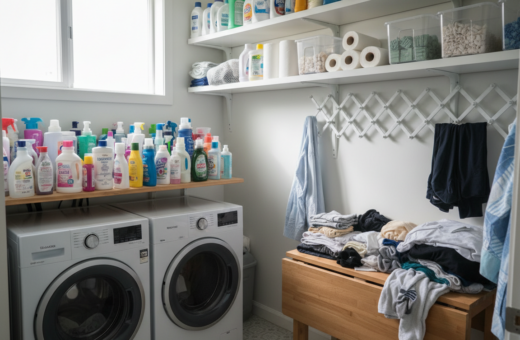
Stackable washer units free floor space and open the room for storage or a folding zone. Janelle Blakely of Blakely Interior Design recommends a stackable washer dryer to maximize square footage and create a cleaner workflow.
Placing cabinets above the stack creates instant storage for detergents and linens. Designers often suggest choosing cabinet height to match user reach and appliance venting needs.
Creating a Folding Station
Installing a base cabinet with a sturdy countertop provides a dedicated spot to sort and fold clothes. A set height countertop reduces bending and saves time on daily chores.
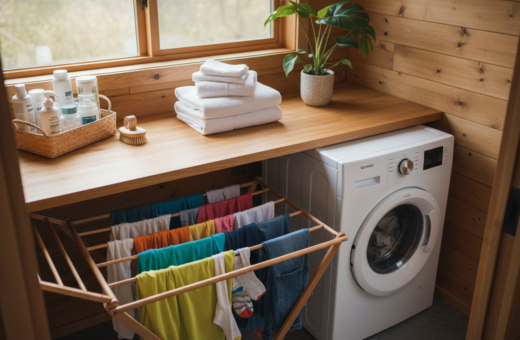
Built-in vertical drying racks and foldaway ironing boards add function without crowding the room. For more practical approaches, see these laundry room design ideas.
- Stack appliances to reclaim floor space for storage.
- Add a countertop over a base cabinet for efficient folding.
- Use vertical racks and foldaway boards for drying and pressing.
Vertical Storage Solutions for Tight Spaces
Using height rather than floor area transforms how a small room performs. Designers recommend treating the wall above the washer and dryer as prime real estate for storage and organization.
Open shelving and upper cabinets create layers of accessible storage. Open shelves keep detergents and baskets visible. Upper cabinets hide bulkier items and seasonal supplies.
A well-placed hanging rod above the machines uses wasted vertical space for air-drying and quick-touch ironing. That simple addition keeps clothes off the floor and speeds up routines.
- Nadia Watts suggests splurging on wall coverings to elevate a small laundry room while maximizing function.
- Wall-mounted shelves and tall cabinets deliver reliable laundry room storage without eating floor area.
- Every surface should pull double duty: tops of cabinets, narrow ledges, and vertical niches become useful room storage.
“Limited square feet allow for splurging on finishes like tile and wall coverings.”
Bottom line: smart vertical storage solutions keep small laundry rooms organized and visually appealing, improving how tight spaces work every day.
Incorporating Multiuse Furniture
Adding one versatile item can change how a tiny room functions every day. A standalone bench gives people a place to sit, sort garments, or tie shoes without building permanent casework.
Practical benefits include added seating and flexible storage. Heidi Woodman of Heidi Woodman Interiors recommends a freestanding bench when built-ins aren’t possible. It lets a small laundry room double as a mudroom and hold folded piles temporarily.
“A wooden bench can bring vintage warmth while adding useful seating,”
Many designers praise benches because they are easy to move and adapt. A wooden style suits a moody, vintage-inspired palette and adds textural contrast. For tight spaces, the bench offers a simple, non-permanent upgrade that improves function and feel.
- A standalone bench creates a spot to sit and lace shoes.
- It helps the room serve as a mudroom and folding zone.
- Benches provide flexible storage and welcoming seating.
Creative Ways to Add Color and Personality
A few bold choices can change a small space from forgettable to full of personality.
Bold wallpaper choices make a striking statement in a tiny room. Gray Walker installed Pierre Frey patterned paper from floor to ceiling to create a jewel box effect. The Willowberry pattern from Rifle Paper Co. adds a vivid blue focal point that turns a routine area into a design moment.
Painting Trim and Millwork
Refreshing trim with a crisp white like Sherwin Williams Snowbound brightens the room and highlights wallpaper or fabric. Painting cabinets and millwork gives the space a cohesive, finished look with minimal effort.
Using Patterned Fabrics
Textiles add softness and motion. Pleated Scrolling Acanthus by Soane in Cobalt brings elegance to a window treatment or hamper cover. Patterned fabrics can echo wallpaper or stand alone as a signature detail.
- Willowberry wallpaper creates a bold blue accent.
- Snowbound paint refreshes trim and cabinets.
- Pleated Scrolling Acanthus fabric adds refined texture.
- Bold choices make the laundry room feel intentional and styled.
“A jewel box approach helps small laundry rooms feel like special destinations.”
Utilizing Hidden Storage Behind Cabinet Doors
Hidden storage behind cabinet doors keeps a small room feeling calm and tidy. Amanda Reynal of Amanda Reynal Interiors recommends this approach to prevent visible clutter and streamline daily chores.
KraftMaid Shaker cabinets in Dove White are one example designers use to create clean, concealed storage. Cabinets that extend to the ceiling add capacity without making the room feel busy.
A small cabinet above the washer keeps detergent close at hand while camouflaging plastic bottles. Inside, baskets separate essentials like dryer balls and detergent pods so items stay organized and easy to reach.
- Ceiling‑high cabinetry maximizes vertical space and hides seasonal supplies.
- Deep cabinets store bulk items and reduce countertop clutter.
- Using baskets inside cabinets creates tidy zones for frequently used essentials.
Bottom line: closed cabinet doors are a simple storage solution that keeps a small laundry room neat and functional while offering a usable countertop for folding or sorting.
Installing Functional Wall Mounted Drying Racks
Wall-mounted drying racks turn unused vertical real estate into a practical staging area for delicates and daily wear. Kathryn Murphy of Kathryn Murphy Interiors installed one in a blue small laundry room to save floor and closet space while keeping the palette cohesive.
A few smart details make a big difference. A handyman once used three brackets to support a custom shelf that conceals washer hookups and doubles as a rack anchor. Sliding racks that fit between the washer and dryer eliminate clutter and tuck away when not in use.
Using vertical space keeps clothes off the floor and lets a small laundry room feel open and airy. Designers favor wall-mounted options because they protect aesthetic choices while adding real function.
- Wall racks save closet space and free floor room near the dryer.
- Sliding inserts hide when idle, reducing visual clutter.
- Easy setups handle delicates and avoid frequent trips to the dryer.
“A wall rack keeps the room tidy and makes handling delicate clothes simple.”
Making the Most of Every Flat Surface
Flat surfaces are the unsung workhorses in any small utility room. Ashley Macuga of Collected Interiors incorporated a wooden butcher block on top of the washer and dryer to add usable surface area.
A butcher block countertop turns appliance tops into a proper spot for folding clothes. It gives a steady, warm surface that handles daily wear and makes folding faster.
Open countertop space also keeps baskets and essentials organized. Small decorative vignettes sit beside functional items, so the room looks styled and stays useful.
- Use the top of the dryer as a temporary folding station.
- Keep baskets lined up for sorting and quick transport.
- Reserve a clear area for detergent, clips, and other essentials.
Making the most of every flat surface helps families stay organized while they fold. In a tight laundry room, a dedicated countertop makes the whole process more efficient and calm.
Choosing the Right Appliances for Small Rooms
Picking appliances that fit both the footprint and workflow makes a small room feel intentional and efficient. Janelle Blakely recommends a stackable washer dryer to reclaim floor space and allow for added storage cabinets above.
When the room permits, designers still favor a side-by-side washer and dryer for faster loads and a wider folding surface. For a converted closet or tight area, appliance dimensions are crucial to avoid costly retrofits.
A small cabinet positioned above the washer keeps detergent within reach and hides clutter. By choosing narrow, tall cabinets, homeowners can add meaningful storage without losing usable floor area.
- Stackable washer solutions free floor space for baskets or a slim cabinet.
- Side-by-side setups work best when space allows for a folding zone.
- Measure twice—select appliances that match the room’s exact width and clearances.
“Selecting the right appliances is the foundation of a successful laundry room design in any small home.”
Enhancing the Space with Strategic Lighting
A layered light plan brings depth and function to tight appliance setups.
Task lighting matters most. Susan Yeley recommends pairing sconces, pendant lights, and table lamps to brighten work surfaces and the washer and dryer area.
Designers also use a showstopping fixture to lift the mood. Rachel Cannon hung a beaded chandelier to add whimsy and make the laundry room feel special.
Placement is practical as well as pretty. Denise Morrison installed three wall-mounted sconces above a window to keep the room bright for sorting and folding.
- Mix ambient and task lights to reduce shadows near appliances and storage.
- Replace builder-grade fixtures with unique pendants or sconces to elevate the space.
- Good lighting helps complete chores faster and makes small laundry areas feel larger.
“Strategic lighting can make all the difference in a small laundry room.”
Using Textiles to Soften the Room Feel
Soft textiles can instantly shift a utilitarian room into a comforting domestic nook. Designers use fabric to add texture, color, and a human scale to an otherwise clinical laundry room.
David Frazier backed pleated fabric to the wall to mimic wallpaper and introduce movement. That trick gives a small laundry area a layered, tailored look without major renovation.
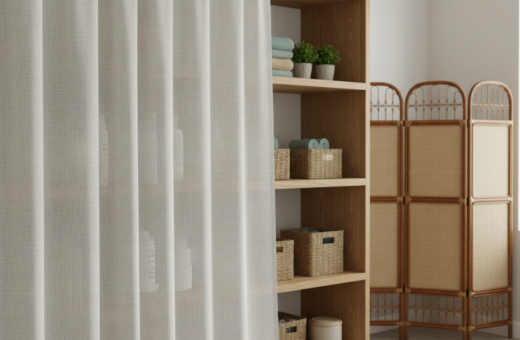
Curtains offer another simple upgrade. They conceal a washer and dryer, hide clutter, and add elegance while keeping machines accessible.
- A rug in varied blues can tie finishes together and protect the floor.
- Soft textiles reduce echo and make the room feel warmer and calmer.
- Swapable fabrics are an easy way to refresh the space without structural work.
“Textiles turn a service space into a true extension of the home.”
Bottom line: adding curtains, wall-backed fabric, and a well-chosen rug makes the laundry room more pleasant and helps chores feel less like work.
Implementing Smart Organization for Cleaning Supplies
Smart zones for supplies make daily chores faster and keep a small room calm.
Megan Gorelick recommends keeping basic items like detergent and stain remover within arm’s reach of the washer. That simple rule speeds workflow and avoids searching during busy days.
Store cleaning supplies in cabinets rather than on open shelves to reduce visual clutter. Cabinets also shield bottles from heat and steam produced by the dryer and other appliances.
Use baskets inside a cabinet to corral small essentials like pods, brushes, and stain sticks. Baskets keep items grouped and make laundry room storage easy to pull out and put back.
- Assign one cabinet or cabinet shelf for cleaning supplies and another for extras.
- Keep hazardous products away from heat sources and unreachable by children.
- Label baskets and containers so items are easy to find and refill.
“Smart organization of cleaning supplies is key to maintaining a functional and tidy laundry room.”
These simple storage solutions help a small laundry room stay orderly. A clear plan for room storage ensures chores run smoothly and clutter stays out of sight.
Designing a Dual Purpose Mudroom
A well-planned entry zone can turn a service area into a hardworking, welcoming mudroom.
Nadia Watts designed a small laundry room that doubles as a mudroom with a bench for lacing shoes. The bench also gives a handy spot for folded piles before they head upstairs.
Practical cabinetry and wall hooks add extra storage and keep clothes and cleaning supplies out of sight. A narrow cabinet beside the washer and dryer stores essentials and creates a tidy workflow.
A brick floor hides dirt well and suits high-traffic areas. Add a small countertop to convert the space into a gift-wrapping station or sewing spot when needed.
- Bench for seating and temporary folding
- Ceiling‑high cabinets for concealed storage
- Countertop and baskets to create a versatile workspace
“A dual-purpose mudroom makes the most of every square foot.”
Adding Art to Elevate the Aesthetic
Well-chosen artwork brings personality to a utilitarian room and invites people to linger.
Kristen Peña of K Interiors once installed Gucci wallpaper and centered an oversized painting to anchor a small laundry area. That bold move made the space feel curated rather than purely functional.
A vintage-inspired print of a woman hanging clothes can add charm and narrative to a wall without overwhelming the room.
Art gives homeowners a way to express personal style and finish a design thoughtfully. Even a single framed piece can provide a focal point in a tight space and elevate the overall aesthetic.
- Make it personal: choose art that reflects the homeowner’s taste.
- Scale matters: a well-placed large piece reads better than many small items on a small wall.
- Mix with pattern: pair art with wallpaper or textiles to create depth and cohesion.
“A single art piece can change how a space feels and make daily chores more enjoyable.”
For more design inspiration, see this design inspiration piece that highlights creative finishing touches for service rooms.
Selecting Durable Flooring for High Traffic Areas
A resilient floor makes daily chores feel less like maintenance and more like routine.
For a busy laundry room that doubles as a mudroom, durability is nonnegotiable. Nadia Watts chose brick flooring for that exact reason: it hides dirt and tolerates heavy traffic well.
Tile remains a top pick. Many designers recommend penny tile for a subtle vintage touch. Painted floor tiles also offer a European charm while staying tough under boots, supplies, and active feet.
Pick materials that shrug off spills, resist scratches, and clean easily. That helps keep a small laundry or multiuse space looking fresh even with constant use.
- Brick hides dirt and suits mudroom combos.
- Penny tile offers vintage character and grip.
- Painted tiles add charm while remaining durable.
- Tile is easy to maintain and resists damage from a heavy dryer or appliances.
Choosing the right floor material is a key part of successful room design. A tough surface protects the countertop, appliances, and the clothes you handle every day. With the right choice, the area stays functional and beautiful for years.
Avoiding Common Design Pitfalls
Small rooms reveal design mistakes quickly, especially when moisture and appliances are involved.
Start with materials. Janelle Blakely warns that fragile wallpaper—like silk or grasscloth—fails in damp areas where wet clothes hang. Choose washable wall coverings and water‑resistant finishes near the washer and dryer.
Think about what you store. Kimberly Harrison advises against using a small laundry room to hold holiday decorations or sports gear. Overfilling cabinets or piling items near doors makes the space feel cramped and slows work.
Safety and simple rules
Keep cleaning supplies away from heat sources and vents on appliances to reduce fire risk. Store hazardous products in a labeled cabinet with good ventilation.
Avoid crowding the room with extra décor. Too many decorative items cut into useful storage and harm the room feel. Proper planning prevents these common mistakes.
- Use moisture‑proof materials on walls and floors.
- Reserve cabinets for essentials; do not stockpile unrelated items.
- Prioritize ventilation to protect finishes and supplies.
“A simple, safety‑first approach often makes the most effective laundry room design.”
Conclusion
Thoughtful details and simple systems add up, making everyday chores faster and less stressful in a small room. A focused refresh that balances storage, color, and durable finishes creates lasting value and improves daily flow.
Plan the work in stages so the project fits the household’s schedule. Allow a sensible amount of time for decisions, ordering, and install; the results repay the effort.
With smart choices—from cabinets to a resilient floor—any laundry space can become a favorite spot in the home. Small changes keep the area organized, reduce friction during chores, and make a visible difference every day.