Kristine Renee, a designer in Sacramento, says utility areas should feel lived-in, not like cold storage. Many people in the United States spend time in a laundry room and expect more than bare function. A cramped closet or corner often lacks planning and stalls good work.
Common issues include awkward appliance placement, wasted vertical area, and poor traffic flow. These problems make a small laundry room feel inefficient and hard to use. By rethinking the way the space is organized, residents can boost efficiency and comfort.
Designers recommend smart shelves, stacked machines, and cohesive finishes to tie the utility area to the rest of the home. With a few creative ideas, even the tightest spaces can handle heavy chores while looking inviting.
Quick takeaway: poor planning is the main culprit, and deliberate design choices transform neglected spaces into productive, stylish areas.
Understanding the Challenges of a Small Apartment Laundry Room Layout
When floor area shrinks, every decision affects how easily people move and work. Designers must balance function and finish to keep the area calm and productive.
The Impact of Limited Square Footage
Limited square footage forces choices about which tasks happen where. Stacking machines reclaims floor space and creates room for counters or bins.
“Stacking appliances is one of the easiest ways to reclaim valuable floor space in narrow areas.”
High-end finishes can raise the perceived quality of a compact area. Nadia Watts recommends using tile and wallpaper to make a small space feel intentional rather than cramped.
Common Spatial Constraints
Typical constraints include tight door swings, limited storage, and poor workflow. Addressing flow is the fastest way to boost efficiency and save time.
- Stacking and vertical storage: reclaim floor area for folding or hampers.
- Built-in shelving: keeps essentials organized and visible.
- Custom solutions: tailor cabinets and counters to unique spaces.
Maximizing Vertical Space with Stacking Appliances
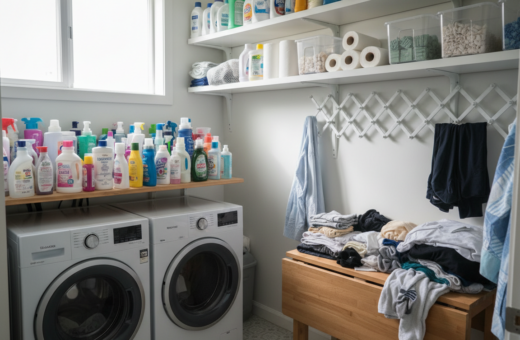
Stacking machines and tall shelving turn vertical height into usable storage and clear floor space. Emilie Munroe of Studio Munroe in San Francisco installs open shelving above the washer dryer to keep a small laundry room looking uncluttered.
Designers often place the washer and dryer in a vertical configuration as the most efficient way to free floor area. That freed area can host bins, a folding counter, or a slim cart for supplies.
Vertical storage keeps essential machines accessible while preserving a clean, modern aesthetic in the home. It also speeds tasks by locating supplies within arm’s reach.
- Stacking saves footprint and enables added storage.
- Open shelves make items visible and reduce clutter.
- Tall cabinets create hidden storage for detergents and tools.
Practical solutions focus on stable installation and service access. When done right, this approach transforms tight spaces into efficient, time-saving areas that feel larger than their actual area.
Incorporating Functional Countertops for Folding
A well-placed folding surface makes chores feel quicker and gives machines a purposeful top.
Choosing Durable Materials for Folding Stations
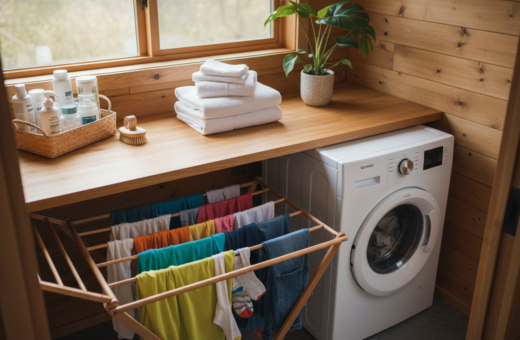
Ashley Macuga of Collected Interiors recommends butcher block to turn the top of a washer dryer into a usable folding station. Meghan Dorrian of Young America Creative adds that a sturdy wooden countertop makes a galley setup far more functional.
Durability matters. A hard-wearing surface stands up to daily use and resists dents and stains. That longevity keeps the space practical for years.
Integrating a countertop provides a dedicated area for sorting and folding. This saves time and reduces clutter by keeping clothes on one solid surface near the machines.
- Multi-purpose tops double as prep or craft space.
- Butcher block adds warmth and can be refinished.
- Built-in counters unify machines into a single work area.
For practical folding ideas, see the guide at folding ideas to explore materials and installation tips.
Creative Solutions for Drying Racks
Drying solutions can reclaim precious floor area while keeping clothes neat and accessible. A few smart choices make a practical difference in how a laundry room performs.
Wall Mounted Options
Wall-mounted drying racks work well in a small laundry room. Kathryn Murphy installed one in a blue space to keep things tidy and cohesive.
Sliding racks that tuck between the washer dryer and counters fit narrow gaps. Shannon Adamson uses those to add drying without losing usable surface.
Ceiling Mounted Alternatives
Ceiling-mounted systems lift wet garments out of the way. They free floor storage and make the area feel larger.
These options are ideal for delicate clothes that need air drying. They also avoid a permanent footprint in a busy laundry closet.
- Wall racks keep clothes off the floor and visible.
- Sliding inserts use space between machines and cabinets.
- Ceiling hoists free floor storage and speed work flow.
- Dedicated drying areas streamline laundry chores at home.
Utilizing Hidden Storage Behind Cabinetry
Camouflaged storage behind full-height doors makes appliances and products vanish from view. Amanda Reynal of Amanda Reynal Interiors uses hidden compartments to keep a small laundry room tidy and calm.
Hannah Fulton of J. Banks Design fits ceiling-height cabinets to hide detergent bottles and baskets. Ceiling cabinets maximize vertical space and keep supplies out of sight.
Designers often suggest doors that conceal the washer dryer to reduce visual noise. A custom laundry closet with fitted cabinetry allows machines and baskets to tuck away. This approach makes the area read as part of the home rather than a utility corner.
- Concealment: cabinets with doors hide cleaning products and drying aids.
- Reachability: keep essentials within arm’s reach but unseen.
- Seamless look: matching cabinet fronts unify the space with nearby rooms.
Designing a Dual Purpose Mudroom and Laundry Area
A dual-purpose mudroom and laundry area turns an entry into a hardworking zone that welcomes guests while containing mess. This approach helps the home stay tidy and speeds daily routines.
Durable finishes matter. Nadia Watts uses brick flooring to hide dirt and resist wear in a combined mudroom and small laundry room. Brick stands up to wet shoes and heavy foot traffic.
Heidi Woodman recommends a standalone bench to add vintage style and provide a spot for shoes. The bench doubles as storage and a landing for bags.
Smart separation keeps clean clothes away from dirty gear. A built-in countertop gives a folding surface near machines, while hooks and cubbies corral coats and boots.
- Integrate a laundry closet to conceal the washer dryer and keep the entry welcoming.
- Pick moisture-proof materials that endure high traffic and damp conditions.
- Use benches and hanging storage to free floor space and speed drying tasks.
Selecting the Right Flooring for High Traffic Utility Spaces
Durable flooring anchors a busy utility area and sets the tone for function and style. Choosing materials that resist moisture and wear keeps the space tidy and practical for daily chores.
Benefits of Brick and Tile
Designers often point to brick and tile for hard-working zones. Nicole Yee of NY Interiors recommends penny tile for a vintage touch in a small laundry room. That option adds character while standing up to heavy use.
Brick and larger tile both offer superior durability and hide dirt well. They handle the weight of a washer dryer and other appliances without quick wear.
“Penny tile brings warmth and a timeless look while remaining easy to maintain.”
- Durable finish that resists scratches and stains
- Simple cleaning for mudroom traffic and wet shoes
- Supports heavy appliances and frequent foot traffic
Practical tip: pick grout and sealers that match the home’s care routine to extend longevity. The right floor makes a laundry area feel welcoming and reliable for years to come.
Enhancing Aesthetics with Bold Wallpaper and Color
A bold pattern or a bright trim can instantly change how a compact service area feels. Designers use high-impact surfaces to turn utilitarian corners into places people notice and enjoy.
Pattern and texture ideas:
- Gray Walker installed floor-to-ceiling Pierre Frey wallpaper to create drama in a small laundry room.
- David Frazier backed a wall with pleated fabric for a jewel-box effect that feels luxe next to the washer dryer.
- Megan Molten favors playful pineapple-print wallpaper to make the space whimsical and inviting.
- Emily June Spanos pairs patterned paper with neon green trim for a colorful oasis that brightens the floor and storage areas.
Practical tip: pick moisture-resistant wallpaper or protected panels where drying and humidity are highest. That ensures the decor lasts and the wall stays sound.
Installing Unique Lighting Fixtures
A signature fixture can turn a utilitarian corner into a curated focal point. Designers use light to lift mood and add personality to a small laundry room without heavy renovation.
Practical benefits: proper lighting makes sorting and folding faster and more accurate. It improves visibility around the washer dryer and near storage and drying areas.
Notable examples:
- Kristen Peña paired Gucci wallpaper with an oversized art piece and a statement lamp to create visual interest.
- Rachel Cannon hung a beaded chandelier as a whimsical showstopper that doubles as task light.
- Sara Hillery chose an artful pendant to echo geometric floor patterns and soften the space.
- Denise Morrison installed three wall-mounted sconces to brighten a moody modern room for chores.
“Lighting is both functional and decorative; the right fixture makes a service area feel like part of the home.”
Design tips: layer overhead and wall fixtures, select damp-rated finishes near the washer, and aim for warm, even light across the floor and work surfaces. Thoughtful fixtures elevate decor and improve everyday use.
Camouflaging Appliances to Reduce Visual Noise
A clean facade can turn noisy mechanics into a quiet, integrated part of the home. Designers use cabinetry and color to hide function and highlight finish.
Practical tactics:
- Lisa Laliberte-Alle recommends tucking the washer dryer behind full-height doors to keep the space calm and orderly.
- Craig O’Connell suggests a bold paint treatment on the wall to draw focus away from exposed machines and create a focal point.
- Install a tuck-away drying rack that folds into a cabinet to preserve usable floor and storage surfaces.
Reducing visual noise matters when the area is visible from living zones. Camouflage helps the laundry area feel cohesive and intentional.
“By combining tailored cabinetry and selective color, homeowners make service zones read like curated parts of the home.”
Design takeaway: pair concealed storage with a painted backdrop and retractable racks. This mix hides the washer and dryer, clears the floor, and keeps the room serene.
Implementing Smart Cabinetry Hacks
Standalone storage pieces transform tight service areas into organized, efficient work zones.
Rob Stuart of Rob Stuart Interiors in New York recommends placing standalone cabinets on top of the washer dryer as a renter-friendly hack.
These cabinets add usable shelving without drilling into walls or costly carpentry. They keep supplies and baskets within reach and make the laundry closet feel intentional.
Practical advantage: mounted-free cabinets clear the floor for hampers, carts, or walking space. That open floor improves flow and speeds chores.
“Stand-alone cabinets give renters flexibility and immediate storage gains,”
Choose cabinetry that matches kitchen finishes for cohesion. Durable doors hide clutter and protect detergents from dust. Properly sized cabinets also allow service access to machines when needed.
- Place cabinets directly above the washer and dryer to use vertical space.
- Use deep shelves for baskets and narrow pull-out organizers for supplies.
- Pick modular units that can be moved when needs change.
Adding Texture with Specialized Cabinet Fronts
Introducing tactile materials on cabinet doors gives cabinetry a bespoke, kitchen-like presence even in tight spaces. Kriste Michelini of Kriste Michelini Interiors in Danville used mesh-front cabinets to add English-inspired detail and warmth.
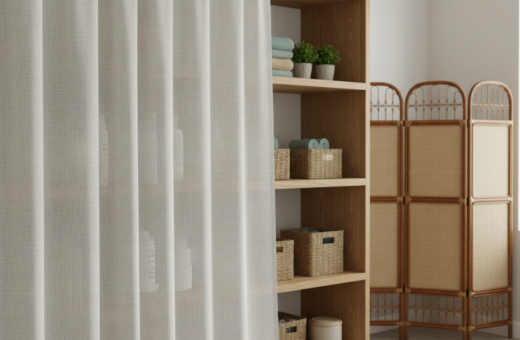
Mesh or woven fronts provide subtle ventilation for stored supplies and help reduce musty smells near the washer and dryer. They also break up flat planes and add depth without heavy renovation.
Small changes to cabinet faces make a big visual difference. Adding baskets and mixed materials brings contrast and function. Designers find the cabinetry often becomes the focal feature, so thoughtful fronts pay off.
- Mesh doors add ventilation and visual texture.
- Reclaimed wood or perforated metal breaks monotony of flat cabinetry.
- Baskets and open shelves balance hidden storage with easy access to everyday items.
Creating a Dedicated Workstation
A thoughtfully placed desk and countertop turn chores into multitasking moments that add real value. Designers now treat service zones as flexible areas where work and housework coexist.
Megan Evans built a skirted desk that doubles as a workstation and conceals storage baskets for detergents and hampers. The hidden storage keeps supplies close while preserving a tidy look.
Amanda Leigh borrowed cues from the kitchen, installing dark cabinets and marble countertops to create an elegant, functional corner. The effect reads like a built-in office that sits comfortably next to the washer and dryer.
Practical benefits: a dedicated desk lets residents answer email, sort bills, or craft while machines run. Adding cabinets and a generous countertop gives room for folding and for stashing cleaning supplies.
- Dual use: desk plus storage supports daily chores and focused work.
- Integrated finish: kitchen-style cabinets make the space feel cohesive.
- Work surface: durable countertops handle folding and paperwork.
“A well-planned workstation changes how a home uses its utility area, turning downtime into productive, pleasant moments.”
Incorporating Rolling Hampers for Organization
Rolling hampers on casters transform chaotic piles into mobile, organized loads. Shelby Van Daley of Daley Home in Cedar Park, Texas, fits wheeled baskets beneath the countertop to make sorting easier for a busy family.
Placing baskets under a dedicated cabinet or open counter creates instant storage and keeps dirty clothes off the floor. Homeowners can wheel a full hamper straight to the washer, cutting steps and spills.
Designers often pair these mobile bins with a nearby drying rack and a clear folding zone. That combination keeps the work area tidy and makes chores move faster.
- Use a cabinet opening or open bay sized for rolling hampers.
- Pick durable, ventilated baskets for damp items and easy transport.
- Keep a slim rack or wall hooks close for quick air-dry items.
Practical tip: select hampers that fit under the countertop and slide out smoothly. Rolling baskets free floor space and boost efficiency, especially where every piece must serve a clear purpose.
Avoiding Common Design Mistakes
Crowding a service area with decor or gear undermines function more than it adds charm. Designers advise removing nonessential items so tasks flow quickly and without frustration.
Keep the essentials visible and accessible. Clear shelving, designated hooks for coats or sports gear, and a durable countertop make chores faster and reduce spills.
Many people let holiday decorations or sports equipment accumulate. That creates bottlenecks, especially where a mudroom meets active circulation paths. Thoughtful placement of storage stops congestion during peak use.
Minimalism here is practical, not austere. A focused approach to laundry room design favors hard-wearing finishes, simple storage modules, and unobstructed pass-throughs that improve daily use.
- Prioritize an efficient work triangle and generous counter space.
- Avoid mixing seasonal clutter with everyday supplies.
- Plan flow between the mudroom and service zones to prevent traffic jams.
For common pitfalls and quick fixes, see this guide on laundry room design mistakes.
Conclusion
Smart choices in storage and finishes help transform an overlooked service area into an efficient, inviting space. Thoughtful solutions make daily chores faster and less stressful.
By prioritizing vertical storage, sturdy materials, and tailored cabinetry, homeowners address common problems and maximize workflow. These approaches support better function while adding style that fits the home.
With proper planning, well-executed laundry room design gives real returns: faster routines, less clutter, and a space people can enjoy. Apply the tips here to improve laundry rooms and overall room design without a full remodel.