Em, a content creator at Microfiber Wholesale, breaks down practical methods that help professionals and homeowners make a better laundry space. They stress simple, repeatable steps that keep the area useful and attractive each day.
Smart design ideas turn a chaotic spot into a pleasant view. Vertical storage, labeled containers, and attention to small details let people hide supplies while keeping them easy to reach. This approach makes the workflow more efficient and reduces stress.
With thoughtful design and a few well-chosen ideas, anyone can reclaim the space and create a more inviting part of the home. Professionals note that focusing on function and look together makes upkeep feel simple rather than overwhelming.
The Importance of a Clean Laundry Room Setup
An orderly washing space speeds tasks and cuts the risk of costly wear on your machines. A short, intentional layout helps people move from sorting to washing and then drying with fewer steps.
Improving workflow efficiency
Clear zones and visible supplies let users grab detergent, sort items, and load the washer faster. This saves time and reduces wasted motion during chores. Designating a spot for pre-treatments and one for folded clothes keeps the process steady.
Ensuring household safety
Good ventilation and empty floors prevent mold and mildew that harm fabrics and appliances. Storing hazardous bottles up high or in locked cabinets keeps children and pets safe. A tidy space also lowers trip-and-fall risks, matching the safety standards of other rooms like the bathroom.
- Faster washing cycles when tools are within reach.
- Reduced appliance wear with proper ventilation.
- Safer home for the whole family when supplies are secured.
Preparing Your Space for a Deep Clean
Start by emptying every shelf and basket so the space becomes a true blank slate. Removing items makes it easy to sort essentials from extras and helps them evaluate what to keep or donate.
They should pull detergents, baskets, and miscellaneous items out of cabinets and onto a table. This step reveals dust and debris that hide behind appliances and along the baseboard.
Sort supplies into keep, toss, and donate piles. Dispose of expired bottles and consolidate half-used products into one container to free up storage.
Clearing the floor and counters lets them inspect the floor under machines and identify needed repairs or ventilation issues. It also makes future cleaning and sanitizing more effective.
Once empty, the space can be reimagined. Visualizing a new design helps place storage where it supports workflow and keeps frequently used items within reach.
- Remove everything to expose every corner.
- Sort items and discard expired products.
- Evaluate storage and clear the floor for better access.
Essential Cleaning Techniques for Surfaces
Reaching tight corners and high ledges is easier with the right microfiber duster and a telescoping handle. Using the Microfiber Fluffy Duster or the Chenille Microfiber High Duster on a standard threaded telescoping pole lets users clear vents and top shelves without climbing.
- Start with a dry microfiber cloth to wipe countertops and any flat surfaces; this removes fine dust and lint.
- Attach a high duster to reach behind cabinets, vents, and the top of the wall behind machines.
- Use a microfiber mini flat mop for narrow gaps and the floor under appliances.
They should also spray a diluted solution from a bottle for stubborn spots. Wiping behind and under appliances prevents debris buildup that harms air quality.
Attention to small details and the right tools keeps the space orderly. Proper microfiber use extends the life of appliances and makes the area more inviting for daily tasks.
Maintaining Your Washing Machine and Dryer
Routine care protects appliances and keeps the space efficient. A short, regular plan prevents odors, mold, and performance loss.
Preventing mold starts with timing. Mold can begin in 12–24 hours if wet clothes sit in the drum. Always remove items promptly and leave the door or glass lid open after cycles to let the interior air out.
Preventing Mold in Washing Machines
Run an empty hot-water cycle with one cup of white vinegar monthly to remove buildup and odors. Wipe the door gasket and detergent dispenser with a microfiber cloth. If dispensers don’t come out, spray an all-purpose solution and dry thoroughly.
Cleaning Dryer Vents and Lint Traps
Vent and trap care is a safety must. Clean the lint trap after every load and inspect vents seasonally. Pull the washer and dryer from the wall to vacuum the floor and clear lint that accumulates behind machines.
- Follow manufacturer instructions for gasket and internal care.
- Schedule regular maintenance to save time and avoid repairs.
- Keep the appliance area well-ventilated to protect clothes and the machine.
Floor Care and Dust Removal
Keeping the floor free of lint and dust protects appliances and improves air quality in the space.
Start with a thorough vacuuming to pull dust, dirt, and lint from corners and behind machines. This step prevents buildup that shortens appliance life and lowers indoor air quality.
Use a high-quality microfiber mini flat mop to reach tight gaps. Microfiber lifts particles without scratching surfaces and works well on tile, vinyl, or sealed wood.
Some all-purpose cleaners, like Sal Suds, can be diluted for floors. Spray the solution directly onto the floor instead of using a bucket to speed drying time by up to three times.
- Vacuum edges and behind washers regularly.
- Mop with a microfiber tool for deeper pickup.
- Spray-and-wipe methods reduce drying time and streaks.
Paying attention to the small details of floor care keeps the laundry room pleasant and functional. A clean floor makes the task of doing laundry feel less daunting and helps the whole room look well maintained.
Establishing Functional Laundry Zones
Organizing the space into specific stations speeds chores and keeps items within reach. A clear plan helps the household move from sorting to washing to drying without wasted steps.
Sorting Dirty Laundry
Designate a sorting area with labeled bins or hampers for whites, darks, colors, and linens. This keeps the laundry room tidy and reduces sorting time before washing.
They should place laundry baskets near the washer to speed transfers and protect the floor from spills.
Creating an Ironing Station
Install a wall-mounted ironing board and a slim storage pocket for sprays and starch. Hooks on the wall hold the board and iron, saving storage space.
Setting Up a Folding Area
Reserve a flat surface or small table for folding so clean clothes don’t pile up. If space is limited, a dining table or sofa works as a temporary folding spot.
- Designated zones make washing and drying more systematic.
- Use labeled bins to streamline the process and save time.
- Wall hooks and vertical storage free floor space and organize items.
Maximizing Vertical Storage Solutions
Tall shelving and mounted cabinets turn awkward wall space above the washer and dryer into a usable storage zone.
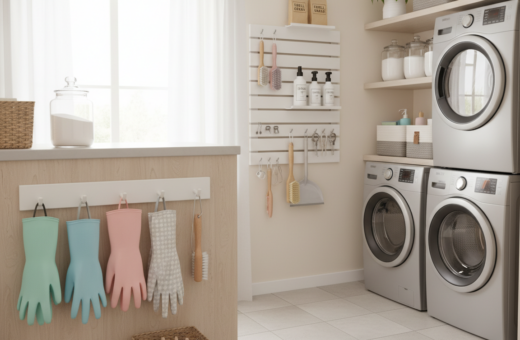
Install shelves above the washer dryer to hold detergents, fabric softeners, and baskets of frequently used supplies. This keeps the floor clear and makes items easy to reach.
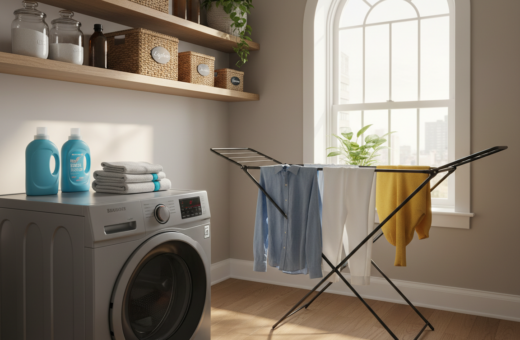
Consider cabinets with a hanging rail to tuck away hangers and seasonal items. A foldable, wall-mounted rack offers a compact option for air drying when needed.
Hooks and slim rails add quick access for brushes, small tools, or spray bottles. They keep tools visible but out of the way and reduce clutter on counters.
- Use vertical storage to free floor space and improve safety.
- Mix open shelves and closed cabinets for tidy display and hidden storage.
- Add a fold-down rack for instant drying without losing usable space.
Smart vertical choices create a more efficient laundry room that saves time and simplifies daily tasks.
Utilizing Containers and Bins for Organization
Small, uniform containers instantly turn a cluttered shelf into an orderly storage display. This approach makes the entire space easier to use and keeps essentials visible without chaos.
Labeling jars for pods, detergent, and dryer sheets removes guesswork. Labeled jars also create a neat, cohesive look on open shelving and inside cabinets.
Decorative baskets on shelves keep frequently used items at hand while hiding less attractive bottles. A tiny bin for single socks prevents lost matches from scattering across the floor.
- Use matching containers to group similar items and reduce visual clutter.
- Place laundry baskets or a small bin near the washer to speed transfers and collect stray socks.
- Keep clear labels so every family member can find and return supplies fast.
Consistent containers across the laundry room make the space feel intentional and calm. When storage and bins are chosen for both form and function, maintaining order becomes a simple habit.
Enhancing Lighting and Ventilation
Good lighting and steady airflow change a cramped utility area into a safer, more efficient workspace.
Bright, energy-efficient lighting makes it easier to spot stains and sort fabrics. If permanent fixtures are not an option, rechargeable motion-sensor lights or wall-mounted sconces bring instant, flexible light to the space.
Proper ventilation prevents mildew and protects appliances after a wet cycle. When an exhaust fan is not available, a slim column fan circulates air and helps dry moisture that builds up after a dryer run.
“A well-lit, well-ventilated area feels more inviting and reduces the risk of moisture-related issues.”
- Use a dehumidifier after heavy loads to remove excess humidity from the air.
- Install energy-saving bulbs to keep the floor and counters bright without high costs.
- Prioritize air circulation—an exhaust fan or column fan keeps the space healthy for family use.
Result: By focusing on lighting and airflow, the laundry area becomes a practical, pleasant place that supports daily home maintenance.
Personalizing Your Laundry Space
Choosing the right palette and accents helps transform a utilitarian space into a calm, functional retreat. Small choices change mood and make tasks feel easier. They should treat this area as part of the home and not an afterthought.
Choosing Relaxing Color Schemes
Light, neutral color choices expand the visual area and keep the space feeling bright. Soft grays, muted blues, or warm off-whites reduce visual stress.
Use one or two accent colors for cabinets or trim to add personality without overwhelming the view.
Adding Decorative Elements
Plants, framed artwork, and a simple rug help the laundry room feel welcoming. Waterproof wallpaper or textured wood paneling adds interest and stays practical.
- Personal details boost motivation and make chores less tedious.
- Choose durable accents that resist moisture and keep maintenance low.
- Mix form and function to align design with everyday use.
“Treat this space with the same care as other rooms to enjoy better daily routines.”
Selecting Natural Cleaning Products
Choosing non-toxic supplies turns an ordinary utility space into a healthier part of the home.
Opt for wool dryer balls like Cleancult to reduce static and skip single-use sheets. They last for hundreds of cycles and lower waste.
The Laundress offers concentrated, non-toxic detergents and stain treatments that are gentle on fabric and skin. These products help keep the laundry area safer for children and pets.
Why switch?
- Natural products reduce exposure to synthetic fragrances and harsh chemicals.
- Wool dryer balls replace dryer sheets and perform well for up to 1,000 loads.
- Plant-based cleaners often biodegrade faster and are kinder to the planet.
For practical tips and product ideas, see this short guide on favorite non-toxic options: non-toxic laundry products.
Benefits of Air Drying Clothes
Drying clothes naturally extends garment life and reduces static without chemical sheets.
Air drying cuts energy use and protects fabrics. It reduces wear from high heat and avoids additives from dryer sheets. That means fewer repairs and fresher garments over time.
Installing a wall mounted drying rack is a smart design choice for small spaces. A rack mounts to the wall above the washer dryer or a folding table. This keeps the floor clear and adds usable storage for hanging delicates.
- Extends the life of garments and lowers energy bills for the laundry room.
- Wall racks free floor space and make drying efficient without clutter.
- Air drying reduces static and avoids chemical additives found in dryer sheets.
- Portable racks fit tight spaces and let homeowners dry clothes indoors or on a porch.
- Outdoor drying uses sun and fresh air to naturally refresh fabrics.
Adding air drying to a weekly washing plan saves money and keeps the room more sustainable. Small changes in design and storage produce long-term benefits for clothing and the home.
Eco-Friendly Laundry Practices
Swapping one habit — washing on cool — can lower a home’s energy use dramatically. Heating water accounts for roughly 90% of a washing machine’s energy in many cycles, so cooler temperatures save power and protect fabrics.
Simple choices add up. Choose phosphate-free detergents to reduce chemical runoff into waterways. Sort items so most loads can run on cool without dye transfer. That protects clothes and reduces hot-water demand.
Reduce dryer reliance by air drying when possible and using high-efficiency cycles when heat is needed. Front-loading machines often save water and work well in tight spaces, further cutting utility bills.
- Wash on cool to save energy and preserve fibers.
- Pick phosphate-free detergents to protect local streams.
- Air dry or use efficient dryer settings to lower emissions.
“Small changes in daily habits yield measurable benefits for the home and the planet.”
Regular Maintenance Routines
Devoting ten minutes each week to basic tasks keeps the area reliable and prevents small issues from growing.
Weekly habits include wiping down surfaces, emptying the lint trap, and sweeping the floor. These quick steps keep a laundry room tidy and cut the time needed for deeper work later.
Monthly, they should run a maintenance cycle for the washer and inspect dryer vents. A focused monthly routine prevents buildup and keeps clothes smelling fresh.
Seasonally, review storage and declutter supplies. Removing unused items simplifies the design and frees space for essentials the family actually uses.
- Establish a short weekly checklist to save time and effort.
- Perform a deeper monthly service for appliances.
- Declutter storage each season to stay organized.
Attention to details — stocked supplies, clear zones, and prompt spot care — turns the room into a functional part of the home. Consistent maintenance protects appliances and keeps the space working for every laundry day.
Design Trends for Modern Laundry Rooms
Today’s laundry designs favor bold color and clever storage to turn a functional space into a destination.
Designer Kristine Renee notes that spaces are moving away from a sterile look and toward versatile, multiuse areas.
Suzanne Shumaker calls this shift a move to “destinations” — places that can double as a mudroom or a pet-washing station. Adding a beverage fridge or a built-in bench helps the area feel intentional and lived-in.
Practical ideas designers recommend:
- Stack the washer and dryer to free floor space for cabinets or a folding table, per Janelle Blakely.
- Use unique floor tiles or fun wallpaper for instant personality and an elevated look.
- Install decorative lighting, like sconces or a pendant, to add mood and task light.
Pay attention to details — hardware, a custom drying rack, or glass cabinet doors — to make the space both beautiful and highly functional.
“A well-designed laundry area should feel like a thoughtful part of the home, not an afterthought.”
Conclusion
Investing a few hours to reorganize and maintain the area pays back with saved time and less frustration,
Simple changes — defined zones for sorting, washing, drying, and folding — make tasks flow. Consistent upkeep preserves appliances and keeps supplies handy.
Use smart storage, clear labels, and a brief weekly checklist to stop clutter before it starts. Personal touches and eco-friendly choices make chores more pleasant and sustainable.
Result: A well-ordered space reduces stress, cuts wasted time, and supports the whole household. Small, steady efforts deliver big convenience every day.