Designers show how modest updates can turn tight corners into useful, attractive areas. In many urban apartments, a dedicated utility niche can feel cramped, but smart layout choices improve function without a full overhaul.
By prioritizing storage and flow, they create a tidy laundry corner that fits modern living. Simple shelving from IKEA, stackable appliances, and a clear plan often do the trick.
These interventions free up valuable floor space while keeping chores efficient. Homeowners see that minimal changes boost both form and function.
In 2024, the trend favors practical styling: clean lines, hidden bins, and multiuse fixtures. Professionals recommend balancing storage with an uncluttered aesthetic to make the most of any apartment room.
Transforming Apartment Corners into Functional Utility Spaces
Converting an awkward niche into a functioning laundry space starts with a clear plan for how the area will be used each day. A concise vision defines appliance placement, storage, and the work flow needed for efficient chores.
Color and finish matter: designers such as Maggie Glendenning argue that bold, consistent color treatment can make the laundry room feel more inviting.
“Color-drenching a small room can make the laundry process feel significantly more enjoyable.”
When laying out the utility area, prioritize circulation so tasks move logically from washer to folding surface to storage. This keeps chores faster and less disruptive to adjacent rooms.
Many modern apartments have awkward spaces that a smart design team can convert into useful laundry zones. Creating a cohesive look across nearby rooms helps the new area blend in and feel like a natural part of the home.
Small Utility Room Ideas for Maximum Efficiency
Smart placement of appliances and counters transforms limited areas into high-functioning service spaces. This section focuses on compact fixes that boost daily workflow without major refits.
Stackable Washer Dryer Combos
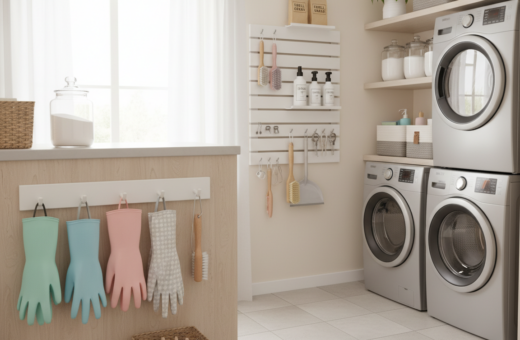
Stacking a washer and dryer saves floor area and frees room for a folding shelf or bins. Modern washer dryer models often include quick cycles and energy-saving modes that suit apartment life.
Place the stack in a corner near plumbing to cut installation costs. Keep a slim pull-out shelf for detergent and other items.
Creating a Work Triangle
Design a simple triangle between the washing machine, sink, and dryer to speed chores. When these three points sit close, moving heavy laundry loads becomes easier and safer.
- Group washer and dryer to form a dedicated laundry zone that limits clutter in adjacent spaces.
- Locate a small sink within reach for spot treatment and hand washing clothes.
- Allow clear walk space so carrying baskets is quick and unobstructed.
Color Drenching for Visual Depth
When walls, millwork, and ceiling share one vivid tone, the laundry room reads as intentional and polished. Zoë Feldman of Zoë Feldman Design in Washington, DC, used a citrine hue to wrap every surface and create depth.
Color drenching makes the space feel cohesive and confident. A single bold paint ties appliances, storage, and trim into a unified view.
Designers say this approach works especially well in compact rooms because it removes visual stops and starts. Painting the ceiling the same color blurs boundaries and makes the laundry area feel more immersive.
- One continuous color gives modest spaces strong presence without construction.
- It turns laundry into a clear styling statement that complements nearby rooms.
- Color drenching is an affordable way to lift the look of tight spaces quickly.
“Color-drenching a small area can make the laundry process feel significantly more enjoyable.”
Creative Cabinetry and Storage Hacks
Clever cabinetry updates can stretch storage and turn awkward corners into calm, efficient spaces.
Spray Painting Existing Cabinets
Claire Staszak of Centered by Design recommends spray painting standard white cabinets for a high-end, custom feel. She also had drying racks sprayed a coordinating blue to make the fixtures feel intentional.
Mesh Front Cabinetry
Kriste Michelini favors mesh-front cabinets to add texture and an English-inspired touch. Mesh keeps the area breathable while hiding clutter.
Modular Shelving Units
Rob Stuart suggests renter-friendly hacks, like placing a standalone cabinet on top of the washer and dryer. Modular shelving units can be moved as needs change.
- Spray paint updates save money and look bespoke.
- Mesh fronts add pattern and venting without heavy carpentry.
- Modular pieces adapt to odd layouts and maximize vertical storage.
Utilizing Vertical Space with Wall-Mounted Solutions
High-mounted cabinets and hanging rods unlock unused height and streamline how laundry moves through the space.
Marea Clark of Marea Clark Interiors in San Francisco installed upper cabinets and a hanging rod above the washing machine to free the floor for baskets and a slim cart. Alexandra Kaehler of Alexandra Kaehler Design in Winnetka repeated the trick, adding a rod above the washer and dryer to put wasted vertical area to work.
Wall-mounted shelves and rods keep surfaces clear and make the ceiling feel higher. Choose a sturdy rack or a floating shelf to hold detergents and baskets without crowding the workflow.
- Rejuvenation Undermount Laundry Rod — $219: keeps clothes off the floor and aligns with folding work zones.
- West Elm Volume Floating Shelf — $149: adds polished storage on the wall for frequent-use items.
- Closet Maid Laminate Shelf Kit — $42: a budget-friendly way to raise storage quickly.
These practical solutions improve storage and sightlines in the room. They help the laundry area feel organized, efficient, and intentional without major renovation.
Concealing Appliances with Stylish Doors
Turning exposed laundry gear into a tidy visual feature keeps the adjacent living area calm and cohesive. Designers use simple closures to hide machines while preserving access and airflow.
Using Curtains as Soft Closures
Fabric is one of the quickest ways to tuck a washer and dryer out of sight. Laura Keeler Pierce of Keeler & Co. in Boston opts for chic curtains to give a charm-filled vestibule a soft finish.
For a more built-in look, Lisa Laliberte-Alle hides the washer and dryer behind closed cabinet doors. Craig O’Connell sometimes paints stacked appliances to camo them into the walls. Shannon Adamson adds sliding racks in the side gap between the washer dryer and countertop to improve access.
- Quince Cotton Slub Room Darkening Curtain — $60 for a textile closure that blocks sight and light.
- Rejuvenation Stanton Adjustable Drapery Rod Set — $169 for a durable hanging solution.
- Custom cabinets or painted panels provide long-term storage and reduce visual noise in the home.
Selecting Durable Countertop Materials
Durable countertops turn a busy laundry station into a dependable work surface that lasts for years. Ashley Macuga of Collected Interiors tops a washer and dryer with a wooden butcher block to create an instant folding station.
Meghan Dorrian of Young America Creative chose an expansive wooden countertop in a galley laundry room to maximize folding and sorting. These wooden surfaces feel warm and wear well when sealed properly.
Material choices matter: hardwood, butcher block, and engineered stone all stand up to frequent use. For a high-traffic corner, pick a finish that resists water, stains, and dents.
- Hardwood butcher block: friendly to folding and can be sanded and resealed.
- Engineered stone: resists stains and lasts with little upkeep.
- Laminate with reinforced edge: budget-friendly and easy to clean.
A well-designed countertop gives the room a professional feel and creates clear space for sorting. Choose durable materials and proper sealing so the laundry area remains functional for years.
Optimizing the Utility Sink Area
A deep, durable sink becomes the anchor of an efficient laundry workflow, handling everything from hand-washables to muddy gear. Placing a strong basin near the washer improves how the laundry room functions and reduces steps during chores.
The Caple Chepstow Belfast Sink is a favored choice for this purpose. Its large single-compartment unit fits bulky items and offers generous drain space. Designers note that a sturdy sink helps pre-treat stains before transferring garments to the washing machine.
- Versatile use: clean pans, tools, and sports gear without crowding the kitchen.
- Work triangle: position sink, washer, and folding surface close together for an efficient workflow.
- Durable unit: pick materials that resist knocks, stains, and heavy use to protect the area long-term.
Thoughtful placement of the sink expands the functional space in a compact room. A well-chosen basin upgrades the whole laundry room and makes daily washing tasks faster and neater.
Incorporating Multiuse Furniture
Multiuse furniture can turn a transitional corner into a purposeful, attractive hub. Designers favor pieces that combine seating, storage, and a work surface so the space serves more than one function.
Dual Purpose Mudroom Benches
Benches provide a handy spot to sit, lace shoes, and set down folded clothes. Nadia Watts of Nadia Watts Interior Design in Denver uses a bench that doubles as a staging place for laundry and daily drop-offs.
Heidi Woodman of Heidi Woodman Interiors picks a freestanding wooden bench to add vintage character while offering hidden storage below. For shoppers, the Pottery Barn Scarlett Entryway Storage Bench ($799) and the Article Rolph Storage Bench ($449) are reliable picks for extra storage and style.
Skirted Desk Workstations
Skirted desks conceal baskets, a hard drive, and cleaning supplies while giving a discreet home office or folding spot. Megan Evans of Megan Evans Interiors uses a skirted desk to hide storage baskets and a computer hard drive so the laundry area reads tidy and lived-in.
Multiuse pieces free floor space and make the laundry room easier to organize. When furniture serves several uses, apartment layouts gain flexibility and homeowners get more usable spaces without major change.
- Choose benches with built-in storage to hold detergents and cloths.
- Use a skirted desk to mask baskets and create a compact work spot.
- Prioritize durable finishes that stand up to wet clothes and frequent use.
Adding Personality with Bold Wallpaper
Wallpaper that runs floor-to-ceiling turns a service zone into a styled vignette. Designers use pattern and color to make the laundry room feel like a deliberate part of the home, not an afterthought.
Gray Walker of Gray Walker Interiors in Charlotte installed Pierre Frey from floor to ceiling to pack personality into the room. The continuous pattern frames appliances and storage so the space reads as intentional.
David Frazier of New York achieved a jewel-box effect by backing pleated Scrolling Acanthus fabric to the wall, giving the laundry room a luxe, paper-like depth.
Emily June Spanos paired patterned wallpaper with neon green trim to turn a compact room into a colorful oasis. Her approach shows how bold finishes can change how people feel about routine chores.
- Gray Walker favors floor-to-ceiling pattern for vivid personality.
- David Frazier used pleated fabric backing for an elegant, textured wall.
- Emily June Spanos pairs wallpaper with neon trim to energize the space.
- The $345 House of Hackney Hollyhocks Spring Wallpaper is a ready-made way to add character to your walls.
“Bold wallpaper choices allow you to express your personal style in a utility space, making the area feel like a deliberate part of the home.”
Enhancing Lighting for Better Visibility
Good lighting transforms a functional area into a welcoming, efficient workspace.
Rachel Cannon of Rachel Cannon Limited in Baton Rouge swapped builder-grade fixtures for a beaded chandelier to add whimsy to the laundry room. The fixture lifts mood and gives the space personality while keeping tasks visible.
Denise Morrison of Morrison Interiors in Costa Mesa relied on three wall-mounted sconces to keep the room bright for sorting and stain work. Layered light removes shadows and speeds routine chores.
- Statement fixture: The Established & Sons Filigrana S2 Pendant — $445 — makes a strong visual impact.
- Elegant option: The Lulu and Georgia Kalani Pendant Light — $598 — pairs form with function.
- Layer light: Combine a pendant with task sconces for even coverage.
- Practical payoff: Proper lighting improves how you sort clothes and reach supplies in this space.
- Design boost: A showstopping light can make the room feel like a curated part of the home.
Installing Flexible Drying Racks
Ceiling-mounted rails and fold-flat racks free floor space and make drying garments nearly invisible when not in use.
Ceiling Mounted Drying Rails
Ceiling rails lift wet items up and out of the way so the laundry room stays neat. They let air circulate around clothes and reduce reliance on the dryer for every load.
Kathryn Murphy of Kathryn Murphy Interiors in Oak Park, IL, installed wall-mounted drying racks in a rich blue room to save floor space while keeping the palette cohesive. Fold-flat racks and retractable rails work well near a washer dryer stack or beside a washing machine.
- Pottery Barn Aubrey Folding Drying Rack — $249: a stylish folding option for indoor drying.
- Ballard Designs Beadboard Drying Rack — $299: classic details with a compact footprint.
- Lion Wooden Store Rack — $132 and Novecrafto Natural Wood Wall Mounted Drying Rack — £99.95: warm wood options that blend with cabinetry.
Flexible racks that fold flat or mount to the ceiling keep the space organized when not in use. Using ceiling mounted drying rails is an efficient way to air clothes without sacrificing circulation or style.
Using Decorative Flooring to Define the Area
Decorative floors can carve out a distinct laundry area without adding walls or heavy fixtures.
Liz Goldberg of CAROLYNLEONA in Raleigh, NC, used painted tiles to bring a hint of European charm to her laundry room. The painted floor reads like a rug and gives the space personality.
Nicole Yee of NY Interiors in San Francisco chose penny tile for a vintage, neutral approach. The penny tile grounds the room and makes cleaning easy.
Sara Hillery of Sara Hillery Interior Design in Richmond, VA, layered whimsical geometric patterns on the floor to add visual interest. The pattern helps the laundry feel intentional and styled.
Decorative flooring is a simple way to separate the laundry area visually from the rest of your home. Choose durable materials—glazed tile, porcelain, or sealed painted wood—so the floor stands up to daily washing and spills.
- Painted tiles add charm and pattern.
- Penny tile offers vintage texture and durability.
- Geometric floors create focal interest while defining function.
Organizing Supplies with Hidden Storage
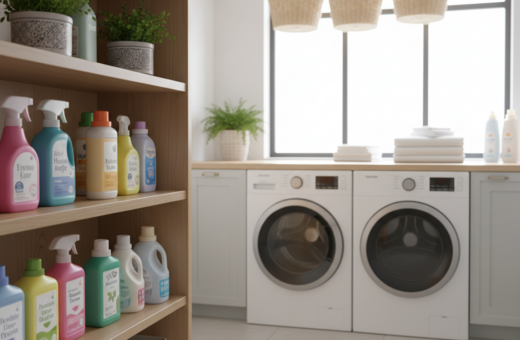
Custom millwork and discreet cabinets make a big difference in how a laundry room functions. Olivia Wahler of Hearth Homes Interiors used tailored paneling to make storage feel built-in and intentional.
Hidden cabinets that run to the ceiling keep detergents and ironing tools out of sight while keeping them handy. Amanda Reynal extended cabinet fronts to the top to hide less-used supplies and appliances.
Practical baskets corral loose items like dryer balls and pods. Emilie Munroe favors woven baskets to group essentials so the counters stay clear.
Shelving with a spot for rolling hampers makes sorting simple. Shelby Van Daley designs a place under the countertop to slide a hamper away when not in use.
- Built-in look: ceiling-high cabinets hide clutter and keep the wall clean.
- Woven baskets: group supplies and make retrieval fast.
- Rolling hampers: slide under the counter to free floor space.
- Top picks: West Elm Otto Linen Cabinet ($1,099) and Mustard Made Mixer Cabinet ($549) for concealed storage.
- Accessories: Serena & Lily Lidded Bin ($248), McGee & Co. Boyce Woven Basket ($88), Joseph Joseph Tota Trio ($150).
Design-forward storage makes the laundry and dryer feel like part of the home. With the right layout, the washer and appliances stay accessible and the room looks composed.
Integrating Art and Personal Touches
A bold print or oversized canvas makes the laundry feel like a designed corner of the home.
Kristen Peña of K Interiors in San Francisco wrapped a wall in Gucci wallpaper and hung an oversized artwork to make the space feel exciting and personal. That pairing turns the area into a curated vignette visitors notice first.
Integrating art shifts attention away from machines and toward mood. Designers argue that even the most functional spaces deserve equal design intention as main living areas.
Add a few decorative items on a shelf or floating ledge to soften the view. Use framed photographs, a sculptural vase, or a single statement print to make the wall the focal point.
- Choose moisture-friendly materials for pieces near washers.
- Group items so storage stays tidy and visually balanced.
- Use one strong piece rather than many small accents to avoid clutter.
“Art makes daily chores feel less like a task and more like a visit to a well-styled part of the home.”
Conclusion
A few targeted tweaks can make a laundry corner feel purposeful and easy to use every day. Practical finishes, clever storage, and clear flow are a simple way to lift tight spaces into a tidy spot.
Designers recommend pairing layered storage with accessible appliances and a single paint or wallpaper choice to unify the area. This approach keeps items organized and makes the place feel like part of the home.
From floor to ceiling cabinet solutions, small edits improve how people use the wall and fixtures. Thoughtful choices turn a neglected spot into a calm, efficient area that makes laundry less of a chore and more of a curated space.