The busy household had relied on simple systems to keep the small space tidy and functional. Families found that using the right tools saved time each day and made chores less stressful.
Many homeowners discovered the price of professional help was worth it when a messy site became a calm part of the home. These practical tips showed how to add smart storage, label essentials, and choose durable tools without big renovations.
With modest effort, a family could reclaim the room and keep it presentable through the busiest weeks. The guide that followed shared quick steps to save time and keep routines steady.
Assessing Your Laundry Closet Potential
They begin with a simple measure of the space to determine which products will fit the specific dryer configuration. A quick plan helps avoid wasted time and costly mistakes when selecting storage and workflow solutions.
Closet Factory has been creating laundry room systems for over 42 years, which shows how tailored builds can improve function. Many homeowners find the price of custom cabinetry justified by faster daily routines and clearer sight lines.
Next, evaluate the room layout to spot where shelves, hooks, or slim cabinets can be added. This review reveals limits of the current dryer setup and where supplemental products will streamline washing and drying tasks.
Consider several design ideas that maximize every inch so the small room remains easy to navigate. For examples of modular options and installation guides, see this sample page.
- Measure clearances and door swings.
- Note plumbing and electrical access.
- List must-have products to support daily use.
Essential Strategies for an Organized Laundry Closet
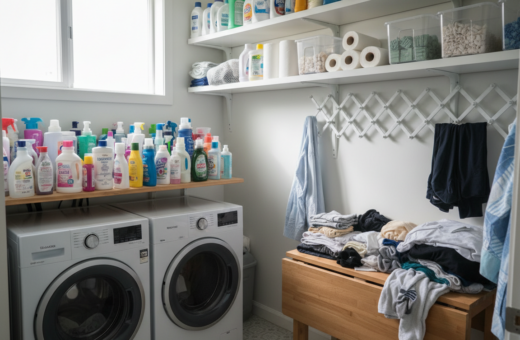
Smart zoning and simple storage choices cut task time and keep the utility room running smoothly.
Defining Your Storage Needs
They start by listing items used each week and noting their size. This helps specify which storage solutions fit the space.
Custom shelves that match exact measurements make the best use of a small area. That approach reduces clutter and saves time.
Creating Dedicated Zones
Establish clear zones so each task has a place. A washing zone, a folding zone, and a supply zone keep the room efficient.
- Place detergents and bleach near the washer for quick access.
- Reserve a shelf or basket for delicates and stain treatments.
- Design a small folding surface to speed the workflow and lower the project price.
Practical ideas and steady habits make upkeep easier. Good planning improves long-term organization and reduces daily friction.
Maximizing Vertical Storage with Mounting Rails
Mounting rails turn unused vertical space into a practical holding area for everyday supplies. This approach frees the floor and makes the small room feel less crowded. Homeowners can mount a slim system on a single surface and get immediate benefit.
Installing Utility Baskets
Elfa mounting rails pair well with utility baskets to create a compact, secure solution. By attaching rails to the back of a door or a wall, one can store cleaners, sprays, and stain bottles where they are easy to reach.
- Mount rails on the back of a door to keep items off the floor.
- Use the vertical racks to fit multiple baskets for separate categories.
- Store stain removers and sprays in basket pockets for safe, tidy access.
This vertical method delivers clear benefits: more usable space, faster access to essentials, and a neat way to store day-to-day items in a busy laundry room.
Creative Solutions for Small Laundry Supplies
Taming tiny items like dryer balls helps the whole laundry room feel calmer and more efficient. A few compact fixes stop small accessories from getting lost behind machines and make daily tasks quicker.
Defining Your Storage Needs
First, list the small items used each week: dryer balls, scent boosters, stain pens, and clothespins. This simple check clarifies which containers fit the space and which items need frequent access.
Creating Dedicated Zones
Mount a small jar or mesh pouch on the wall near the dryer to hold dryer balls so they are always within reach. Use shallow bins for other supplies to keep the room tidy and visible.
- Use clear bins for quick identification.
- Label lids for fast access during busy weeks.
- Keep frequently used items at eye level for speed.
These ideas offer a simple solution: dedicated containers for small items keep the space functional without major changes.
Utilizing Door Space for Hanging Needs
Using the door as a multi-bar hanger created a neat spot for delicate clothing to air dry. This smart swap kept the main area clear and gave the room instant, usable hanging capacity.
Adding Towel Bars
Four-bar towel holders mounted on the inside of the door replaced bulky folding drying racks. They provided a compact rack that folded away when not in use.
Benefits of Door Racks
Key advantages included increased drying capacity and easier handling of delicate clothes that could not go in the dryer.
- Installing a four-bar towel rack on the back of a door gives perfect space for hanging items as they come out of the dryer.
- These door racks act as a drying rack alternative for delicate clothing that needs to air dry.
- By using the door for hanging needs, the household freed up valuable room and eliminated the need for bulky, folding drying racks.
- Draping damp clothing over the bars kept the room tidy while garments finished drying.
Practical and low-cost, this tactic made routine handling of clothes simpler during busy weeks and kept the small laundry area functioning smoothly.
Selecting the Right Containers for Detergent and Essentials
Glass canisters with washi tape labels made a simple upgrade that combined style and clarity for a compact laundry room. They let the household see levels at a glance and keep messy boxes off surfaces.
Defining Your Storage Needs
They first listed weekly items: detergent pods, OxiClean powder, stain pens, and other essentials. This clarified which sizes of jars were needed and which items required frequent access.
Creating Dedicated Zones
Placing uniform glass jars on a high shelf or tucked behind a door kept these items safe from children. The clear containers made it easy for the family to spot low detergent levels before they ran out.
- Visibility: glass canisters show pod and powder levels quickly.
- Safety: store jars behind a door or on a high shelf for childproofing.
- Style: matching jars create a polished look while storing key products.
Choosing the right containers improved room flow and reduced refill surprises. Small changes to storage made the room feel more efficient and kept essential supplies within reach.
Managing Lint and Waste in Tight Quarters
A lidded jute basket added both function and flair to a tight service nook. It served as a discreet place to collect lint and small waste so the room stayed cleaner between chores.
One popular option was a black and white striped, lidded jute basket. This style fit narrow space near the wall and blended with many decor schemes.
Choosing Stylish Lidded Baskets
Benefits: a covered basket keeps lint off the dryer and hides unsightly bits until trash day. It also freed a small amount of storage for other essentials.
- A lidded jute basket acts as a perfect lint collector so waste doesn’t pile up on the dryer.
- It can store near the wall in a tight space, keeping items within reach during busy weeks.
- This solution adds a decorative touch while providing a designated place to store lint before emptying it into the main trash.
“A covered basket made daily cleanup feel simple and intentional.”
For more compact ideas to store essentials and manage small items, see this collection of practical solutions.
Collapsible Baskets for Efficient Floor Management
When floor space is tight, a collapsible mesh basket becomes the room’s most flexible tool.
Collapsible baskets tuck flat and slip into the narrow space between the dryer and the wall. That use keeps the floor clear and makes daily handling easier.
These mesh bins hold a full load of clothes, so one basket can replace multiple trips. They are lightweight for carrying and fold down for compact storage.
Practical benefits include quick transport of clothing to bedrooms and less clutter during busy weeks. The baskets dry fast and resist mildew when emptied after use.
- Store folded baskets upright in a gap to save floor space.
- Use one basket per family member to speed sorting.
- Fold down when not needed to free the room for other tasks.
“A single collapsible mesh basket made daily laundry flow faster and much neater.”
Incorporating Custom Cabinetry for a Polished Look
Built-in cabinets and folding stations transform a tight space into an efficient work area. This approach makes the laundry room feel purposeful and visually clean.
Custom cabinetry provides focused storage and keeps detergents, irons, and stain treatments out of sight. Upper cabinets conceal supplies while lower units can hide built-in hampers and pull-out baskets for sorting.
Adjustable shelves let the homeowner tailor the layout as needs change. An integrated folding station saves time and creates a steady surface that doubles as extra counter space.
Design ideas often include soft-close doors, durable finishes, and matching hardware so the room blends with nearby living areas. Over time, quality cabinets pay off by protecting plumbing areas and simplifying daily chores.
- Ample storage: hides supplies, tools, and cleaning products.
- Built-in baskets: speed sorting and keep items contained.
- Folding stations: add function without sacrificing style.
Choosing Finishes That Match Your Home Decor
A thoughtful finish palette helps the room read like an extension of the home’s overall design.
Thermally fused laminate and wood veneer are popular finishes for a laundry room cabinet. Both come in many colors and textures to match nearby spaces.
Modern, high-gloss wall cabinets give a sleek look. Classic matte finishes provide a softer, timeless feel. Open shelves add display space and a chance to show curated decor pieces.
Durability matters. Choose finishes that resist moisture and wear so the room stays attractive after years of use.
- Coordinate colors to make the space feel like part of the home.
- Pick materials that stand up to heat, humidity, and frequent handling.
- Blend open and closed storage for both style and function.
“Select finishes that match nearby rooms to create a seamless transition.”
For more styling tips and specific finish ideas, see laundry room decor ideas.
Streamlining Your Folding and Ironing Routine
A few targeted upgrades make finishing garments faster and neater after a wash or drying cycle. These additions fit tight spaces and speed routine steps so tasks take less time.
Pull-out Ironing Boards
Pull-out boards slide from a cabinet and tuck away when not in use. A pull-out ironing board saves floor space and makes ironing easier during busy mornings.
They install into a narrow cabinet and offer a steady surface for quick touch-ups. This keeps ironing tools handy without crowding the room.
Folding Stations
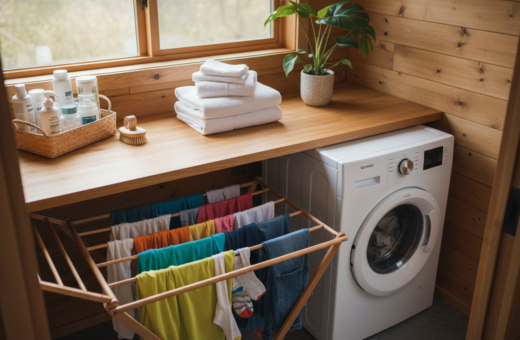
A dedicated folding station creates a clear spot for sorting and folding clean clothes. A built-in counter or a small pull-out shelf gives the family a repeatable place to fold.
Folding stations reduce trips and speed up the process, so folded piles move quickly from dryer to drawers.
Hanger Stackers
Install a compact hanger rack or stacker near the dryer so hangers are ready as clothes come out. This small change minimizes wrinkles and simplifies drying-to-wardrobe steps.
- Board and rack solutions save space and time.
- Pair an ironing board with a folding station for a professional-grade room setup.
- Keep a hanger stacker close to the dryer to speed handling of delicate pieces.
Maintaining Order During Busy Weeks
A simple “return-it-now” rule prevented supplies and items from piling up after busy days. This quick habit let the family keep the room ready for the next load with minimal effort.
Keep most-used supplies on an accessible rack or tucked behind a door so people save time when chores are rushed. Place daily essentials on low shelves; reserve higher shelves for backups.
Clear the floor and the wall regularly to stop clutter from growing during hectic stretches. A labeled cabinet can store extra items so everyone at home knows where to store and find refills.
- Designate a place on a shelf or in a cabinet for every item.
- Keep essentials on a rack or behind a door for fast access.
- Make a short daily check to return things to their spot.
“Consistency beats big cleanups—small habits kept the space usable through the busiest weeks.”
Conclusion
Thoughtful design choices let a modest service area function like a mini command center that saves the family real time each day.
Small investments in smart ideas and the right tools produce lasting gains. The modest price of these changes is paid back in fewer chores and less stress.
Use these tips and products to create simple systems that improve day-to-day flow and protect valuable time. For more help and inspiration, visit our site to explore practical solutions for every room in your home.