Designing a compact laundry room starts with a clear plan. Every square inch in the room should serve a purpose for the home. Thoughtful layouts help people work faster and reduce clutter.
When sizing a small space, they must consider the placement of the door so it does not block access to supplies. A smart layout shows the best way to tuck bottles and sprays into narrow gaps.
The right color palette can make the room feel larger and brighter. Choosing light tones creates a calm place that invites use and reduces visual noise.
Efficient storage saves time and makes daily tasks less of a chore. A well-organized laundry area gives clear spots for essentials and makes routines smoother.
Maximizing Efficiency with Laundry Cleaning Station Ideas
A tight nook can become a high-functioning hub with a few smart layout moves. The goal is to make the most of vertical room and maintain clear access to essentials. Small changes add up fast and improve daily flow.
Small Nook Optimization
They should fit a washer‑dryer combo when possible — Home Depot data shows this frees considerable floor space in a cramped laundry room design. Adding narrow, open shelves above machines keeps items visible and reachable.
Functional Layouts
A custom diy shelving unit maximizes vertical use and prevents clutter. Proper organization on shelves reduces wasted time and stops supplies from drifting back into the kitchen.
- Use stackable bins for small items.
- Place frequently used products at eye level.
- Reserve lower shelves for bulky containers to keep the room tidy.
Vertical Storage Solutions for Detergents
Tall storage transforms a cramped room into a streamlined workspace. Because the average American family completes roughly 300 loads per year, vertical storage is essential for keeping a laundry room tidy and efficient.
A slim tall cabinet next to the washer or washer dryer combo saves floor space and hides bottles and other supplies. Open shelving above the dryer keeps frequently used items visible and reduces time spent searching.
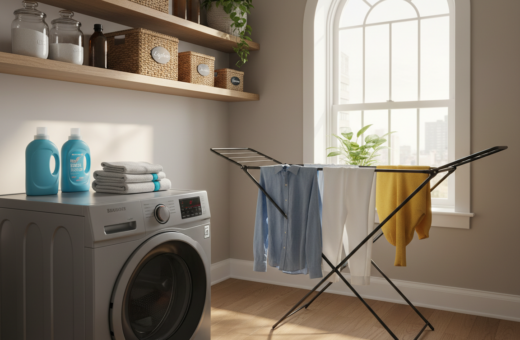
Mounting a rod on the wall creates a built-in drying option for delicate pieces when a full rack won’t fit. Adding baskets and bins on shelves helps sort small items and keeps each wash day less stressful.
A side cabinet near a dedicated sink gives a handy spot to soak items while keeping soaps and brushes organized. For small laundry areas, combining cabinets, shelving, and a hanging rod delivers maximum utility without crowding the space.
- Use tall cabinets to hide bulk supplies and free floor area.
- Mix open shelves and bins for fast access to small items.
- Install a wall rod to add drying options in tight spaces.
Utilizing Hidden Drying Racks
Tucking a drying system into a drawer or closet delivers a neat, out‑of‑sight solution for delicate garments. This approach keeps the room looking uncluttered and preserves usable floor area for a washer and dryer.
Hidden drawer racks slide out when needed and fold away when not in use. They are ideal for small laundry room setups because they free space and add function without bulky hardware.
Key benefits include faster routines and fewer trips to an external dryer. Homeowners often report saved time because delicate clothes can air dry inside the cabinet rather than being hand‑hung elsewhere.
- Space saving: installs inside a closet or under a counter.
- Protection: ideal for items that a dryer can damage.
- Versatility: keeps the room flexible for other tasks.
As a simple solution, a hidden rack helps the small laundry area stay organized and adaptable through the week.
Installing Custom Cabinetry for Supplies
A compact cabinet run with built-in shelving and a sink slot transforms underused space into a functional hub. It keeps bottles and jars hidden and removes clutter from the floor.
Custom cabinetry offers purpose-built storage for a small laundry room. A floor‑to‑ceiling unit maximizes vertical use along a single wall and frees valuable room area.
Homeowners can build a diy cabinet that matches their finishes and fits around appliances. Adding a small sink inside the run gives a handy spot for messy tasks and keeps them out of the kitchen.
Install sturdy shelves and reinforced shelving for heavy bottles so the unit protects walls and holds weight safely. Thoughtful layout and quality hardware turn a cluttered laundry room into a near‑professional workspace.
- Off‑floor storage: prevents spills and keeps the floor clear.
- Vertical shelving: increases capacity without expanding the room.
- Integrated sink: separates messy work from kitchen tasks.
Incorporating Pull-Out Ironing Boards
Installing a slide-out ironing board turns dead cabinet space into a ready press area without crowding the room. A built-in ironing board tucks away when not in use and frees valuable floor space in a compact laundry room.
Place the board inside a shallow cabinet next to a folding surface. This setup keeps the ironing board close to baskets and other items so all the things needed for a quick press are together.
Choose a unit with sturdy hardware and an easy glide for safe, fast setup. A cabinet-mounted ironing board prevents the clutter that often collects in a busy room and makes the best use of narrow spaces.
- Store ironing tools and small items nearby for faster use.
- Combine the pull-out board with shelves for baskets to keep supplies tidy.
- Professional designs use these boards to deliver a flat surface ready any time.
Creating a Dedicated Folding Countertop
A built-in folding counter above the washer and dryer creates a stable work surface that makes sorting and folding garments quicker and neater. This countertop acts as the central hub of the laundry room and streamlines tasks for the day.
Sorting Surfaces
Place the countertop at comfortable height to reduce bending and speed sorting. A solid surface prevents creases that occur when folding on soft tops.
Underneath the counter, install a shallow cabinet to hold an ironing board, small baskets, and other essentials. This adds storage while keeping the floor clear.
Folding Techniques
Use one side of the counter for sorting and the other for folding to keep a steady flow. A dedicated board or mat can help keep delicate items flat.
- Save floor space: the over-appliance layout frees up walking room.
- Organize fast: cabinets below store tools and the ironing board out of sight.
- Protect garments: a firm countertop reduces wrinkles and speeds routine tasks.
Implementing Magnetic Storage for Small Items
Magnetic organizers turn machine sides into instant work zones that keep small supplies in reach. They attach to a washer or a dryer and create a tidy edge for quick access.
Use magnetic baskets and a slim rack on the wall or door to hold lint bins, brushes, and small bottles. Mounting a magnetic unit on the back of a door clears shelf space and keeps the room uncluttered.
The Murphy door shelving unit is a heavy-duty option. It can hold up to 300 pounds and effectively hides supplies in plain sight while adding robust storage capacity.
- Place baskets on the side of the washer for items used often.
- Mount a magnetic rack on a metal door to free floor space.
- Mix bins and baskets for fast visual organization and easy pickup.
Magnetic solutions are a smart way to use every inch of a small space. They keep essentials visible and speed regular routines in the room.
Using Rolling Carts for Flexible Organization
A narrow, wheeled cart can transform a tight room into a flexible work zone. It moves easily so a person can bring items right to the washer and quickly return the cart to a closet or corner.
Three-tier carts offer open shelves that hold dryer sheets, detergents, and extra clothes. Keeping these supplies in one mobile unit speeds tasks and cuts down on trips back and forth.
A slim rolling rack tucks under a counter or beside a stacked unit when not in use. This approach gives extra storage without permanent shelves or bulky fixtures, so the room stays adaptable and uncluttered.
- Moveable storage: brings essentials to the machine.
- Visible shelves: let users spot items at a glance.
- Space saver: maximizes utility without built-ins.
Optimizing Space with Stacked Machines
Stacking machines vertically reclaims floor area and lets homeowners add practical storage along an adjacent wall. This approach suits a small laundry room and creates room for a folding surface or a sink.
Built-in Cubbies
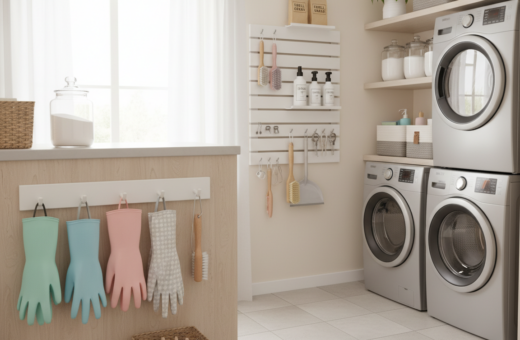
Built-in cubbies beside a stacked washer and dryer provide tidy places for baskets and small items. They keep essentials visible and reduce the need for extra freestanding units.
The layout gives a sleek, professional look while keeping both machines easily accessible. Many homeowners choose this configuration to free up floor space for a countertop or a shallow set of cabinets.
- Stacking units frees floor space and allows for added storage.
- Integrate cubbies to hold baskets, sprays, and everyday tools within reach.
- Ensure proper installation by following the manufacturer’s guidelines for safety and efficiency.
Adding Decorative Baskets for Visual Appeal
Styled storage baskets bridge form and function, letting the dryer area look tidy and curated. Woven options and cotton rope baskets offer texture that elevates a small laundry room while keeping essentials out of sight.
Amazon carries popular cotton rope baskets that pair well with neutral cabinets and modern design palettes. Etsy supplies custom labels for a simple DIY touch that keeps items sorted and easy to find.
Choose a consistent color scheme so the room reads as a cohesive part of the home. Matching basket tones to cabinet finishes reduces visual clutter and makes storage feel intentional.
- Hide clutter: baskets near the dryer conceal loose items and create a neat surface.
- Organize: labeled baskets help everyone know where common items belong.
- Upgrade design: the right baskets turn a utilitarian space into a polished corner of the home.
Installing Wall-Mounted Rods for Hanging Clothes
A simple wall-mounted rod converts unused vertical wall into a fast, practical drying zone. It gives a clear place to hang items that need air-dry care and preserves counter and floor surfaces.
Install the rod above the dryer or beside a closet to make the most of vertical space. This keeps the room orderly and puts wet garments close to the machine for easy transfer.
Delicate clothes benefit most from a mounted rod because they avoid heat damage. A rod also reduces wrinkles and extends garment life by letting items hang freely.
- Over-dryer placement: saves space and speeds routines.
- Near a closet: creates a ready place for hanging items after sorting.
- Multiple rods: professional setups add several levels to handle shirts, pants, and small items separately.
Overall, a wall-mounted rod is a low-cost upgrade that improves function and keeps a small laundry room efficient and tidy.
Designing a Multi-Functional Mudroom Combo
A mudroom combo can act as the home’s command center, letting family members drop off gear and start a wash in one smooth step. This design saves time and reduces clutter by placing a washer and dryer near the main entry.
Designer Sarah Stacey often specifies pull-out shelves for hampers so sorting happens at the door. Floor-to-ceiling cabinets create deep storage for supplies, baskets, and bulky bins.
Adding a countertop and sink turns the area into a useful place for quick rinses and kitchen-adjacent tasks. A slim closet or open shelving keeps shoes, coats, and cleaning items organized.
- Fast flow: drop clothes, sort in a hamper, and start washing in minutes.
- Smart storage: tall cabinets hide supplies and free floor space.
- Dual use: countertop plus sink supports ironing and small repairs.
When planned well, this multi-use room becomes more than a machine space. It serves the whole home as a neat, efficient hub for daily life.
Enhancing Lighting for Better Visibility
Proper illumination removes shadows and makes sorting, spotting stains, and ironing far easier. Good light helps anyone spot a faint stain before it goes into the washer, which protects the rest of the home wardrobe.
Install task lights above the folding counter and near the ironing area to create focused work zones. A single overhead fixture often leaves corners dim, so a layered plan improves function.
Wall-mounted sconces or adjustable LED strips brighten key work surfaces without taking up shelf space. They are ideal for a compact space and keep tools within reach.
- Layered lighting: combine ambient, task, and accent lights to light every corner of the room.
- Spot treatment: task fixtures reveal stains and speed sorting and laundry routines.
- Safety and comfort: better lighting reduces mistakes and creates a more productive home workspace.
Selecting Bold Colors to Define the Space
A bold hue on a single wall can instantly turn a compact room into a designed space with character.
Choose one accent wall or a single cabinet face to create a clear focal point. A vivid cabinet or painted door pairs well with neutral floors to keep the area feeling intentional and professional.
Coordinate finishes so the color ties into the wider home palette. Matching a cabinet color to trim or a nearby door gives the small room a cohesive, built‑in look.
- Define the side that faces traffic: paint it darker to frame the layout.
- Use bold color for storage fronts: this hides clutter while adding style.
- Limit to one or two saturated tones: to keep the space functional and calm.
With deliberate color choices, a small laundry room feels custom and efficient. The right palette can elevate storage and overall design without sacrificing utility.
Incorporating a Pet-Washing Station
A shallow tub tucked beside a sink creates a multipurpose wash area that keeps pet care out of the kitchen. Installing a compact basin in the laundry room gives a clear place for washing muddy paws and for small utility tasks.
Mount a sturdy rod above the tub to hang towels and clothes for drying. A short wall shelf adds storage for brushes and shampoos so supplies stay organized near the washer dryer.
This setup saves trips across the house and keeps the room tidy. Professionals often include a pet wash in modern designs because it protects other areas and boosts the overall use of a small space.
- Dedicated tub for pets and quick rinses.
- Rod above the basin for fast drying.
- Sized shelving or a sink combo to support cleaning and storage.
Conclusion
Small spaces can deliver big returns when storage, surface, and workflow come together with intention.
They will find that implementing vertical shelving, hidden drying racks, and custom cabinetry transforms a compact laundry room into a functional workspace. A dedicated countertop and a shallow sink make tasks quicker and neater.
Prioritize what matters — whether that is a pull-out board for ironing, a wall rod by the door, or extra shelves to free floor space. These choices save time and keep the room orderly.
For more ways to adapt the layout or to repurpose your laundry room, explore practical options that match daily needs. The right plan will make this small room a lasting, useful part of the home.