Many homeowners struggled with narrow laundry room organization because they ignored vertical storage and stuck with the original builder-basic setup. In 2016, the author moved into a house with a plain wire shelf and little usable space.
The author replaced that wire shelf with custom cabinets and added vertical shiplap painted in Sherwin Williams Rainwashed. That change created a brighter, more functional small laundry room and improved the overall look of the space.
Planning mattered. The project showed that even a compact area could work hard for a family when the layout supported movement and kept cleaning supplies easy to reach.
This introduction sets up practical ideas that focus on function first. Readers can learn clear ways to design a small laundry space that meets daily needs without clutter or wasted steps.
Common Pitfalls in Narrow Laundry Room Organization
Tight service areas often fail when homeowners ignore wall height and door swings. Simple oversights made a compact space harder to use and drained daily efficiency.
Ignoring Vertical Potential
One big mistake was leaving walls empty. Taller cabinets and shelves were not added, so the small laundry room lost much-needed storage.
Using vertical space could have turned wasted height into reachable shelves for supplies and baskets.
Overlooking Door Clearance
The author noted a swing-out dryer door that blocked passage. That single door often stopped people from moving baskets in and out on a busy day.
- Account for each door swing when planning layout.
- Ensure appliances do not collide with shelves or hampers.
- Small changes in design freed walking paths and improved room organization.
Assessing Your Current Layout Challenges
Measure first, change second. Take clear measurements of the washer dryer location, door swings, and walk paths before buying new machines or cabinetry.
Because the author’s area sits on the second floor, they installed a protective tray under the washer to guard against leaks. That simple step prevents costly damage and is vital for any upstairs setup.
Replacement events matter. When the washer failed in March, a fast swap forced a fresh look at access and reach. The old machine had been hard to use, which made washing feel like a chore.
- Check dryer door clearance so machines do not block passage.
- Confirm top-load vs. front-load needs for space and access.
- Map vents, plumbing, and electrical locations to avoid surprises.
Every small laundry space has quirks. A quick layout audit helps identify where the washer and dryer sit poorly and what adjustments will free usable floor and improve room organization.
Maximizing Vertical Wall Space
Turning the main wall into an active storage plane made the compact area feel larger and neater. This approach focused on using vertical height to free the floor and improve access to essentials.
Vertical shiplap was installed on the back wall to provide a solid, attractive base for new shelving and fixtures. That durable surface accepted anchors easily and supported heavier pieces.
Installing Floating Shelves
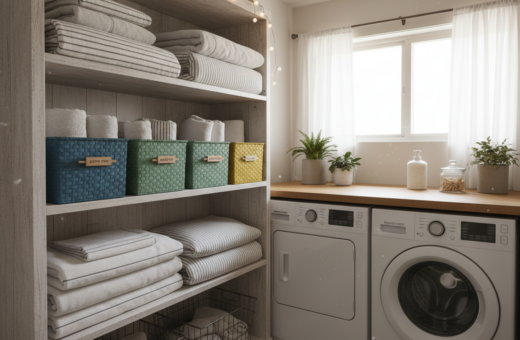
Floating shelves proved one of the best ideas for a small laundry room. They keep supplies visible and reachable while leaving the floor clear.
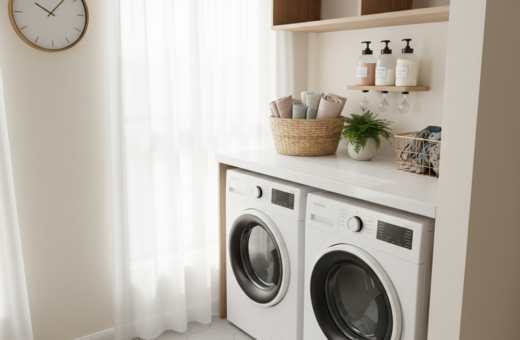
- Place a shelf above the washer and dryer to hide hoses and plugs.
- Mix open shelves with a single closed shelf to balance display and concealed storage.
- Stagger three shelves vertically to use wall height without crowding the walk path.
By prioritizing walls, the author created more storage space and a cleaner look. Every small laundry benefits when shelves are planned to suit daily use and keep essentials at arm’s reach.
Selecting the Right Storage Containers
Good container choices made the cabinets above the washer dryer function like a small supply station.
The author used IKEA VARIERA bins to corral detergent, dryer sheets, and other supplies inside the upper cabinets. This kept the area tidy and reduced spills around the washing machine and dryer.
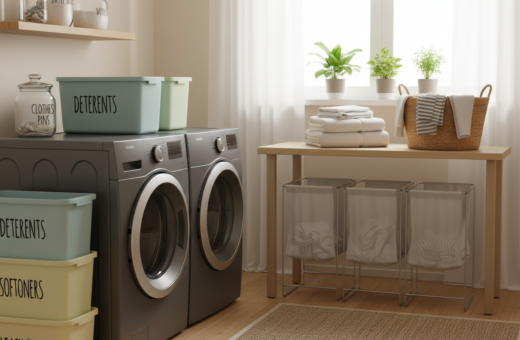
Clear containers showed what was inside at a glance, so anyone in the house could grab items quickly. Grouping similar items in labeled bins saved space and cut the time it took to start a load.
They paired deeper bins for bulk detergent with smaller containers for sheets and single-use items. A few baskets on open shelves handled odd tools and stain treatments without adding visual clutter.
- Tip: Store detergent in a dedicated bin to prevent spills near the washer.
- Tip: Use two to three clear containers for everyday supplies to keep tasks fast.
- Tip: Keep an extra bin for dryer sheets so grab-and-go is simple on busy days.
Implementing Functional Cabinetry Solutions
A simple rail-mounted system made hanging heavy cabinets fast and kept them perfectly level on the wall. This method sped installation and reduced guesswork for alignment.
The author selected IKEA cabinets that were three inches deeper than typical kitchen units. Those extra inches created meaningful storage for bulk detergent, stain kits, and spare baskets.
Customizing IKEA Units
They added internal shelves to form a clear system for supplies. Grouped shelves made it easy to separate everyday items from seasonal or bulk goods.
Adding Crown Molding
Donnie applied crown molding to the top of the cabinets to give them a custom finish. The trim improved the overall look and made the cabinets read like built-ins.
- Free floor space: Wall-mounted cabinets open the area around the washer dryer for baskets and movement.
- Better use of vertical space: Deeper cabinets plus shelves increase usable storage without adding clutter.
- Easy leveling: A rail system keeps heavy cabinets secure and aligned against the wall.
Creative Ways to Hide Laundry Appliances
Hiding the washer and dryer transforms a utilitarian corner into a polished, useful space. He used a hanging bar behind the light fixture to air-dry delicate clothes, keeping them out of sight and off floors.
Concealment options include a lightweight curtain, sliding door, or cabinet facade that closes when machines are idle. This approach stops the machines from dominating the visual plane and helps the overall design feel cohesive.
The author found a rod above the washer dryer worked best for delicate items. It keeps wet clothes close to the machines but hidden from view when the curtain is drawn.
- Tip: Mount a fold-down rod for temporary hanging without losing folding surface.
- Tip: Choose neutral fabrics or panels to match finishes so the space blends with adjacent areas.
- Tip: Leave a clear surface for folding clothes and sorting supplies.
Utilizing Door and Wall Surfaces
Small vertical surfaces and doors often hide simple fixes that free floor space and add function. Treating these planes as active zones turned wasted inches into daily helpers.
Using Magnetic Lint Bins and Wall Hooks
The author attached a magnetic lint bin to the side of the dryer, keeping fluff and small trash off the floor. That single change kept the area tidier and helped the washer area feel less crowded.
They also mounted a slim rod on the wall for short-term hanging and extra hangers. Hooks and a few wall-mounted bins made the back of the door useful for supplies and small tools.
- Use magnetic bins on metal surfaces to save floor space.
- Install a rod for delicates or as a staging area for folding.
- Add hooks or shallow bins to the door to keep essentials within reach.
By using every surface, the author created a more efficient small laundry setup that kept the floor clear and made daily tasks faster.
Choosing Collapsible Laundry Baskets
A set of fold-flat baskets allowed the author to store carriers inside the linen closet and free the main work surface.
Collapsible laundry baskets are one of the best additions for a small laundry room. They fold flat when not in use, so the room stays clear and usable for folding and sorting.
The author found models that were sturdy enough for full loads yet light to carry. Folding carriers tucked easily behind the closet door, which improved access and kept the passage unobstructed.
Practical tip: choose baskets with reinforced seams and handles so they hold a dense load without collapsing during transport.
“Folding versions saved floor space and made the linen closet the go-to spot for quick storage.”
- Store folded baskets in the closet to free floor space.
- Pick durable materials that hold a full load and resist wear.
- Keep one set ready near the washer for fast sorting and folding.
Installing Efficient Drying Rods
A simple wooden rod mounted between two cabinets gave the space a quick, practical drying station.
The author attached the rod above the washer dryer so delicates could air-dry without taking up floor area. Placing the bar between cabinets used otherwise idle wall width and kept items close to the machines.
Using a rod freed the folding shelf and counters for sorting. Wet items hung clear of vents and heat, which protected fabrics and reduced trips to the dryer.
For small laundry setups, a mounted dowel or telescoping bar that fits between fixed cabinets is ideal. It installs quickly and supports hangers for shirts, knits, and delicate items.
- Save floor space: Hang above the washer or shelf to keep walkways clear.
- Protect fabrics: Air-dry items that cannot go in the dryer.
- Speed folding: Stage garments nearby so folding stays efficient.
“A single rod made the family’s compact space far more functional.”
Managing Cleaning Supplies and Detergents
A small set of well-chosen containers turned scattered bottles into an efficient supply station. The author stored baking soda and OxiClean in OXO POP containers to keep powder neat and visible.
Clear spray bottles held stain remover, moved easily to the washer, and fit cleanly on a single shelf. A wipe dispenser for dryer sheets kept one hand free when loading the dryer.
Safety and speed mattered: grouping liquids and powders inside a cabinet reduced spills and kept them out of reach of children and pets.
- Place commonly used detergent and stain sprays near the washer dryer for quick access.
- Use clear glass or plastic containers so refills are obvious at a glance.
- Keep a dedicated shelf or small cabinet for cleaning supplies to prevent clutter on work surfaces.
One consistent system—labeled containers, a wipe dispenser, and a single refill shelf—made daily laundry tasks faster and kept the space safe every day.
Upgrading Lighting for Better Visibility
Good lighting makes chores faster and less frustrating. A bright fixture helps people spot stains, read labels, and see inside the washer and dryer with ease.
The author removed an old dome and installed a brass, semi-flush fixture that holds three bulbs. The new fixture casts clear, even light across the whole space and made the small laundry room feel much brighter and more welcoming.
Light is a tool—when the room is well lit, it is easier to find items and keep surfaces tidy. Proper illumination reduces mistakes like missed stains or misplaced supplies.
The upgrade also proved that style and function can pair well. Choosing a brass fixture added a subtle design lift while delivering practical benefits for daily tasks.
- Why upgrade: Better visibility helps maintain an efficient space.
- Practical tip: Aim for multi-bulb fixtures or layered lighting to eliminate shadows around the washer and dryer.
- Design note: A high-quality fixture can unify style without sacrificing performance.
“A brighter fixture made the area easier to use and more inviting.”
Incorporating Decorative Elements
A couple of handmade prints gave the compact area instant personality. The author created two small pieces of DIY art and hung them where they caught the eye above the cabinets.
Decorative touches make daily tasks feel lighter. A few well-placed accents improved the overall look of the small laundry space without reducing function.
Personalization matters: adding a bit of color, a framed quote, or a small plant turned the utilitarian corner into a welcoming spot. These choices helped the space read as part of the home instead of a hidden utility area.
- Choose two or three items that reflect personal style and keep them scaled to the space.
- Use DIY art to add warmth without expensive renovation.
- Pick finishes that tie into the room’s existing design and color palette.
“A few personal touches made the chore area feel cared for and more inviting.”
Selecting Durable Flooring Options
Choosing the right floor sets the foundation for a functional laundry room. A durable surface handles spills, traffic, and heavy baskets while keeping the area easy to clean.
The author replaced builder-basic tile with wood-look tile, and the difference was immediate. The new tile gave the small laundry a warmer, more finished look without costing a fortune.
Durability matters: a tough, water-resistant floor reduces maintenance and protects subfloors from leaks and detergent spills.
- Pick materials that resist moisture and scuffs.
- Choose a finish that wipes clean and hides wear.
- Match the floor tone to shelving and cabinets for a cohesive look.
Budget-friendly options exist; the author’s wood-look tile proved that style and resilience can coexist. For more ideas on flooring choices, see great options for laundry room flooring.
“Upgrading the floor changed the feel of the entire space and made daily tasks easier.”
Keeping Essential Tools Within Reach
A simple habit—storing frequently used items within arm’s reach—changed how the space handled everyday chores. The author kept a fold-up stool from Dollar General in the closet so high shelves stayed useful without bulky step ladders.
They added a compact utility board to the side of the dryer to hold ironing tools, spare buttons, and a small glass jar for pins. This system kept small items visible and easy to grab while doing a load.
Use wall space wisely: hang an ironing board on a slim hook, mount a shelf for cleaning supplies, and keep baskets nearby for sorting. Storing laundry baskets in the closet freed floor space and made the area feel larger.
- Keep a folding stool near the closet to reach top shelves safely.
- Install a utility board next to the washer dryer for tools and quick repairs.
- Store baskets and supplies in the closet so surfaces stay clear for folding.
“A simple utility board and a folding stool made everyday tasks faster and kept small items from getting lost.”
Avoiding Overstocking and Clutter
Too much stockpiling turned the compact space into a cluttered one, so the author adopted a simple rule: keep only what is used regularly.
She removed extra towels and reduced duplicate detergent bottles in the closet. This freed cabinet and shelf space and made the washer dryer area easier to use.
Regular editing of supplies prevents buildup. A quick monthly check of cabinets keeps unnecessary items from creeping back in.
Benefits were immediate: more room for folding, clearer shelves, and faster access to the washing machine and dryer.
- Limit backup bottles and store bulk items off-site or in the closet only when needed.
- Rotate towels and linens so excess are donated or stored elsewhere.
- Keep one clear shelf for daily supplies and a single cabinet for seasonals or bulk.
By keeping cabinets neat and shelves purposeful, the design stays functional and the floor stays free. A modest system of culling and rechecking makes room use simpler every day.
Conclusion
Conclusion: With careful planning and small, intentional changes, a compact space can become highly functional.
They focused on vertical shelving, efficient containers, and a few smart fixtures to free the floor and speed tasks. Simple updates — a rod for air-drying, collapsible baskets, or clearer bins — made daily chores faster and less stressful.
Practicality wins: prioritize easy reach, dedicated spots for each item, and durable finishes so the space works for the whole family. The right mix of storage and flow transforms the room into a calm, productive area that supports routine tasks.