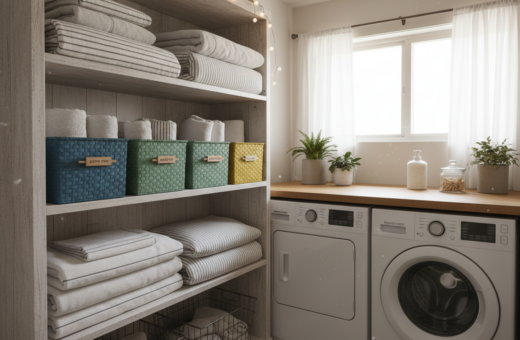
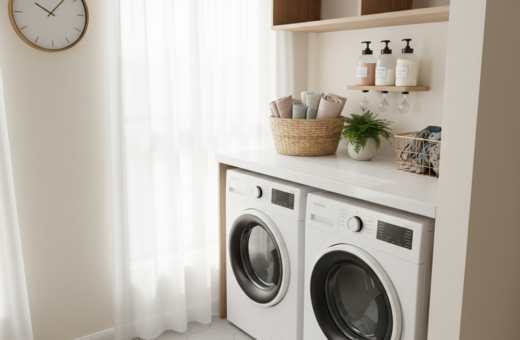
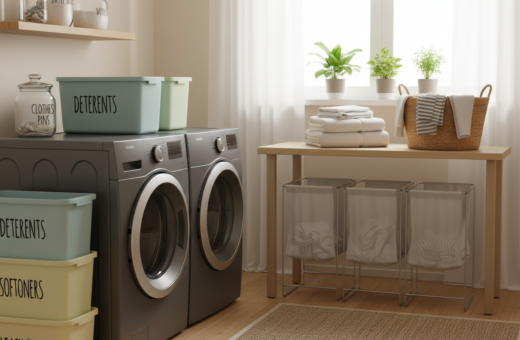
Many homeowners face a compact 1990s layout — about 62 inches wide by 66 inches deep — that makes daily chores feel cramped. This guide shows how to rethink a tight room and fit efficient systems into minimal space.
Practical, tested tips help transform a small laundry room into a tidy, functional part of the home. Clever racks, fold-down surfaces, and vertical organizers free floor area and simplify work.
The article highlights compact storage solutions, wall-mounted options, and a built-in nook approach that suit stacked machines and narrow footprints. Readers will learn easy swaps that improve workflow and save time.
Helpful product picks and recommended solutions with affiliate links are included to make upgrades simple and reliable.
Maximizing Small Laundry Room Potential
Maximizing function in a compact room begins by assessing how each appliance and item affects movement and access.
Start with the washer dryer placement. Shift equipment to free the main path so loading and unloading flow without obstruction.
When available laundry room storage is tight, pare down supplies to daily essentials. Use wall shelves and narrow carts to keep surfaces clear.
Consider traffic flow during every cycle. A cramped route adds steps and time. Reposition bins and hooks so doors open fully and the user can pivot easily.
“A well-planned small laundry room can perform like a much larger one when layout and access take priority.”
Simple room ideas reclaim lost square footage. Hang a fold-down shelf or add a slim pullout for detergents to gain functional counter space.
- Prioritize clear walking space near doors and machines.
- Group supplies by task to reduce repeated trips.
- Choose narrow, vertical units over wide footprints.
Essential Laundry Hanging Storage Ideas
When floor space is at a premium, well-planned hanging systems convert walls and ceilings into working surfaces. These approaches keep the workflow smooth and the room uncluttered.
Wall-Mounted Peg Rails
Peg rails attach to narrow sections of wall and give quick access to frequently used items. They hold drying clips, small racks, and foldable hangers without taking up floor area.
Install a rail above the washer or next to the dryer to create a reachable zone for one-step transfers. Choose rust-resistant metal or sealed wood for longevity in damp conditions.
Ceiling-Mounted Drying Racks
Ceiling racks use vertical space by lowering a drying rack when needed and lifting it out of the way when not. This keeps wet clothes from blocking doors or appliance access.
Look for pulley systems with secure locks and corrosion-resistant hardware. They work well above stacked machines or in rooms where wall space is mostly used for cabinets.
- Keep clothes off the floor to avoid mildew and traffic interference.
- Use vertical zones so the dryer can run without obstruction.
- Prioritize compact mounts and retractable designs for the tightest rooms.
Installing Double Sliding Barn Doors
Sliding barn doors convert a narrow entrance into a practical design feature that saves valuable corridor space. They reduce door swings and improve flow in tight areas.
Double sliding barn doors work well when a hallway is crowded with multiple door swings. They glide along the wall, so they do not take up floor area and free that place for other uses.
For a budget-friendly option, the GRIMO door from IKEA is $30 each. Pairing two doors with a $70 double-door hardware kit yields a smooth, professional operation and a refined finish for the room entrance.
These doors also add character to a small laundry room. They make the room feel more open and architecturally significant without pricey remodeling.
“Because the doors slide along the wall, they do not take up any floor space.”
- Save clearance in narrow halls and improve access to the room.
- Create a visually larger opening for a small laundry or utility space.
- Use affordable parts like the GRIMO door and a compatible kit for a quick upgrade.
Utilizing Vertical Wall Space
When counter area is nonexistent, the walls become the best ally for keeping the room organized. Using vertical zones helps clear the washer zone and makes chores faster.
Installing Hooks for Towels
Hooks are a low-cost fix that keeps towels and small linens airing near the washing machine. They stop fabrics from getting musty by letting them dry between uses.
Mount hooks on any free wall space above or beside the machines. Put a few at different heights so wet clothes can drip without touching the floor.
This simple change keeps clothes off the floor and preserves circulation around appliances. It also creates a tidy, usable zone in a tiny laundry room.
- Free the washer area by moving towels and rags up the wall.
- Place hooks near the door for quick access and neat routines.
- Mix single and double hooks to hold different items without crowding the wall.
Implementing Collapsible Clothes Hangers
A pair of retractable hangers can make a small laundry room far more functional. Two units available on Amazon cost about $40 and fit neatly on a short stretch of wall.
These hangers hold at least ten clothing items so delicate loads dry without crowding the dryer. When not needed, they fold flat against the wall and clear the room for daily movement.
The compact design keeps wet clothes off counters and out of traffic paths. It also frees limited wall space for hooks or a small shelf.
- Holds multiple items for efficient air-dry cycles.
- Folds away to preserve walking and working space.
- Affordable — two retractable hangers for roughly $40 total.
“A fold-flat system is the easiest upgrade for tight utility rooms.”
Optimizing Lighting for Better Visibility
Good task lighting transforms small spaces, letting users spot stains and finish chores faster.
A bright fixture makes a measurable difference. Replacing an old ceiling lamp with a 3-light semi flush mount from Home Depot for $97 provided enough brightness to reveal spots on dirty clothes and reduce missed stains.
If replacing the fixture is not possible, swap in higher-lumen LED bulbs. LEDs improve contrast and cut energy use while boosting light where it matters most.
Proper illumination helps more than stain spotting. A well-lit laundry room makes sorting, folding, and organizing much easier. It also speeds routines and reduces mistakes.
“A bright, focused fixture lets users identify which items need extra treatment before they go into the washer or dryer.”
- See stains and wrinkles quickly.
- Use LEDs to maximize output without rewiring.
- Place a fixture so light reaches both machines and the work area; add a small task lamp near hooks for spot work.
Adding Narrow Rolling Storage Carts
A four-inch-wide rolling cart can change how a tiny utility room stores its daily supplies. It slides into the slim gap beside a washer dryer and creates quick access without cluttering counters.
At about $27 on Amazon, this slim cart fits between machines. It holds detergent in easy-pour containers, dryer sheets, and basic cleaning supplies.
Keeping items in labeled containers makes the room more efficient. The cart frees up shelf and counter space and reduces time spent searching for supplies.
- Use clear containers for liquid and powdered detergent to speed pouring.
- Group dryer sheets and small tools on the top tier for quick reach.
- Keep one slim cart as a dedicated room storage solution near the machines.
“A narrow rolling cart keeps most-used items within reach while maintaining a clean room look.”
Choosing Light Color Palettes
Choosing a soft, neutral wall color can visually expand a compact service room without any structural changes. Painting the walls SW Eider White created a bright, neutral backdrop that worked well with hexagon flooring and made the small area appear larger.
Light palettes improve reflected light, so the user could see stains and sort items more easily. A consistent color across walls and trim tied the surfaces together and reduced visual clutter.
A neutral white base also let homeowners add personality with towels, artwork, or a single colored shelf without overwhelming the room.
- SW Eider White brightens and enlarges a tiny laundry room visually.
- A consistent palette made the small room feel unified and more spacious.
- Light paint improved task visibility and made routine laundry work more pleasant.
Creating Countertop Space Without Pedestals
Removing pedestals from a washer dryer is a quick way to gain counter space in a tight room. That newly flat top becomes a practical place for folding and sorting clothes.
To make cabinets and the upper machine surfaces easier to reach, the team purchased a 13-inch folding step stool for $22. The stool fits neatly in the narrow room and folds flat when not in use.
Using Folding Step Stools
The small stool offers multiple benefits: it helps users reach high cabinets and the top of the washer without stretching. It also provides a low seat for removing items from the dryer, reducing strain on the back.
- Removing pedestals yields a functional counter for sorting and folding in the room.
- The 13-inch stool ($22) improves access to cabinets and machine tops.
- The stool stores against the wall, keeping the compact space clear and usable.
“A folding step stool turns a tight work area into a comfortable, reachable workspace.”
Installing Functional Wall Cabinets
A row of wall cabinets can instantly clear counters and give each item a dedicated home.
For this project the team chose the Askersund cabinets from IKEA. The full install, including the deco strip, hinges, suspension rail, and shipping, cost $379 for the laundry room.
These cabinets hide clutter and hold cleaning products, extra bins, and seasonal supplies. Placing them above the washer opens up the work surface and keeps the room tidy.
If renting prevents permanent mounts, use baskets and shelves above the machines. They offer a simple, removable way to organize supplies and bins without drilling.
- Hide clutter: cabinets keep daily surfaces clear.
- Dedicated spots: each shelf stores specific items and cleaning solutions.
- Renter-friendly: baskets and small shelves fit above the washer as an alternate plan.
Adding these cabinets turned a cramped service area into an organized space where every item has a place.
Incorporating Pullout Drying Racks
Pullout drying racks tuck away under counters to add a discreet drying surface in the smallest laundry room layouts.
These slide-out units save floor space and are ideal for rooms that cannot fit a freestanding rack. They pull out when needed and disappear when not in use.
Install a thin drying rack into the cabinets above the washer dryer or under a countertop next to the machines. This keeps delicate clothes near the washer and avoids blocking access to the dryer.
The system helps keep the room neat: wet items dry without cluttering counters or blocking doors. Homeowners with compact laundry rooms find them especially useful for shirts, delicates, and sweaters.
- Hidden when unused: slides back into cabinets for a clean look.
- Protects delicate clothes: a gentle drying option that reduces wear.
- Maximizes function: adds practical drying space without losing counter area.
“A slim pullout rack is the easiest upgrade to gain drying function in a tiny utility room.”
Using Undershelf Hanging Rods
A simple rod fixed beneath a shelf converts wasted vertical space into an efficient clothes zone. This approach makes the most of the area directly above the washer dryer and keeps garments close to where they finish drying.
Install the rod on the underside of any sturdy shelf to create a low-profile rail for shirts and delicates. The result keeps counters clear and clears room for folding.
Adding a few small hooks to the shelf or the rod increases capacity and helps hang bags or lightweight supplies. Hooks also let smaller items dry without crowding the rail.
- Use a metal or coated rod for moisture resistance.
- Place the rod several inches below the shelf so clothes do not touch the top of the dryer.
- Combine with a narrow shelf above for soap, sprays, and other supplies.
“A tucked-in rod under a shelf adds useful function without changing the room’s footprint.”
Selecting Appropriate Laundry Baskets
Choosing the right baskets makes sorting and transport faster in a compact service area. A single well-placed basket can cut steps and keep the room tidy.
Large cotton rope baskets cost $31 on Amazon and proved ideal for separating dirty clothes from clean sheets. They are sturdy, breathable, and simple to move from room to dryer.
In tight setups near the washer dryer, hanging canvas bags on the wall saved valuable floor space. This small change preserved walking room and kept baskets accessible when needed.
For many laundry rooms, a mix of baskets and wall-mounted bags offered the best balance. One basket held daily wear, another captured whites and sheets for quick sorting before wash day.
Using Undershelf Hanging Rods
Adding an undershelf rod created a low-profile rail above a basket zone. It kept delicate items off the top of the dryer and made folding nearby straightforward.
- Pick baskets sized to the task: larger for sheets, medium for daily loads.
- Use a pair of rope baskets so one can travel while the other waits.
- Combine baskets with a small wall bag to save space and speed routines.
Adding Decorative Elements Carefully
A few well-placed accents transform a compact utility room into a space that feels welcoming.
Floating shelves are a simple way to add personality without sacrificing function. A set of three hexagon floating shelves from Amazon cost $48 and can be painted to match the cabinets above the washer and dryer.
Place shelves high enough to avoid collisions while working, and keep heavier items on the lower shelf near the cabinets. Use plants, small frames, or a single decorative jar to keep the look restrained.
- Design, not clutter: decorative shelves make the room feel curated.
- Use with cabinets: display art and greenery above cabinets to free counter surfaces.
- Mind the workflow: place items so the working area stays clear and safe.
By choosing modest decor and the right floating shelves, they created a pleasant laundry room that stays fully functional.
Prioritizing Daily Laundry Tasks
Start by listing what gets used every day and what can live elsewhere. This simple step helps shape a small laundry zone into a truly useful workspace.
Move rarely used items out of the main room. For example, they relocated the ironing board to the garage since it was used only every other week. That freed valuable storage space near the washer and dryer.
Focus on the essentials: keep detergent, a small brush, and a folding surface close to the washing machine. Store bulk or seasonal items where they do not block access.
- Group daily supplies so clothes move quickly from washer to dryer.
- Assign a single spot for the ironing board when it must stay nearby.
- Use affiliate links to choose compact tools that fit tight rooms and save time.
“Keeping large items out of the way ensures the work area remains functional every day.”
Conclusion
Thoughtful organization and the right tools can reshape a tiny service room into an efficient hub. Small upgrades make the most of every square foot and keep daily tasks simple.
Maximizing vertical wall space and choosing compact equipment helps create a functional space that fits family needs. Prioritizing routine tasks keeps the workflow smooth and reduces clutter.
Bright light, clear zones, and a few smart fixtures often matter more than major remodels. Apply these tips to make a small room both attractive and highly practical for everyday use.