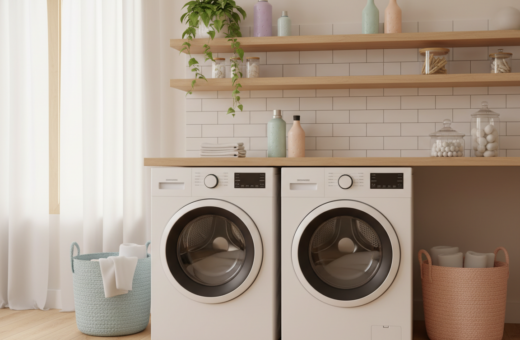
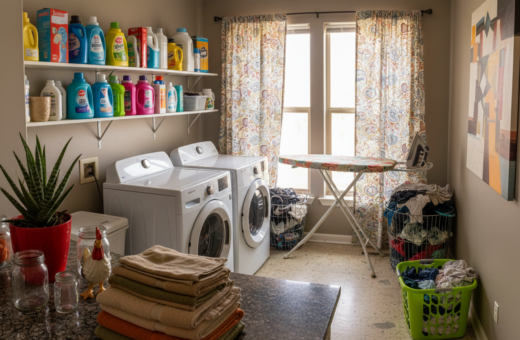
Designers had shown that even the most compact service areas could be both useful and inviting. They focused on layouts that made every spot work hard while keeping a warm look.
Practical choices like stacked machines, clever shelving, and task lighting turned chores into manageable moments. These ideas aimed to make time spent doing laundry feel calmer and more efficient.
Good plans used vertical storage and multipurpose furniture to free up floor space. Homeowners then found that thoughtful finishes and soft accents bridged function and style.
When designers balanced capacity with comfort, small laundry rooms became appealing extensions of the house. The result was a set of room ideas that worked well for daily life and looked intentional.
Defining the Vision for a Cozy Small Laundry Room
A confident vision helps transform a compact service area into a deliberate, high-functioning part of the home.
Design philosophy starts with intent. Zoë Feldman of Zoë Feldman Design advocated citrine color drenching to give tight spaces depth and presence. Such a bold move made a small laundry room read as purposeful rather than utilitarian.
Design Philosophy for Compact Areas
Establish a clear concept before picking finishes. When designers commit to a palette and layout, every shelf and fixture supports the idea.
Balancing Utility and Comfort
Plan how the family uses the space daily. That will guide storage, surfaces, and task lighting so the laundry room works well for chores and feels like a curated room.
“Even the most utilitarian spaces deserve the same attention as a living room.”
- Make bold choices to create memorable, functional rooms.
- Look at the area as a whole so elements read cohesive.
- Prioritize utility and comfort so the space is practical and pleasant.
Maximizing Vertical Storage Potential
Designers stretched storage upward so every inch of wall became useful for keeping supplies and tools.
Marea Clark of Marea Clark Interiors urged using tall cupboards and stacked shelving so every surface works harder. Open shelves let owners access detergents and cleaning supplies at a glance while keeping the room feeling airy.
Emilie Munroe of Studio Munroe recommended woven baskets to keep items corralled on high shelves. These baskets hide clutter and free floor space for tasks and appliances.
- Install shelves to the ceiling to store extra linens and supplies.
- Choose open shelving for everyday items and closed bins for seasonal goods.
- Use baskets on upper shelves so infrequent items stay tidy and reachable with a step stool.
Maximizing vertical storage makes a small laundry room more functional and helps homeowners make space without sacrificing style.
Creative Solutions for Exposed Washer Hookups
Exposed washer and dryer fittings once made utility areas look unfinished. Designers turned those eyesores into opportunities by adding modest millwork and smart shelving.
Installing a custom shelf above the machines both hid plumbing and created usable storage. A single shelf acted as a bridge between washer and dryer and tied the surfaces together.
Built-In Units and Closet Approaches
Many professionals recommended a shallow cabinet or a full wall unit to conceal hookups completely. A closet-style door kept access easy while keeping the side of the room clean.
- Fit a shelf to mask valves and cords and add a tidy work surface.
- Use shallow cabinets for detergents and tools to reduce visual clutter.
- Consider a built-in wall unit that frames the machines and creates cohesive storage.
These solutions made the laundry room feel more finished and the space more functional.
Selecting the Right Color Palette
Choosing a palette can turn a utilitarian space into a defining design moment. The paint and trim choices shape how the laundry room reads and how people feel while working there.
Sherwin Williams Snowbound is a go-to for a bright, clean look. It reflects light and makes a small laundry room feel larger and more inviting.
Designers also use unexpected accents to add personality. Emily June Spanos applies neon green trim to inject energy without overwhelming the space. Such an accent works well against a neutral field of paint.
Cost-effective updates are possible too. Claire Staszak had cabinets sprayed blue to create a custom finish that ties the entire room together.
- Match paint to cabinetry: test swatches next to cabinets and hardware.
- Pick one bold accent: limit vivid trim or a single wall to keep balance.
- Consider light levels: brighter paint broadens the space; deeper tones add drama.
A thoughtful color strategy ranks among the top laundry ideas. It defines the character of the room and helps the area feel like an integrated part of the home.
Incorporating Impactful Wallpaper Designs
Wallpaper offers a fast way to add pattern, color, and texture to a service area. A well-chosen paper can turn a utility corner into a memorable part of the home.
Traditional glue papers still deliver the most seamless finish. Gray Walker of Gray Walker Interiors installed Pierre Frey from floor to ceiling to create a fully wrapped effect that amplified personality in a compact laundry room.
Traditional Glue Method
Pros: long-lasting adhesion and a refined, continuous look. Prospective installers should pick a paste suited for humid spaces and take care at seams.
Peel and Stick Options
Peel-and-stick makes pattern trials easy. Rifle Paper Co.’s Willowberry is available in both glue and peel-and-stick formats, giving homeowners flexibility.
- Consider fabric-backed papers for a jewel-box effect—David Frazier used Soane’s Scrolling Acanthus for luxe texture.
- Wallpapering the ceiling can add drama when wall space is limited by cabinets and appliances.
- Choose durable materials rated for moisture so the finish lasts in an active laundry space.
Enhancing Floors with Decorative Tiles
Decorative tiles transform what was an afterthought into a defining design element. Liz Goldberg of CAROLYNLEONA used painted floor tiles to bring a European character to a small laundry room in North Carolina. That painted finish reads like a curated surface rather than a utility floor.
Nicole Yee of NY Interiors recommends penny tile for a subtle vintage feel. Penny tile pairs well with neutral walls and simple cabinetry so the pattern gets center stage.
The floor often goes unnoticed, but a patterned or painted tile can define the space and separate the laundry area from adjacent zones.
- Pick durable tiles: porcelain or glazed ceramics resist stains and heavy traffic.
- Think maintenance: choose grout and sealers that simplify cleaning.
- Use pattern wisely: a bold tile anchors the room without adding clutter.
Investing in quality tiling makes the laundry room both practical and stylish. A well-designed floor becomes the foundation of the room’s aesthetic for years to come.
Installing Functional Drying Racks
A discreet drying system can turn a busy utility corner into an efficient care station. Choosing the right rack keeps the workflow smooth and protects garments during drying.
Wall-mounted options are ideal when floor space is limited. Kathryn Murphy of Kathryn Murphy Interiors installed a wall-mounted drying rack in a blue small laundry room to save room and add style.
Wall Mounted Racks
Benefits: wall racks tuck away when not in use and free floor space for a washer and dryer. They work well above a utility sink or beside a narrow closet.
“A fold-flat rack makes daily care feel deliberate, not chaotic.”
- Install a wall-mounted rack to save floor space and keep clothes accessible.
- Use sliding racks between the washer and dryer, as Shannon Adamson suggests, to eliminate clutter.
- Combine a rack with a sink for a practical washing and drying station.
- Pick tuck-away designs so the area stays neat when not in use.
For more layout ideas that pair racks with other storage, consult small laundry room ideas. Integrating a functional rack makes the space more efficient and better suited to daily washing and care.
Utilizing Flat Surfaces for Folding
A dedicated flat surface makes folding efficient and keeps clutter from accumulating. Designers often add a continuous worktop to streamline the process from washer to dryer to folded items.
Ashley Macuga of Collected Interiors mounts a wooden butcher block directly above the machines to create a warm, sturdy folding station. It reads like a built-in table and doubles as useful countertop space.
Meghan Dorrian of Young America Creative installed an expansive wooden countertop in a galley laundry room to offer ample room for sorting and folding clothes. That approach turns narrow layouts into highly productive spaces.
For function, pair a folding surface with accessible storage. Cabinets or open shelves above the counter keep detergents, baskets, and a drying rack within reach.
- Maximize flat surfaces: use the top of the washer and dryer or a full-length countertop.
- Combine storage: add cabinets or shelves above for tidy, reachable items.
- Keep tools handy: include a slim rack or shallow tray for clothespins and folding aids.
Adding Personal Touches with Artwork
A well-chosen artwork can turn a utilitarian wash area into a personal gallery that sparks joy. Kristen Peña of K Interiors proved this by installing Gucci wallpaper and hanging an oversized art piece to make the laundry room feel lively and curated.
Artwork brings color and character to the wall and ties the space to the home’s broader design. Even a single framed print can offer a focal point and soften the mechanical feel of appliances.
Consider scale and material when choosing pieces. A large canvas reads well over a folding counter. Metal or glass frames complement modern hardware and match existing finishes.
- Pick art that reflects personal taste so the area feels connected to the household.
- Use wallpaper or a painted accent behind a piece to add depth and color.
- Choose moisture-resistant materials when hanging near washers and stains-prone spots.
“When you treat the laundry room as a place that deserves beauty, the time spent on clothes feels more rewarding.”
Implementing Hidden Storage Cabinets
Concealed storage keeps essentials within reach while preserving a calm aesthetic. Designers used cabinetry to hide supplies and make the laundry room feel orderly.
Amanda Reynal favored ceiling-height cabinets to maximize storage and keep the room uncluttered. Tall units free floor space and store seasonal items up high.
Hannah Fulton placed a cabinet above the washer so detergent stays handy but out of view. Shelby Van Daley suggested rolling hampers under a countertop to move items quickly from sort to wash.
Rob Stuart recommended standalone cabinets that sit on top of the machines for renters who need nonpermanent solutions. These units create closet-like storage without drilling.
- Use tall cabinets to reach the ceiling and add storage capacity.
- Hide essentials behind doors so the space reads neat and serene.
- Include rolling hampers for accessible sorting under counters.
“Hidden storage is a key component of a functional laundry room.”
Well-planned cabinets keep every item in its place and make daily laundry chores faster and less distracting.
Creating a Multiuse Mudroom Space
Smart layouts position the washer and dryer beside seating and storage so the laundry room doubles as a mudroom and a functional work area.
Megan Evans of Megan Evans Interiors designed a laundry that also serves as a workstation with a skirted desk. It lets someone handle quick emails while washing clothes, which increases daily efficiency.
Nadia Watts of Nadia Watts Interior Design recommended adding a bench to the room so people can sit to tie shoes, stash backpacks, or sort gear. A simple seat makes the side that faces the entry feel intentional and organized.
Heidi Woodman used a standalone wooden bench to add vintage style while keeping storage practical. That mix of form and function helps busy families maintain order.
- Combine seating and storage to store shoes and outerwear.
- Include a small desk or shelf to make the space work for short tasks.
- Plan zones for washing, sorting, and gear so rooms stay tidy.
Designing the area as a multiuse space maximizes the home’s footprint and keeps everyday chores and gear in one tidy place.
Choosing Unique Lighting Fixtures
Well-planned illumination makes tasks easier and gives the laundry room a deliberate personality.
Designers have used playful and practical fixtures to lift both mood and function. Rachel Cannon hung a beaded chandelier to add whimsy and a strong focal point above the washer and dryer. Sara Hillery paired a geometric painted ceiling with a pendant to amplify charm and color across the area.
Task lighting matters. Denise Morrison installs wall-mounted sconces to brighten work surfaces near cabinets, the sink, and folding counters. Good task light helps people see stains, sort items, and use shelves and storage efficiently.
- Swap builder-grade fixtures for a unique pendant or chandelier to add a personal touch.
- Combine ambient and task lighting to keep the floor and work surfaces well lit.
- Consider ceiling treatments, wall sconces, and directional fixtures to layer light for both chores and design ideas.
“The right fixture becomes both a tool and a beautiful focal point in the home.”
Camouflaging Appliances for a Seamless Look
Hiding appliances with built-ins and bold finishes helps the wall read as part of the home’s palette. Lisa Laliberte-Alle of Laliberte Interiors used plum-colored cabinets to tuck a washer and dryer completely out of sight.
Craig O’Connell of Craig O’Connell Architecture favors strong color and a geometric backsplash to redirect the eye. A patterned tile or wallpaper focal point makes the machines feel intentional rather than utilitarian.
Integrate storage and shelves so doors conceal detergent, hampers, and cords. When appliances sit behind matched fronts, the room reads cohesive and calm.
- Use built-in panels to minimize visual noise from machines.
- Pick a bold paint or backsplash to create a deliberate focal point.
- Design shelves and cabinets to keep essentials handy but hidden.
“When appliances disappear into cabinetry, the laundry becomes an integrated part of the home’s design.”
Camouflaging appliances turns the laundry room into a polished space that feels planned and useful.
Embracing Texture with Cabinet Fronts
Textured cabinet doors can change how a service area reads, adding depth and character without extra square footage.
Kriste Michelini of Kriste Michelini Interiors often uses mesh cabinet fronts to introduce English-inspired detail. Those fronts offer pattern and ventilation while making storage feel bespoke.
KraftMaid Shaker Dove White cabinets deliver a clean, tactile surface that suits many schemes. Pairing textured fronts with a bold color or subtle wallpaper creates contrast and keeps the layout from feeling flat.
Mixing textures balances polish and practicality. For example, a woven-front cabinet beside a smooth painted door gives interest without cluttering the visual field.
- Add immediate detail: mesh or beadboard fronts lift a laundry room’s look.
- Elevate the design: textured fronts make cabinets read custom and refined.
- Work with finishes: coordinate textures with the washer and dryer surfaces for cohesion.
“Focusing on cabinet fronts lets homeowners express personal style through small, high-impact details.”
Avoiding Common Design Pitfalls
A thoughtful checklist prevents the most frequent pitfalls in utility-area design. Good planning keeps the space useful and calm.
Wallpaper and finishes matter. Janelle Blakely of Blakely Interior Design warns against fragile papers like silk or grasscloth near washers and dryers because moisture ruins delicate fibers and seams.
Less is more when accessorizing. Kimberly Harrison advises avoiding crowded displays and non-essential decor that compete with storage and task areas.
Do not use the area to park holiday boxes, sports gear, or unrelated collections. These items turn cabinets and shelves into dumping grounds and reduce usable floor and countertop space.
- Place the washer and dryer so there is clear counter space for folding clothes.
- Reserve wall shelves and baskets for daily essentials, not seasonal overflow.
- Keep the sink, rack, and closet access unobstructed for quick washing tasks.
“A clutter-free layout saves time and makes the area feel intentional.”
By avoiding these mistakes, homeowners create a functional, attractive laundry room that supports daily washing and keeps items organized.
Conclusion
Simple changes to layout and storage can radically improve how a service area functions and feels. A clear plan that balances storage, finishes, and lighting turns chores into smoother moments.
By focusing on smart storage, intentional design, and even bold wallpaper choices, any compact space can become both useful and attractive. These choices help the room work better and read like a designed part of the home.
They hope readers will use the ideas here as a starting point. For practical inspiration and DIY options, consult these DIY small laundry ideas.
Start the transformation today and enjoy a more organized, pleasant space for years to come.