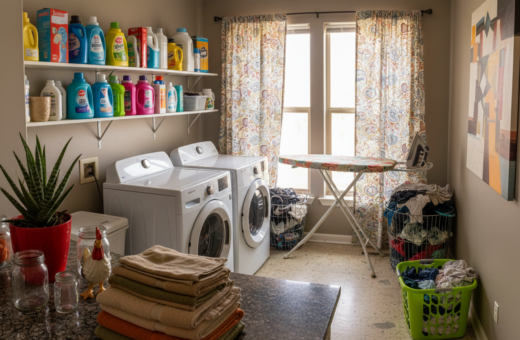
She wants a laundry room that feels calm and useful. Research shows people spend over 480 hours a year on laundry, so the environment truly affects daily life.
The author runs a community of 300,000+ followers who use a free design guide to optimize their home spaces. That guide offers practical laundry room ideas that help balance function with style.
Simple design choices can turn a small laundry room or tiny closet into a pleasant place to sort a load each day. Smart solutions let you keep what you need while adding personal decor touches.
Practical help on the blog walks readers through changes that make laundry tasks feel less like a chore. With clear design moves, they can create a space that serves daily needs and reflects taste.
The Importance of Aesthetic Laundry Spaces
A thoughtful aesthetic can make routine wash days feel calmer and more efficient. A well-planned laundry room lifts mood and helps people stay organized without adding clutter.
Design that considers color, texture, and layout turns mundane tasks into a more pleasant part of the day. When these rooms are intentional, they reduce stress and speed workflow.
Treating a small work area with the same care as a living space raises the home’s comfort and resale appeal. Simple choices—soft paint, tactile baskets, and clear surfaces—create a welcoming vibe.
- Improves daily routines by making tasks faster and clearer.
- Helps keep the rest of the house orderly and efficient.
- Adds value by showing thoughtful design in often-overlooked rooms.
Investing in design for these areas is practical, not vain. A calm aesthetic saves time, reduces mess, and makes doing laundry less of a chore.
Maximizing Decorative Storage Laundry Room Potential
An 8×8 layout becomes extremely efficient when every inch is planned for both use and visual appeal. Start by measuring and testing one of the 25+ layout options the author recommends to match your specific floor plan.
Hidden Storage Techniques
Concealment is a powerful design move. Install shallow cabinets above the washer and dryer to tuck away detergent, stain removers, and small tools.
Use deep drawers under a folding counter to hold bulky items and spare linens. Slide-out trays keep bottles upright and accessible without cluttering surfaces.
- Custom cabinet fronts hide mess and create a clean visual line.
- Vertical shelving fits tall items while freeing floor space.
- Plan for the washer and dryer hookups so cabinets sit flush and efficient.
Curated Countertop Displays
Keep the countertop tidy by designating a single tray or basket for daily essentials. A curated display makes items look intentional, not messy.
Limit decor pieces to one or two small accents and a functional jar for clothespins or soap pods. Every detail—from cabinet finish to how one loads a washer—affects the work flow and the look of the space.
Utilizing Vertical Wall Space for Decor
When walls become active surfaces, a compact washer and dryer area gains personality without crowding the floor.
Use the wall above appliances to lift the eye and make the entire room feel larger. Mount a slim shelf or a row of hooks high enough to leave the washer and dryer fully accessible.
Artwork, framed prints, or a patterned panel give the space a focal point and show intentional design. Hanging clothes on decorative hooks keeps them off counters and ready to wear.
- Visual height: vertical décor draws attention upward and expands perceived space.
- Function: hooks display clothes and small accessories without blocking appliances.
- Personality: the wall becomes a simple canvas for style that won’t clutter the floor.
Mount items securely so the dryer and washer stay easy to reach. This keeps the area polished and practical while adding thoughtful design ideas to the space.
Selecting the Right Lighting Fixtures
Thoughtful fixture choices lift a functional corner into a stylish, well-lit workspace. Good light improves visibility and mood, making tasks faster and less tiring.
Proper fixtures turn a small wash area into a bright, fresh part of the home. She should aim for layered light: general overhead, task illumination, and soft accents that add warmth.
Accent Lighting Options
Accent lights on the wall provide targeted brightness for folding and stain checks. They also create depth so the space feels larger and more inviting.
- Under-shelf LED strips: low-profile, energy efficient, perfect for counters.
- Adjustable wall sconces: direct light where she needs it for detail work.
- Small pendant: adds style while keeping surfaces clear.
“A well-lit area helps spot stains and speeds sorting, proving that lighting is a practical necessity.”
Choose fixtures that match the overall design so the area stays both useful and attractive. Good lighting is one of the simplest ideas to make any room feel clean and welcoming.
Incorporating Soft Textures with Rugs
A well-placed rug can anchor the space and change how one experiences daily chores.
She should pick a rug that cushions feet on a hard floor and resists moisture. Low-pile, washable fibers work best near machines.
Rugs define a washing area by adding color or pattern, so the laundry room reads like a finished corner of the home.
- Comfort: soft textures reduce fatigue while folding or sorting.
- Acoustics: rugs help muffle the sound of a washer and make the room calmer.
- Style: a runner or small mat gives visual interest without crowding the floor.
“A cushioned rug turns quick chores into moments that feel more like home.”
For maintenance, choose easy-care fibers and a rug pad that prevents slipping. These small ideas improve function and mood while keeping the area tidy.
Choosing Functional Yet Beautiful Containers
Choosing the right containers transforms common supplies into a tidy, intentional part of the space.
Every container should do two things: hold items neatly and add to the overall aesthetic. Pick jars for pods, lidded tins for dryer sheets, and woven bins for bulk goods.
Using a few well-placed bins on top of the dryer keeps small items organized and out of sight. That simple move makes counters look cleaner and speeds daily tasks.
- Hide packaging: swap bulky boxes for labeled jars to keep the room looking calm.
- Mix function and style: choose materials that resist moisture and clean easily.
- Invest once: a quality container lasts and keeps the area tidy for years.
“A neat selection of containers turns scattered supplies into a clear, usable surface.”
Implementing Decorative Shelving Solutions
Shelves can act as both display and work zones, turning a utilitarian corner into a polished part of the home.
Thoughtful shelving helps keep the washer dryer area tidy and makes everyday tasks smoother. Choose a mix of open and closed options so frequently used items sit within reach while less pretty supplies stay hidden.
Floating Shelf Styling
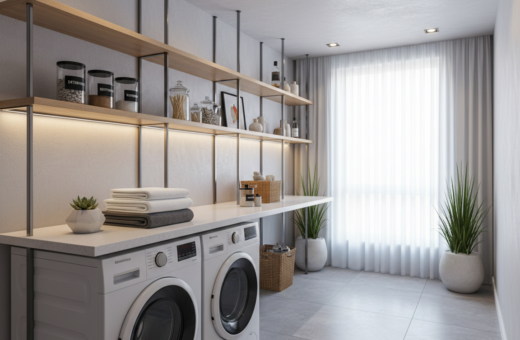
Floating shelves suit a small laundry room because they reduce visual weight. Use two or three shelves above the counter to hold jars, folded cloths, and a framed print.
Open Cabinet Organization
Open cabinets show what is used most. Add labeled baskets and a slim ledge for folded clothes. This keeps the room neat and speeds sorting.
Material Selection
Pick moisture-resistant materials like sealed plywood, metal, or solid wood with a tough finish. That choice supports long-term design and keeps wall fittings secure.
- Five useful shelf types: floating, bracket, built-in, ladder, and cubby.
- Maximize space above the washer and dryer for quick access.
- Balance display and function to improve room storage and organization.
Adding Life with Greenery
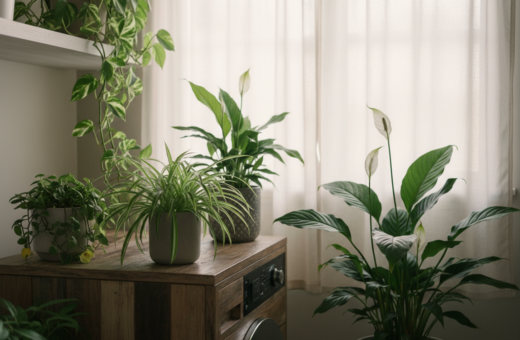
Even one small potted plant can change how someone feels about doing chores. A living accent makes a utility corner calmer and more inviting.
Plants improve air quality and lift mood. Choose low-light, low-maintenance species like pothos, snake plant, or ZZ plant for a busy laundry room.
Place a small pot on a high shelf so it won’t block tasks. A trailing vine softens lines and contrasts with metal machines.
- Improves indoor air and creates a fresher atmosphere.
- Makes the room feel less mechanical and more cared-for.
- Adds color and texture without a full remodel.
“A single plant turns a compact space into a welcome corner.”
With simple pots and a little light, greenery helps the laundry area feel tied to the rest of the home. It is an easy, affordable way to refresh the space.
Enhancing Walls with Paint and Wallpaper
A strategic accent wall behind the washer dryer can shift focus from machines to style. Wallpaper or a painted panel gives the area a clear focal point that feels intentional.
Use beadboard, textured panels, or a single bold color to add depth. These wall details bring tactile interest and make the space feel layered without heavy edits.
She can refresh doors or cabinets with a fresh coat to tie the look into the rest of the home. Painting hardware and trim unifies the area so it reads like part of the house, not an isolated corner.
- Quick updates: wallpaper behind machines creates drama without replacing shelves or cabinetry.
- Textured wall ideas: beadboard, shiplap, or molded panels add depth and detail.
- Color strategy: pick one accent and two neutrals to keep the space calm and consistent.
“Wallpaper and paint are easy, cost-effective ways to refresh laundry rooms with big impact.”
These simple moves make doing clothes feel cleaner and more curated. Small wall changes deliver big design results with minimal cost and disruption.
Installing Stylish Wall Hooks
A row of well-placed hooks turns a blank wall into a handy staging area for damp shirts and delicates. Hooks free up counters and give a clear spot to hang items that need air-dry care.
Choose finishes that match existing hardware so the look feels cohesive. Metal, brass, or matte black hooks tie into pulls and faucets for a unified aesthetic.
In tight layouts, hooks save valuable floor space and make the workflow smoother. She can hang a drying rack, a delicates bag, or a freshly pressed shirt within reach of the washer and dryer.
- Provide a dedicated place for items that must not touch the floor.
- Create an intentional visual line on an otherwise empty wall.
- Install hooks at varied heights for garments, bags, and hang-dry meshes.
“A few simple hooks make small tasks faster and keep the area tidy.”
Creating a Dedicated Folding Station
A dedicated folding area transforms chores into a quick, predictable step in any laundry workflow. Placing a flat counter over the washer dryer gives a clear surface to sort and fold clothes without moving loads across the home.
She should plan the counter height to match the machines so lifting is easier and bending is reduced. Underneath, add cabinets or open shelves to keep essential items close at hand and out of sight.
Built-in cabinets and a slim cabinet or set of shelves beneath the counter increase laundry room storage and help maintain neat surfaces. This keeps items like detergents and stain treatments accessible but organized.
Every space benefits from a purposeful folding zone. It prevents piles from forming on countertops or furniture and speeds the final step of every wash cycle.
- Flat counter above the washer and dryer for easy handling of clothes.
- Cabinets or shelves beneath to add focused laundry room storage.
- Defined area that keeps the rest of the room tidy and efficient.
“A small, well-placed folding station saves time and keeps clothes ready to store.”
For ideas and practical plans, see a dedicated guide on creating an efficient folding station that fits compact layouts and maximizes room storage.
Using Mirrors to Expand Small Spaces
A well-placed mirror changes perception, making a compact wash zone feel broader and brighter. Mirrors reflect natural and artificial light, so a narrow area looks airier and less cramped.
Place a large mirror on a main wall to bounce light across the counter and machines. This trick works especially well beside the dryer, where added brightness helps with sorting and spot checks.
Mirrors also add depth in a small laundry room without taking floor space. A slim framed mirror or a mirrored panel creates the illusion of extra width and height.
- Light boost: reflects overhead and task lighting for clearer work areas.
- Visual expansion: makes narrow corners feel open and balanced.
- Practical monitoring: lets someone glance at the area without moving loads.
“A mirror turns tight corners into welcoming spaces while staying fully functional.”
Displaying Meaningful Artwork
Meaningful art brings personality to tight quarters without compromising function. There are 50 unique wall art ideas she can adapt to set the right vibe and add a personal touch to a laundry room.
Propping frames on a shelf or hanging a small gallery on the wall makes the area feel curated. This approach softens the look of a closet or compact wash corner and turns chores into a more pleasant task.
She should pick pieces she loves so the space becomes welcoming. Even a single print above the dryer can tie together shelves, items, and the overall design.
- Use mixed sizes to create a layered shelf or wall display.
- Choose moisture-resistant frames near machines and vents.
- Let art reflect color and mood to coordinate with clothes and accessories.
“Artwork can be the defining decor element that ties all design ideas together.”
Managing Lint and Waste Elegantly
A simple system for lint and odds-and-ends makes everyday loads quicker and neater. She can keep a small, lidded container by the dryer to collect lint and stray threads. This hides waste and prevents debris on the floor.
Design a dedicated place for found items like coins, buttons, and receipts. A shallow tray or little cabinet drawer near the washer saves time during a busy day. It also keeps things from getting lost in a pile of clothes.
Integrate waste into laundry room organization so tidying becomes part of the workflow. Use a decorative basket for overflow and a sealed container for lint to reduce dust and improve air quality.
- Keep a lidded container for lint by the dryer to hide mess.
- Reserve one tray or drawer for coins and small items found in pockets.
- Choose durable pieces over cheap options—avoid the five IKEA buys the author flags to protect cabinet and shelf longevity.
“Every laundry room needs a simple lint solution to keep the space clean and the work moving.”
Selecting Durable and Stylish Hardware
Choosing the right pulls and knobs is one of the quickest ways to refine a compact work area.
Durable hardware stands up to years of heavy cycles with the washer dryer and daily handling. Look for solid metal finishes, sturdy screws, and reliable hinges so cabinets stay aligned and true.
Match finish to the wider palette to create a cohesive look on the wall and across open shelves. When hardware complements cabinet trim, the entire space reads as intentional and finished.
- Pick finishes that resist fingerprints and moisture near the dryer and washer.
- Choose pulls sized for frequent use so hands don’t fumble while holding clothes.
- Install soft-close hinges to protect doors and keep things quiet on the floor.
Think long term. Quality hardware is a small investment that saves money over time and keeps laundry room storage neat. These small choices make the place more practical and more inviting for every load.
“Small details like hardware change the way a functional area feels and performs.”
Conclusion
With a few practical moves, even a cramped wash area can become both pretty and efficient. Follow simple choices in layout and design to create a tidy laundry space that fits daily life.
Organization is the key to keeping this space calm and usable. Use one or two well-chosen accents to add decor without crowding surfaces, and pick durable pieces that offer real help.
By using the tips on this blog, she can transform small spaces in the home. Enjoy the process, start with one change, and build from there.