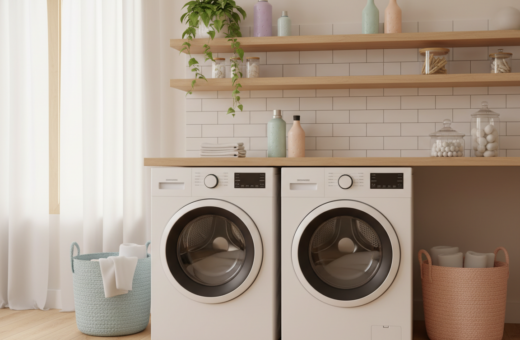
Many homeowners treat the laundry room as an afterthought. Interior designer Claudia Dorsch argues a utility area deserves as much care as a kitchen. She says placement and layout shape how people perceive the space.
When a room is pushed into a dark corner, it often feels cramped. Designers note that poor storage choices and disorganized items shrink the feel of the area. A thoughtful plan improves flow and function.
Good interior design links this room to the rest of the home. Moving or rethinking placement can turn a tight corner into a useful part of daily living. The trick is to plan around how people use the space, not how they store things.
Professional designers often find one key issue: failing to integrate the utility area into the home’s overall scheme. Fixing that makes rooms feel larger and more efficient.
Common Small Laundry Room Decor Mistakes That Shrink Your Space
Many homeowners treat utility areas as purely functional, and that outlook creates avoidable problems. Designer Jen Baxter of Baxter Hill Interiors notes these areas can be stunning when given attention and a clear plan.
Ignoring visual cohesion is one frequent error. When a space lacks personality, it reads as an afterthought instead of part of the home. That perception makes it feel smaller and less useful.
Other common pitfalls include bulky furniture that blocks traffic and poor storage choices that cause clutter. Professionals say lack of planning leads to inefficient layouts and wasted square footage.
- Not matching finishes or colors to adjacent rooms, which disrupts flow.
- Picking oversized pieces that limit movement and function.
- Failing to design for task flow, which creates crowded counters and floors.
“Injecting personality into a service area can uplift daily chores,” said Jen Baxter.
Avoiding these common mistakes opens the space visually and improves function. Thoughtful storage, scaled furniture, and a unified palette help transform this area into a true asset for the home.
Optimizing Workflow and Room Layout
Where appliances sit changes how people move through and use the space. A well-planned layout creates a clear sequence from washing to drying to storing clothes. This reduces wasted motion and saves time for daily chores.
The Importance of Appliance Placement
Keep the washer and dryer close together to avoid carrying heavy loads across the floor. Cat Hoad of Absolute Project Management suggests placing a cupboard on the same floor as the washing machine and dryer to improve access and convenience.
“Placing machines without regard for workflow creates inefficiency,” said Angie Kreller of Yabby.
Integrating Laundry into Multipurpose Rooms
When mixing functions, clever cabinetry can hide a washer dryer pair and keep visual clutter low. Plan plumbing and electrical early to avoid costly moves later.
- Create a dedicated folding and ironing zone to keep the kitchen clear.
- Use wall-mounted ironing boards or pull-out shelves to save floor space.
- Design cabinets to store detergents and items used during washing and drying.
A thoughtful plan lets tasks flow naturally: wash, dry, fold, and store. That sequence improves functionality and makes utility areas behave like true parts of the home.
Maximizing Storage Without Creating Clutter
Smart storage choices make a utility area feel ordered and open. A balanced approach limits visual noise while keeping essentials within reach. Mixing closed cabinets with selective open shelving lets homeowners hide cleaning supplies and show decorative items.
Balancing Open Shelving with Closed Cabinetry
Nicole Jensen of Murphy Door warns that open shelving looks great in photos but can quickly become visual clutter if left unmanaged. Closed cabinetry stores detergents, extra washing machine accessories, and less attractive supplies.
Use tall cabinets on the wall to free the floor and hold bulky items like extra laundry baskets or drying racks. Under-counter baskets keep folding and sorting supplies organized and accessible.
- Designate spots for laundry baskets to keep clothes off the floor.
- Place cabinets near the washer and dryer for easy access during washing and drying.
- Reserve open shelving for baskets and labeled bins so the space stays calm.
“Mixing closed storage with curated shelving keeps a utility area functional and serene.”
Essential Lighting and Ventilation Upgrades
Bright, layered lighting and reliable ventilation are the foundation of any efficient utility area. Proper airflow prevents heat and moisture buildup that can lead to mold near machines and walls.
Plan ventilation and plumbing carefully. Angi estimates residential laundry projects can top $5,000, so get ducting and vents right the first time to avoid costly fixes.
If the space sits next to the kitchen, make sure vents exhaust to the exterior rather than into shared ducts. That protects adjacent rooms and the home’s structure.
Lighting matters for simple tasks like sorting and pairing socks. A single overhead fixture is rarely enough; layer ambient, task, and under-cabinet lights for clarity and a larger feel.
- Install an automatic light switch for hands-free use.
- Choose a ducted exhaust fan sized for the appliances in the space.
- Prioritize airflow systems that protect appliances and finishes.
Upgrades that pair good lighting with proper ventilation improve daily use and extend the life of appliances and finishes. Thoughtful planning saves money and keeps the area healthy.
Improving Ergonomics for Daily Tasks
A well-planned workflow reduces bending and reaching, saving time and strain every day. Simple ergonomic choices improve how people wash, fold, and dry clothes. These changes make the space easier to use and maintain.
Installing Convenient Folding Surfaces
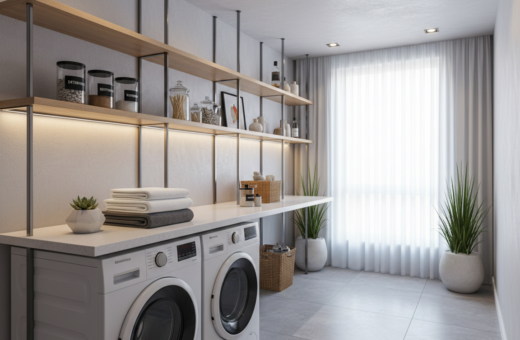
Andrea Sinkin recommends adding counter space over front-loading appliances to create a clean, continuous folding surface. A top installed above a washer dryer pair turns vertical space into useful work area.
Consider a pull-out board or slim cabinet to stash a steamer, as Laura Hursthouse suggests. Those items stay accessible without taking floor space.
Selecting the Right Sink for Your Needs
A deep utility sink is ideal for hand-washing delicates and pre-treating stains. Place it near cabinetry for detergent and cleaning supplies to speed tasks.
Incorporating Dedicated Drying Zones
Install a wall-mounted rack or ceiling-hung rod for air-drying. Elevate the washer and dryer to reduce bending and leave enough floor space for service access.
- Use open shelving for frequently used items and closed cabinets for cleaning supplies.
- Reserve clear floor space so technicians can access appliances for maintenance.
“Ergonomic design saves time and physical effort, making daily chores more manageable.”
For tips on avoiding common pitfalls and boosting functionality, see common pitfalls.
Conclusion: Creating a Functional and Stylish Utility Room
Simple changes in storage and lighting create a more open, practical space. Prioritizing workflow and smart storage prevents common mistakes and keeps daily tasks efficient. Thoughtful interior design ties the area to the rest of the home and protects finishes over time.
A well-organized laundry area makes chores faster and less taxing. Plan durability, ventilation, and task zones early to avoid costly retrofits in the kitchen or adjacent rooms.
For compact solutions and ideas that maximize vertical storage, see small laundry ideas. With clear planning, the utility space becomes both useful and stylish.