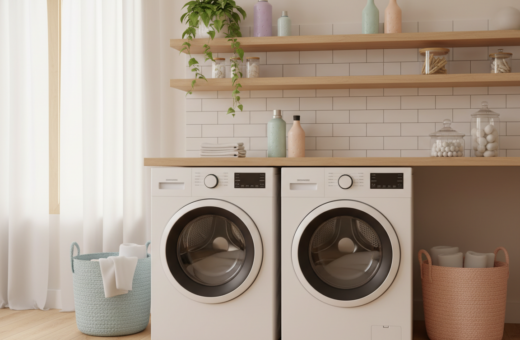
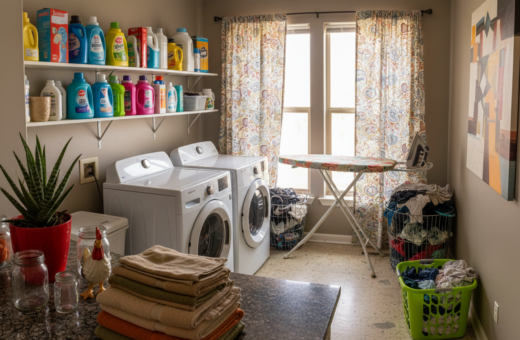
Small changes can make a big impact. Beth and Bob Judge turned part of their 1917 Beaux-Arts flat into a tidy laundry room that fits the home’s character. Nadia and Stephen carved a useful area into their 2,030-square-foot Brooklyn rowhouse and kept the look cohesive.
Careful planning helps a compact laundry room feel intentional, not cramped. Choosing the right design and smart storage turns unused space into a calm, efficient spot for chores.
These examples show how thoughtful room ideas and clever shelving save floor area and keep machines out of sight. With simple choices, any household can add useful features without losing style.
From historic flats to larger homes, these practical laundry room ideas prove that good planning helps unite function and form across varied spaces.
Defining the Modern Laundry Room Apartment
Efficient in-home laundry setups cut chore time and make daily life noticeably easier. A purposeful layout can increase property value and attract residents who plan to stay.
Most American families wash as many as 300 loads a year, so having an in-unit laundry room is a major convenience. Property managers report that quality laundry rooms help retain tenants and reduce vacancy.
Good design ties the utility area to the rest of the home. The best plans keep machines out of sight, maintain clear traffic flow, and preserve visual continuity with adjoining rooms.
- Prioritize a layout that reduces steps and saves time.
- Balance heavy-duty machines with hidden storage to stay clutter-free.
- Consider ventilation, sound control, and durable finishes for long-term value.
Maximizing Square Footage with Compact Appliances
When floor space is scarce, choosing compact machines is the fastest way to add full laundry capability. Small, stacked units make it possible to place a full setup into tight nooks without losing usable area.
Stackable Units
Stackable setups, like the 24-inch unit Isis and Stephano used in their brownstone bathroom, free up floor space while keeping a full washer and dryer accessible.
Ashleigh and Jonathan fit a stackable washer-dryer into their 953-square-foot DUMBO studio to avoid creating a separate utility closet.
Ventless Technology
Ventless dryers and heat-pump models work well where exterior venting is impossible. They reduce installation hassle and open up new layout options for small spaces.
- Save floor area: Stack units to keep traffic paths clear.
- Integrate storage: Surround machines with cabinets and shelving for neat storage and folding surfaces.
- Choose ventless: Ideal for tight spaces and multi-unit buildings lacking vents.
These practical laundry room ideas balance function and form. With smart design and compact equipment, small rooms can perform like larger rooms and keep a home efficient and tidy.
Integrating Laundry into Kitchen Layouts
When the washer and dryer sit beside the dishwasher, the whole service zone reads as one cohesive area. This setup keeps tasks centralized and hides equipment behind cabinetry for a neat finish. Beth and Bob Judge used a stackable unit with stainless-steel trim next to their dishwasher to achieve that seamless look.
Stainless Steel Finishes
Matching finishes helps appliances blend. Choosing stainless-steel trim on a washer dryer makes it feel like part of the appliance family. It pairs well with ovens and dishwashers and keeps the visual flow of the space intact.
- Concealment: Fit the washer behind cabinet doors to keep the area guest-ready.
- Utility sink: Add a small sink for stain pre-treatment and quick rinses.
- Save space: Centralizing machines in the kitchen frees other parts of the home for living.
Designers often recommend this plan for those who want utility tasks out of sight. With careful placement and matching finishes, the kitchen can host full washer functions without disrupting the home’s overall design.
The Rise of All-in-One Washer Dryer Units
Under-counter washer dryer combos let homeowners tuck full wash cycles beneath counters without losing design flow. Jessica and Alex installed one in their 1930s co-op kitchen to keep service areas discreet and practical.
All-in-one units save space by combining washer and dryer functions into a single footprint. They work well where venting is impossible, so owners avoid major structural changes.
These machines have become sought-after amenities for renters and buyers. Having a washer in the same room offers convenience that boosts a property’s appeal.
- Compact footprint: Frees floor area for storage or prep surfaces.
- Ventless operation: Easier installation in constrained buildings.
- Minimalist design: Keeps a home tidy without extra equipment.
All-in-one washer dryer systems represent an efficient, user-friendly path forward. For busy urban residents, they deliver in-unit laundry benefits while preserving style and function.
Creating Accessible Laundry Stations
A. Raising machines on pedestals makes daily chores easier and reduces strain for users of all ages.
Mickey in Prospect Heights placed his apartment-sized washer dryer on a pedestal and built a counter above it. This setup lets him load clothes without bending and gives a handy folding surface at a comfortable height.
Accessible design saves time and eases physical strain. Thoughtful placement and a stable work surface turn a small service room into an inclusive, usable area.
- Raise machines to reduce bending and lifting.
- Add a counter for sorting and folding at waist height.
- Plan clear paths so the space works for varied mobility levels.
These accessible setups help people age in place and make chores less burdensome. For tips on layout and clear traffic flow, see guidance on how to design a laundry layout.
Transforming Closets into Hidden Utility Zones
A compact closet can become a discreet hub for washing and drying with only a few strategic changes. Families in Manhattan have tucked a stackable washer-dryer behind closed doors to preserve a clean, contemporary look. Isis and Stephano fit a 24-inch stacking unit by reconfiguring shelving and hookups.
Door concealment keeps the room tidy. Bi-fold or full-height doors hide machines and vents. When closed, the cabinet front reads like built-in cabinetry rather than a service area.
Vertical Storage
Use the closet height. Add open shelves above the washer dryer for detergent, baskets, and small tools. Slim pull-out cabinets make supplies easy to reach without cluttering floor space.
- Maximize every inch: build custom cabinets around the unit so no space is wasted.
- Keep tasks out of sight: a converted closet becomes a dedicated utility zone that doesn’t interrupt decor.
- Maintain airflow: leave clearance for the dryer and install vents or a ventless model if needed.
“A hidden closet setup makes daily chores vanish from view and preserves living spaces for what matters.”
Selecting the Right Flooring for Wet Zones
A well-chosen floor acts as the first line of defense against leaks and long-term water damage. In many buildings the laundry room sits in a basement, where poured concrete or tiled surfaces handle drainage best.
Install a floor drain where possible and select durable materials like ceramic tile or sealed concrete. These options stand up to heavy machines, repeated spills, and frequent cleaning.
Include a utility sink in the plan to trap debris and keep lint and grime out of the plumbing. A small sink also gives a safe place for hand-washing delicate items before they enter the washer.
If the space has windows, pick flooring that resists moisture and occasional condensation from glass. Properly chosen materials protect adjacent areas and simplify routine upkeep.
- Durability: tile or sealed concrete resists wear and water.
- Drainage: add a floor drain to limit standing water.
- Practicality: a utility sink prevents clogged pipes and keeps tasks neat.
Enhancing Functionality with Custom Cabinetry
A tailored cabinet plan can transform a utility niche into a polished mudroom that works hard and looks good.
Custom cabinetry gives a laundry room clear zones for cleaning products, linens, and daily gear. Nadia and Stephen used fitted cabinets in their South Slope home to combine a practical laundry area with a functioning mudroom.
Well-designed cabinets hide messy supplies while keeping them easy to reach. Adding a pull-down drying rack or a built-in hamper saves precious floor space and speeds routine tasks.
Choose durable finishes and adjustable shelving so the cabinet layout grows with household needs. Thoughtful design details turn a basic room into an attractive, organized part of the home.
- Dedicated spots: labeled bins and shelves cut sorting time.
- Hidden storage: keep detergents out of sight yet handy.
- Smart features: pull-out hampers and drying rods maximize usable space.
“Investing in high-quality cabinets ensures the laundry room performs like a luxury area.”
Incorporating Smart Lighting for Better Visibility
Layered illumination lets a tight space perform like a larger, purpose-built zone. Thoughtful light choices make tasks easier and reduce mistakes when handling garments and detergents.
Task Lighting
Task lighting focuses bright, energy-efficient bulbs where people sort, pretreat stains, and fold. This targeted approach helps spot spills and color issues that overhead fixtures can miss.
Smart systems add convenience. They can dim for evening use, ramp up when machines finish, and switch off when the space is idle to save energy.
- Install under-cabinet or adjustable arm lights above counters and sinks.
- Choose LED bulbs for longevity and crisp, consistent light.
- Program scenes and timers so lights run only when someone uses the area.
“Proper lighting is a key component of a well-designed utility area, making chores safer and more efficient.”
For secure access and building integration, consider pairing smart lighting with systems like ButterflyMX. And for more practical tips on brightening a laundry room, see how to make a laundry room.
Adding Luxury with Thoughtful Design Details
A few refined details — tile, paper, and hardware — can lift a utilitarian area into a designed destination.
Decorative Tiles
Decorative tiles create an immediate focal point. Patterned tile on a backsplash or a small stretch of floor adds color and texture without crowding the space.
High-end floor materials like encaustic or porcelain withstand wear and make even modest spaces feel curated.
Wallpaper Accents
Wallpaper accents introduce personality without heavy cost. Use a durable, washable paper above counters or behind open shelving to keep the area fresh and easy to clean.
Bold prints pair well with neutral cabinets to balance utility and style.
Hardware Finishes
Swapping knobs and pulls updates cabinetry instantly. Brushed metal or matte black hardware gives a professional finish that reads intentional and cohesive.
- Tip: Match hardware finishes to faucets and lighting for a unified look.
- Choose durable materials that stand up to frequent use.
- Consider unique lighting fixtures to make the room feel more like a retreat than a task zone.
“Treating the space with the same care as other rooms in the home turns chores into a pleasant, well-designed moment.”
Improving Airflow and Drying Solutions
Good airflow keeps dampness from lingering and helps clothes dry faster.
Vent choices matter. Lynn and Craig installed a compact, ventless washer-dryer to avoid hauling loads up five flights. That choice eliminated the need for an exterior vent and improved daily convenience.
When a laundry room has windows, open them during and after cycles to encourage cross-ventilation. Even short bursts of fresh air reduce humidity and speed natural drying for delicates.
A well-placed utility sink helps with hand-washing and controls excess moisture from rinsing. Placing drying racks near a sink or a light source improves airflow and shortens drying time.
Space-saving drying solutions matter. Wall-mounted racks, fold-down rods, and ceiling pulley systems keep fabrics off surfaces and let air circulate around garments.
- Prioritize ventilation to prevent mold and preserve finishes.
- Use ventless tech if exterior vents aren’t possible.
- Combine a sink with vertical drying to manage moisture and stay organized.
“By focusing on airflow, you protect the laundry room from mold and keep machines running in top condition.”
Managing Clutter in Small Laundry Spaces
Smart storage turns tight corners into efficient work zones that reduce clutter and save time.
Martine Ilana converted a second-floor storage closet into a Scandi-inspired laundry room that feels calm and useful.
Built-in cabinets and vertical shelving make every inch count. Open shelves hold baskets and supplies while closed cabinetry hides detergents and tools.
Dedicate a small counter for folding. A fixed folding spot keeps clothes off chairs and saves precious time during weekly chores.
- Use wall-mounted racks for drying and free up floor area.
- Install tall cabinets so supplies stay organized and out of sight.
- Label bins and keep like items together to cut sorting time.
These simple ideas make compact laundry zones feel organized. With clear places for each task, small spaces work harder and remain visually tidy.
“A converted closet proves that clever planning beats square footage every time.”
Choosing the Best Location for Your Machines
Choosing the right spot for washer and dryer shapes how smoothly weekly chores run. Designers often suggest placing the laundry room on the same floor as bedrooms for maximum convenience. That choice cuts trips and keeps dirty clothes from piling up.
In a multi-story home, consider where family members spend most time. Placing machines near bedrooms or a central landing saves effort and reduces strain. A well-placed washer dryer also improves workflow and keeps a small space functional.
Proper placement ensures the room remains efficient and unobtrusive. It supports ventilation needs, sound control, and access to the floor drains and utilities.
- Convenience: Locate machines near bedrooms to limit trips up and down the stairs.
- Flow: Choose a place that connects to daily living areas for faster sorting and folding.
- Function: Think about vents, utility access, and how the placement affects the rest of the home.
“Careful placement of machines turns a necessary chore into a simple, efficient task.”
Essential Amenities for a Modern Laundry Room
Practical upgrades — like a deep sink and efficient machines — pay off every week.
A durable utility sink is indispensable for pre-treating stains and rinsing muddy gear. It protects fabrics and keeps messes out of the main home plumbing.
High-efficiency machines matter because most families wash up to 300 loads a year. Choosing energy- and water-saving models cuts bills and saves valuable time.
Beyond machines and a sink, the best setups add clear space for folding and for storing detergent and baskets. These thoughtful touches make the room faster to use and easier to keep tidy.
- Amenities: high-efficiency washer/dryer and a sturdy utility sink.
- Workflow: dedicated folding surface and reachable storage.
- Value: well-equipped zones add appeal and daily convenience to the utility area.
“Investing in the right features turns a basic laundry room into a functional space that supports a busy household.”
Avoiding Common Design Pitfalls
Simple missteps can turn a useful utility into an awkward catchall that undermines a home’s flow.
Keep non-essential items out. Do not store holiday decorations or sports equipment here; they create visual clutter and reduce function.
Choose durable surfaces, especially on the floor. Fragile wallpaper is a poor choice where damp clothing may hang to dry.
Lighting matters. Ensure the lighting is bright enough to spot stains and check colors, especially in basement installations where dark corners are common.
- Tip: Reserve the area for machines and task storage, not as a catchall for mudroom gear.
- Plan cabinets for sorted supplies so essentials stay accessible and neat.
- Pay attention to small details—proper light, resilient finishes, and clear paths improve daily use.
“A well-planned utility will never feel like a storage closet; it supports the household and enhances the home.”
Conclusion
Smart choices in layout and storage make weekly chores faster and less stressful.
By pairing compact appliances with clever shelving, a small service area can work like a full-featured utility zone. They save space and keep clutter out of sight.
Prioritizing accessibility and clear task lighting makes the space comfortable for any household member. Good placement—whether in the kitchen or a converted closet—keeps the home organized and efficient.
With considered finishes and durable materials, the area becomes an asset that eases daily life and adds property value. Small investments in design yield big returns in convenience and appeal.