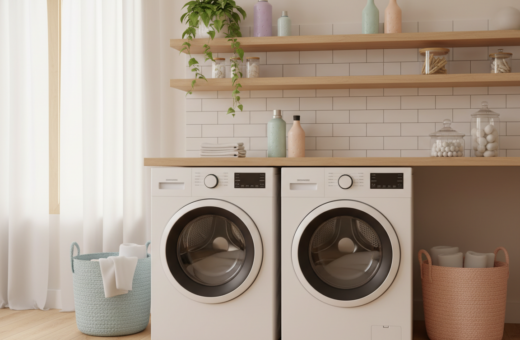
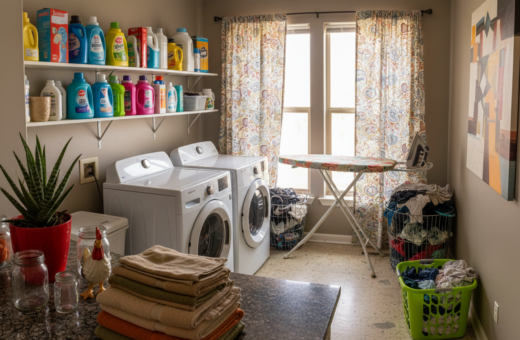
Ram Construction, Inc. shows how Shaker cabinets and white subway tiles turn an ordinary laundry room into a timeless space. The goal is to shift a closed-off, utilitarian area into a place that invites use and calm.
Natural textures—wood grain, woven baskets, and soft textiles—add depth and a lived-in touch. These elements help a small laundry room feel connected to the rest home aesthetic and the kitchen scale of finish choices.
A thoughtful plan makes a small space both functional and stylish. When builders prioritize layout, storage, and finishes, the room becomes a sanctuary instead of a chore zone.
Key idea: modest upgrades and consistent design cues prove that even compact rooms deserve attention. This section outlines why texture and classic materials matter for homeowners planning a professional makeover.
The Philosophy of Warm Laundry Room Design
Intentional choices can make a utilitarian space feel like a cared-for corner of the house. Kristine Renee argues that a laundry room should not read as sterile or industrial. It must feel lived in.
The core idea is to craft a destination within the home that invites use rather than avoids it. Treat this area with the same thoughtfulness you would give a busy kitchen. Simple swaps in lighting, color, and texture do much of the work.
A well-planned small laundry room reflects personal style. Storage, a pleasant palette, and tactile finishes make the space feel like an extension of home design. This reduces the sense that chores happen in a cold, isolated part of the house.
“People spend a surprising amount of time here; it should be comfortable and purposeful.”
- Make comfort a priority with soft lighting and real materials.
- Use concise layouts that mirror kitchen efficiency.
- Choose accents and textiles to soften industrial surfaces.
Incorporating Natural Wood Elements
Natural wood details bring instant character to compact service spaces. Foster Hill Design used a butcher block countertop and stained shelves to counterbalance black-and-white surfaces and create a more inviting cabinet area.
Butcher Block Countertops
Butcher block countertops add texture and practicality. They provide a durable work surface for folding and a natural layer that pairs well with white tile or shaker cabinetry.
Stained Wood Shelving
Stained wood shelving introduces organic grain and depth. Open shelves break up hard lines and make storage feel deliberate instead of utilitarian.
- Wood cabinetry offers long-lasting storage for detergents and cleaning gear.
- Stained shelves soften industrial surfaces and connect the space to other areas of the home.
- Choose finishes that match kitchen cabinet tones to create a cohesive look.
Practical tip: select a butcher block finish sealed for moisture resistance and pair it with closed cabinetry for tidy, functional storage in small laundry rooms.
Selecting the Right Tile Floor
Choosing the right floor tile anchors a compact service area and sets the visual tone. High-quality tiles give a practical surface that resists moisture, cleans easily, and lasts through heavy use.
Timber Trails Development Company shows how a patterned floor can break up the monotony of square edges in a laundry room. A bold pattern adds shape and whimsy, making the space read as intentional rather than purely functional.
The Role of Woven Rugs
White subway tiles work well on walls and backsplashes, pairing nicely with a variety of floor tiles. When paired with textured floors, these tiles keep the palette classic and clean.
Integrating a woven rug over tile adds softness underfoot and makes the room feel more like a finished area of the home. A well-chosen rug also protects floors and helps define zones within small laundry rooms.
- Durability: choose tiles rated for moisture and high traffic.
- Texture: select finishes that add tactile warmth to cold floors.
- Contrast: pair patterned floors with white subway backsplashes for balance.
Softening Industrial Surfaces with Textiles
Textiles quickly transform cold surfaces into inviting, tactile spaces. Adding fabric layers shifts a compact service area from stark to approachable. Small changes yield big impact without a full remodel.
The Role of Woven Rugs
Ram Construction, Inc. used a woven rug to break up white tile and metal appliances. The rug introduces natural texture and a visual anchor that guides the eye away from machines.
Practical benefits include sound absorption and floor protection. Rugs soften clanks from washers and dryers and make standing more comfortable during chores.
- Layer a rug over tile to add warmth and non-slip grip.
- Choose durable fibers that handle regular cleaning and spills.
- Place a runner to define a pathway and create a focal point.
“A simple woven rug can turn a utility area into a more usable part of the home.”
For industrial inspiration, see industrial laundry inspiration. Quality textiles keep small rooms comfortable and stylish while supporting daily tasks.
Using Wallpaper to Add Personality
Patterned wallcoverings can turn a compact service area into a memorable focal point. Alan Clark Architects, LLC used patterned wallpaper to add interest without overwhelming the space. A well-chosen print can shift focus from the floor and appliances to the wall, making the area feel intentional.
Wallpaper is an excellent way to add personality to a laundry room. It lets homeowners experiment with bold patterns and color while keeping changes reversible and budget-friendly.
Durability matters. Select vinyl or moisture-resistant papers that stand up to humidity common in service spaces. This ensures the finish lasts and looks fresh.
- Use wallpaper as a statement surface to draw the eye upward.
- Pick patterns that balance with tile and cabinetry for cohesion.
- Consider an accent wall rather than full coverage to avoid visual clutter.
For ideas and product options, see this curated guide on laundry room wallpaper. Thoughtful choices can transform a functional space into a reflection of personal taste without a major renovation.
“Wallpaper can serve as a statement piece, drawing the eye away from the floor and toward the walls.”
Maximizing Natural Light in Small Spaces
Sunlight can transform a compact service area into a cheerful, functional corner of the house.
Maximizing natural light is crucial to make a small laundry room feel larger, brighter, and more inviting for daily use. Zahn Development, Inc. used a large picture window that lets sunshine flood the area and create a soothing, usable workspace.
Artificial Lighting Solutions
When daylight is limited, layered artificial lighting keeps the space bright and practical. Install recessed can lights for even task illumination and add a decorative pendant or wall sconce to give the area personality.
Reflective Surfaces
Glossy tile, a simple mirror, or light-colored floors help bounce light around a small space. These reflective finishes increase perceived square footage and make tasks like spotting stains and folding easier.
- Tip: place mirrors opposite windows to double daylight impact.
- Tip: choose light tile or pale floors to amplify brightness.
- Tip: combine overhead and task lighting for a well-planned small laundry.
“Proper lighting design is a hallmark of a well-planned small laundry, ensuring tasks are easier and the space feels open.”
Choosing the Perfect Color Palette
Selecting the right palette sets the tone for how a small service area feels and functions. Raykon Construction’s traditional scheme—raised-panel cabinets and crown molding—shows how a cohesive palette elevates cabinetry and styling.
Start with a primary color for walls and cabinets, then pick a contrasting trim or countertop tone. Consider how tile and countertops reflect light and influence perceived depth.
Use a consistent palette across cabinetry and walls to unify the space. This approach makes the utility area read as an intentional part of the home rather than an afterthought.
- Neutral base: soft whites or creams enlarge sightlines and coordinate with most tiles.
- Accent hues: soft blues or muted greens add personality without overwhelming the floor or countertop choices.
- Contrast: darker cabinet finishes anchor the layout when paired with light tiles and pale walls.
“A thoughtfully paired palette turns a compact work area into a cohesive, attractive part of the house.”
Integrating Brass and Metallic Fixtures
Brass accents can make a modest corner read like a curated vignette. The Fox Group used brass hardware with hexagon marble tile to lift the whole laundry room into a brighter, more refined space.
Brass and metal fixtures add instant depth and a sense of quality. A brass faucet at the sink becomes a focal point that blends function with style.
Mixing Metals for Depth
Mixing finishes—brass faucets with nickel pulls or matte black accents—creates layered interest. This approach keeps the cabinetry from feeling flat and gives the space visual texture.
- Luxury feel: brass hardware paired with marble tile reads high-end.
- Functional focal point: a well-placed sink with brass fixtures serves both use and image.
- Value: premium fixtures raise perceived home value and finish quality.
“A touch of brass turns necessary fixtures into intentional accents.”
Creating Functional Storage Solutions
Clever storage turns a compact laundry room into an efficient, calm workspace. Alan Clark Architects, LLC stresses that built-in options keep the area tidy and multifunctional. When storage is planned, daily tasks move faster and the space reads as purposeful.
Schuler Cabinetry recommends deep drawers and tall cabinetry so every item has a place. Use the space above the washer and dryer for cabinets or open shelving to increase storage without crowding the floor.
Install cabinet doors to hide cleaning supplies and baskets. A closed cabinet keeps countertops clear and makes the room feel professional and calm.
- Maximize vertical storage: tall cabinets keep bulky items organized.
- Dedicated zones: a sink area with under-cabinet storage holds detergents and tools.
- Easy sorting: designated baskets and drawers simplify handling clothes on the top of the washer.
“A well-organized laundry room with ample storage makes sorting, washing, and folding far less stressful.”
Adding Character with Vintage Finds
Handpicked antiques can transform a utilitarian laundry room into a layered, personal vignette. Small, curated pieces help a compact room tell a story rather than feel generic.
Jonathan Miller Architecture & Design shows how a concrete sink adds natural tone and texture. The concrete laundry sink serves as a functional statement that anchors the space.
Vintage wallpaper or an antique light fixture adds instant personality and a rich color layer. A reclaimed cabinet or repurposed table becomes practical storage and a focal point.
- One-of-a-kind finds add warmth and history to the laundry room.
- A vintage sink or repurposed furniture piece creates a striking focal point.
- Mixing old and new yields a balanced space that feels timeless and useful.
“A single vintage piece can change how a room reads, making chores feel more considered.”
Hunting for unique elements rewards homeowners with items that give the space a personal touch and enduring charm.
Designing Multi-Purpose Laundry Areas
Smartly arranged service spaces can host pets, crafts, and coffee without feeling crowded.
Pet washing stations are now common. mdt design and Artistic Renovations of Ohio LLC show built-in tubs, hand showers, and lower counters that make baths easy. These fixtures keep pets out of the main bathroom and add real utility to the laundry room.
Crafting Zones
Crafting corners add a dedicated place for hobbies. A fold-down table, task lighting, and targeted storage allow supplies to stay organized without crowding the washer or dryer.
Beverage Centers
Plain and Posh and Cindy O’Brien Design demonstrate how a small beverage center—mini fridge, sink, and shelving—turns the laundry area into a useful household hub.
- Maximize storage with open shelves and shallow cabinets.
- Use bold wallpaper or vibrant color to define zones visually.
- Plan so a washer dryer setup coexists with added amenities in a small laundry room.
“A well-planned multi-purpose space proves size doesn’t limit function.”
Implementing Smart Space-Saving Layouts
When space is tight, placing appliances and counters with purpose changes how people use a compact area. Kitchen Design Concepts and reDesign Home show that purposeful layouts make chores faster and the place feel intentional.
Use vertical storage and smart appliance placement. Stacking a washer and dryer or using a slim front-load pair under a folding counter keeps work surfaces free. Vertical shelves and tall cabinets reclaim unused height without crowding the floor.
- Position the washer dryer to free counter space for folding and sorting.
- Fit pull-out shelves or shallow cabinets to keep detergents handy and hidden.
- Plan clear pathways so workflow moves from sorting to washing to folding.
“A smart layout ensures every inch of a small laundry room adds function.”
Enhancing the Room with Greenery and Decor
A few well-chosen accents can make a compact service area feel curated and lived-in.
Plants and personal items bring life and personality to the space. Projects by Lucy and Company and Iconic Estate Homes show how framed photos and small potted plants make the area feel like part of the home rather than a back corridor.
Use a consistent color palette and natural wood accents to ground decor choices. A cohesive palette ties wallpaper, floors, and textiles together so the washer and dryer recede into the background.
- Add greenery: a small plant brightens dim areas and improves airiness.
- Choose textiles: a stylish rug softens floors and adds pattern.
- Select art: unique wall pieces distract from appliances and add charm.
Thoughtful decor by VBM Home, Zahn Development, and FoxLin Architects proves that final touches complete a successful remodel. When homeowners select accents with intent, a simple laundry space becomes somewhere they enjoy spending time.
“Decor finishes are the final step in making a functional area feel like part of the house.”
Avoiding Common Design Pitfalls
Common missteps in finishes and flow quickly make a compact service area feel cramped. Professionals from Augusta Fine Homes and Sean Freitas, Architect emphasize that early planning prevents costly fixes later.
Poor lighting, flimsy materials, and missing storage are frequent causes of a frustrating laundry room. McCartney Improvement Company recommends choosing durable surfaces and thoughtful millwork so a small space endures daily use.
Placement matters. Set the washer and dryer with enough clearance for loading and sorting. Leave room to open doors and move comfortably between zones.
- Prioritize storage: deep cabinets and hidden bins prevent clutter.
- Pick resilient finishes: select materials that resist moisture and wear.
- Mind details: tailored trim and coordinated wallpaper or hardware stop the area from feeling generic.
“Plan for function first; the finishes can follow.”
Careful choices avoid a cold, industrial feel and make the room a useful, calm space that fits the home.
Elevating the Space with Custom Details
Custom touches turn a basic utility space into a curated, high-end corner of the home.
Custom cabinetry, unique hardware, and tailored storage make the difference between generic and exceptional. Homeowners select materials that last, from solid-wood doors to moisture-resistant counters. These choices keep the space both beautiful and functional for years.
Practical bespoke features—a built-in ironing board, a slide-out drying rack, or concealed hampers—save time and hide clutter. Each detail is planned to support how the household uses the area.
- Personalized storage: pull-out trays and labeled zones for detergents and linens.
- Quality materials: durable finishes that resist wear and humidity.
- Thoughtful hardware: ergonomic pulls and soft-close hinges for daily ease.
A well-executed custom approach proves that even a utilitarian corner deserves careful attention. It becomes a refined part of the home that reflects personal style and practical needs.
“Small, intentional details turn routine tasks into a quietly luxurious experience.”
Conclusion
Few interventions deliver as much impact as smart laundry room ideas that combine texture, light, and storage. Choose a coherent color palette, durable tile floor, and practical countertops to keep tasks simple and clothes care efficient.
For a small laundry room or compact space, prioritize washer and dryer placement, cabinet doors that hide clutter, and a few layered textiles or plants to soften the finishes. These , ideas help the area feel like part of the home.
Start small: swap tiles, update pulls, or tweak lighting. The right choices make this spot useful, inviting, and aligned with broader home design goals.