City dwellers often need clear, clever solutions to live well in tight quarters. This introduction explains how using furniture tucked behind doors can free up floor space and make daily routines easier.
Vertical storage and foldaway furniture let people keep essentials within reach while hiding bulky items out of sight. They can turn cluttered corners into neat, usable zones.
Many residents in New York and other urban centers find that classic laundry setups do not fit their layouts. By choosing units that slide or fold behind doors, they keep functionality without sacrificing style.
Smart design choices help create a calm, tidy home. With thoughtful placement and a few multiuse pieces, an ordinary dwelling can feel open and efficient rather than crowded.
Maximizing Limited Laundry Areas
Smart placement of appliances transforms awkward corners into efficient service zones. This approach helps free the floor and keeps a home tidy without a full remodel.
Stacking Units for Floor Space
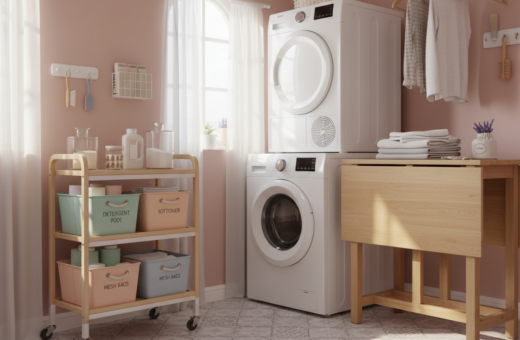
Stacking a washer dryer unit is one of the clearest ways to reclaim floor area. Beth and Bob Judge proved this by fitting a stacked set into their Manhattan kitchen, keeping a busy room functional and uncluttered.
Stacking frees space for storage or a folding surface. Isis and Stephano used a 24-inch stacking unit in a brownstone renovation to solve tight quarters and keep clothes handling simple.
Utilizing Kitchen and Bathroom Nooks
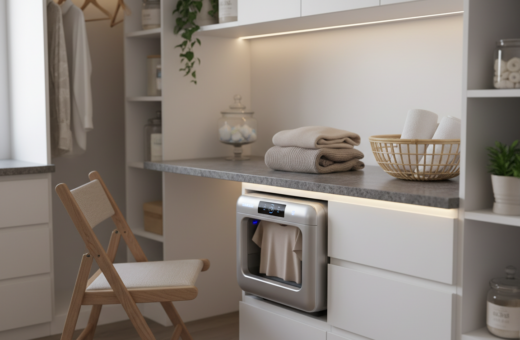
Tucking a washer or washer dryer into a kitchen or bathroom nook makes practical use of wasted space. Install shelves above the machines to hold detergents and baskets and keep the laundry area neat.
- Choose a folding drying rack that tucks away when not in use.
- Use closet doors or a shallow cabinet for extra storage and to hide machines.
- Keep a slim top shelf for baskets and daily supplies.
These ideas help homeowners maintain a functional room while managing clothes care in limited footprints.
Essential Small Apartment Laundry Hacks
Thoughtful baskets and clear routines let busy families finish laundry faster and with less stress. By arranging a compact laundry room with designated bins, sorting before washing becomes routine rather than a chore.
Keep the work simple:
- Assign baskets for whites, colors, and delicates to cut sorting time.
- Create a weekly laundry day so clothes never pile up and tasks fit the family’s schedule.
- Wipe the machine drum monthly and check filters to extend appliance life.
- Pre-sort items near the washer to save walking back and forth.
Treat the room as a functional zone — small changes reduce time and improve home life.
These practical tips help transform tight laundry rooms into calm, efficient spaces. Simple systems make washing less disruptive to daily living and keep clothes ready for the day ahead.
Choosing the Right Portable Appliances
Portable washer and dryer units make it possible to set up a fully functional clothes care station in a tight room without major renovation. Residents who need a compact solution should weigh ventless designs, noise ratings, and stacking or pedestal options.
Portable Washer and Dryer Combos
Combo units combine wash and dry cycles in one fitting. They save space and simplify plumbing. A family can use a combo to manage chores in a single corner of a kitchen or bathroom. Mickey installed a washer and dryer on a pedestal in Prospect Heights to add a folding surface and reduce bending.
Benefits of Ventless Dryer Technology
Ventless dryers remove the need for external vents, freeing up wall and floor space. Lynn and Craig proved this by installing a ventless washer-dryer in their tiny bathroom, showing that a dedicated laundry room is not required.
Prioritizing Quiet Operation for Apartments
Quiet models matter when machines run near living areas. Look for low-decibel ratings and vibration control so the dryer or washer does not disturb daily life. Selecting the right portable appliances lets one create a usable room even in one tight place.
For model recommendations, see the best washer for compact spaces.
Vertical Storage Solutions for Tight Spaces
Tall shelving and wall systems help reclaim floor area in a compact laundry room. They move baskets, detergents, and extras up, so the floor stays clear and usable.
Install a closet organizer to create a dedicated spot for cleaning supplies and folded clothes. A well-planned closet turns a cramped area into an orderly, professional-feeling workspace.
- Use tall shelves to stack bins and keep supplies within reach at the top and bottom.
- Mount wall caddies for sprays and brushes to free the floor and counter.
- Add a slim top shelf above machines for baskets and spare items.
These vertical ideas make the most of every inch in a small apartment or compact home. The result is a tidy, efficient area where chores move faster and the space feels open.
Move items off the floor and up the wall to create more breathing room and easier clothes care.
Creative Use of Over the Door Furniture
A door’s backside often serves best as a hidden shelf for daily supplies and quick-access items. Using furniture that hangs or mounts over a door makes it possible to add storage without taking up floor space in the laundry room.
Adjustable Shelving for Laundry Supplies
Install adjustable shelves on the back of a closet door to store detergents, stain removers, and other supplies. Adjustable racks let one change shelf height to fit bottles, sprays, or bulk containers.
Hang small baskets from over-the-door racks to corral cords, clips, and single-use items. This keeps the main laundry room shelves free for towels and larger baskets.
- Pick shallow shelves to avoid blocking door movement and to free walking space.
- Use labeled baskets for quick sorting of small items and cleaning supplies.
- Choose rust-resistant fittings for humid rooms to extend lifespan.
For more layout ideas, see innovative over-the-door storage ideas. These simple additions help maintain an organized laundry room and make supplies easy to find for every cycle.
Streamlining Your Laundry Day Routine
A clear plan for wash day reduces wasted minutes and keeps living spaces orderly. Establishing a regular day to deal with clothing makes it easier to stay on top of chores and frees up time for other activities.
They should sort clothes before the machine starts. Pre-sorting by color and fabric cuts cycle changes and prevents re-washing. Keeping a few labeled bins near the washer saves trips and makes the process faster.
A simple routine uses the laundry room efficiently and preserves space in other parts of the home. Running similar loads together reduces wear on the machine and shortens total time spent on washing across the week.
- Pick one or two set days for washing and stick to them.
- Sort garments at drop-off to speed loading and unloading.
- Use timers or phone alerts to move loads promptly and avoid pileups.
- Fold immediately to reclaim space and keep rooms tidy.
“A few consistent steps make laundry less of a chore and more of a quick, predictable task.”
Smart Sorting and Folding Techniques
Efficient sorting and folding shorten chores and keep a home’s fabric care simple.
Begin by grouping clothes by color and fabric. Use labeled baskets to separate whites, darks, and delicates. This step speeds washing and protects items from damage.
Color Coding for Efficient Washing
Apply a clear color code with tags or colored bins so anyone in the house can sort at drop-off. Keep a small caddy in the kitchen or laundry room stocked with stain-removing things to treat spots before washing.
Wrinkle Prevention and Folding Tips
Move garments from washer to dryer promptly and fold right away. Folding immediately after the dryer run prevents creases and saves ironing time later.
- Use one basket per type to keep sorting fast and visible.
- Reserve a dedicated washer and a separate dryer when possible to run loads without delay.
- Label storage bins so everyone knows where things belong.
“A steady routine for sorting and folding transforms chores into a five- to ten-minute task.”
Alternative Drying Methods for Small Rooms
Drying solutions that hang or fold make the most of vertical space in a room. They offer an easy way to dry clothes when a full-sized dryer will not fit.
Ceiling-mounted racks lift wet items out of the way. These systems lower to load and raise to dry, freeing floor space and keeping a washer area clear.
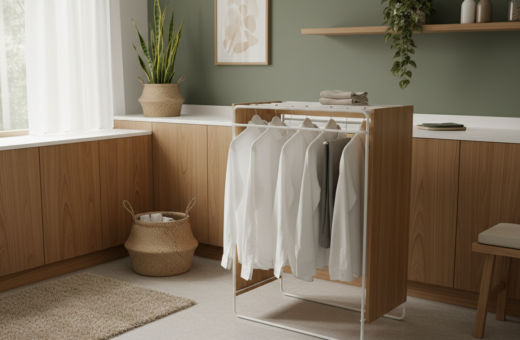
Portable and folding racks let residents air-dry delicates and bulky pieces without a dryer. Air-drying preserves fabric and saves energy, which is useful in a compact apartment.
- Choose a breathable rack to speed drying and avoid mildew.
- Use a ceiling-mounted line for vertical drying when floor space is tight.
- Move a portable rack into sunnier rooms to cut drying time.
“A well-chosen drying rack replaces bulky equipment and keeps the room functional.”
With the right rack, people can manage laundry items efficiently and reduce reliance on a traditional dryer.
Maintaining a Clutter Free Laundry Environment
A tidy wash zone starts with routine purges and a simple plan for items that no longer belong. Clear rules help keep the laundry room usable and reduce time spent managing clothes.
Donation Strategies for Unused Items
They should schedule a quarterly sort of clothes, cleaners, and tools. Set aside durable items for donation and recycle broken things responsibly.
Keep the washer dryer area open by removing excess bins and gear. Free movement around machines improves safety and speeds chores.
- Label baskets and place them in a closet or on a tall shelf for quick sorting.
- Donate wearable clothes and useful tools to local charities or transit drop-off points.
- Sell or swap specialty items that still work but are no longer needed by the family.
- Schedule regular pick-ups so items do not pile up and reclaim useful space.
“A clear, decluttered room makes washing and drying more pleasant for everyone.”
Professional Laundry Services as a Space Saver
Outsourcing wash and dry chores can reclaim a surprising amount of living space and reduce daily stress. Using a professional service to handle washing and drying keeps bulky machines out of the laundry room and other rooms in the house.
Love2Laundry collects and returns your clothes within 24 hours, making it a practical solution for busy families. Their team handles sorting, washing, and dry finishing, so a washer or dryer no longer needs to occupy kitchen, bathroom, or floor space.
- Fast turnaround: orders delivered within 24 hours.
- Full service: professional washing and dryer cycles for all types of items.
- Space saving: frees up storage and open area in your home.
- Convenient contact: call Love2Laundry at 0203 600 0296 to learn more.
For people with a small laundry area or no place for a machine, outsourcing is one effective way to simplify life. It reduces the time spent on chores and helps keep baskets and supplies out of sight, so living areas feel larger and more organized.
“Professional cleaning lets you trade a noisy appliance for usable space and more free time.”
Conclusion
A few targeted changes can turn a cramped wash area into an orderly, efficient corner of the home. Implementing these practical tips and simple hacks helps transform a laundry room into a highly functional and tidy space for daily life.
Use vertical storage and over-the-door furniture to keep essentials and cleaning items neatly hidden behind doors. Choose stackable units and quiet models to save space and cut the time spent on chores.
Keep routines consistent and purge extras regularly. A well-maintained laundry room supports a busy schedule and makes housework faster and less stressful.